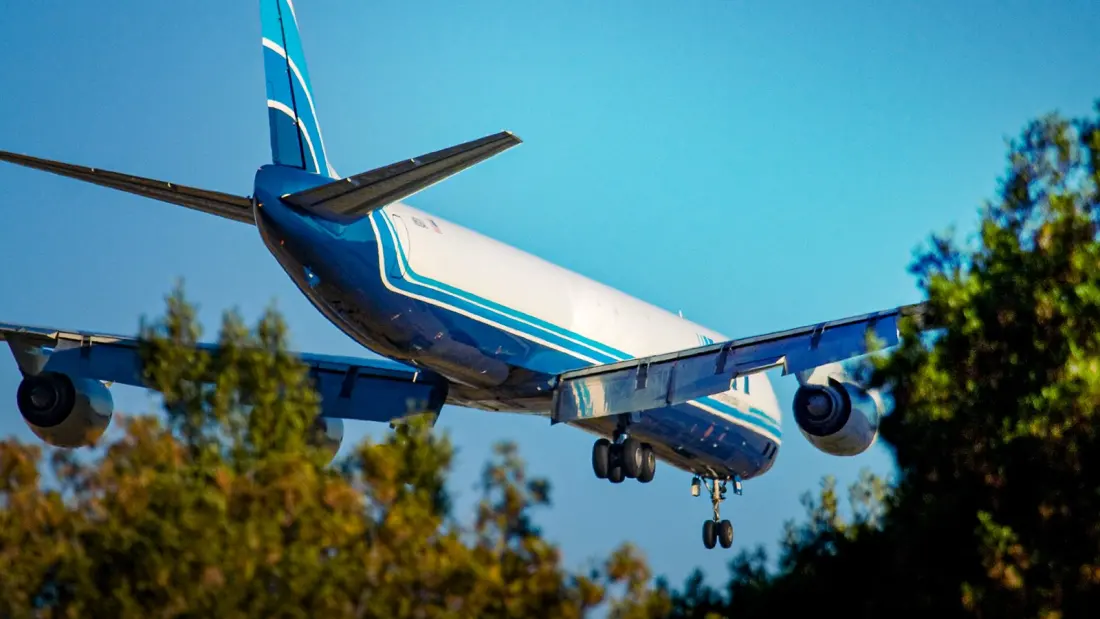
When the last passenger-carrying Douglas DC-8 touched down for the final time in November 2025, it closed out more than six decades of service for an aircraft that first flew passengers in 1959. The story of its longevity is really a story about one of aviation's smartest aftermarket fixes — a re-engining program that saved the jet from noise bans and, in the process, rescued an engine family on the brink of commercial failure.
The DC-8 was Douglas's answer to the Boeing 707, developed in the mid-1950s after losing a US Air Force tanker contract to Boeing. The stretched Super 60 series arrived in 1965, with the DC-8-61 carrying up to 220 passengers on four Pratt & Whitney JT3D turbofans. By the late 1970s, though, new ICAO Chapter 3 noise standards — and a US deadline of 1985 for Stage 3 compliance — threatened to ground aircraft that still had plenty of structural life left.
The fix came from an unexpected place. Jackson McGowan, a retired Douglas division president, founded Cammacorp in 1977 to manage a program swapping the old engines for CFM56-2 turbofans, a new design from the GE–Snecma joint venture CFM International. The breakthrough order came on March 29, 1979, when United Airlines signed up to re-engine 29 of its DC-8-61s — the first commercial sale for the CFM56, an engine family that went on to become one of the best-selling in history, powering everything from the 737 Classic to the A320ceo.
The converted Super 70 series (variants -71, -72 and -73) was roughly 70% quieter and burned up to 23% less fuel than the originals, with each CFM56-2 producing about 22,000 pounds of thrust. Boeing tested a similar CFM56 conversion for its rival 707, the 707-700, but shelved it — the DC-8's greater engine ground clearance made the swap far more practical. By 1986, 110 DC-8s had been converted.
Here's where holiday travel comes in, indirectly: the Super 70's real career was in freight. With long fuselages, tough airframes and manageable running costs, re-engined DC-8s became workhorses for cargo carriers — most famously UPS, which flew them for decades. Cheap-to-buy, cheap-to-run freighters like these helped build the express shipping networks that move goods (and plenty of holiday luggage excess) around the world today. The type's final operator, humanitarian group Samaritan's Purse, flew a DC-8-72CF on more than 200 relief missions from 2015 before retiring it on November 14, 2025, after a last mission to Jamaica.
For anyone who loves aviation history, the DC-8's saga is a reminder that aircraft rarely die on schedule. As late as 2004, 159 were still flying worldwide; today only a handful survive, mostly in museums or specialist roles like Omega Aerial Refueling Services' 707 tankers. If you want to see one, look for preserved examples at aviation museums across the US, or catch NASA's airborne laboratory DC-8 at airshow-adjacent events. Full story via Simple Flying.