Narrowbody jets may be eating into long-haul flying, but the world's premium airlines still lean heavily on twin-aisle aircraft. A new count of the planet's largest widebody fleets shows just how lopsided things get at the top, with Emirates sitting in a league of its own.
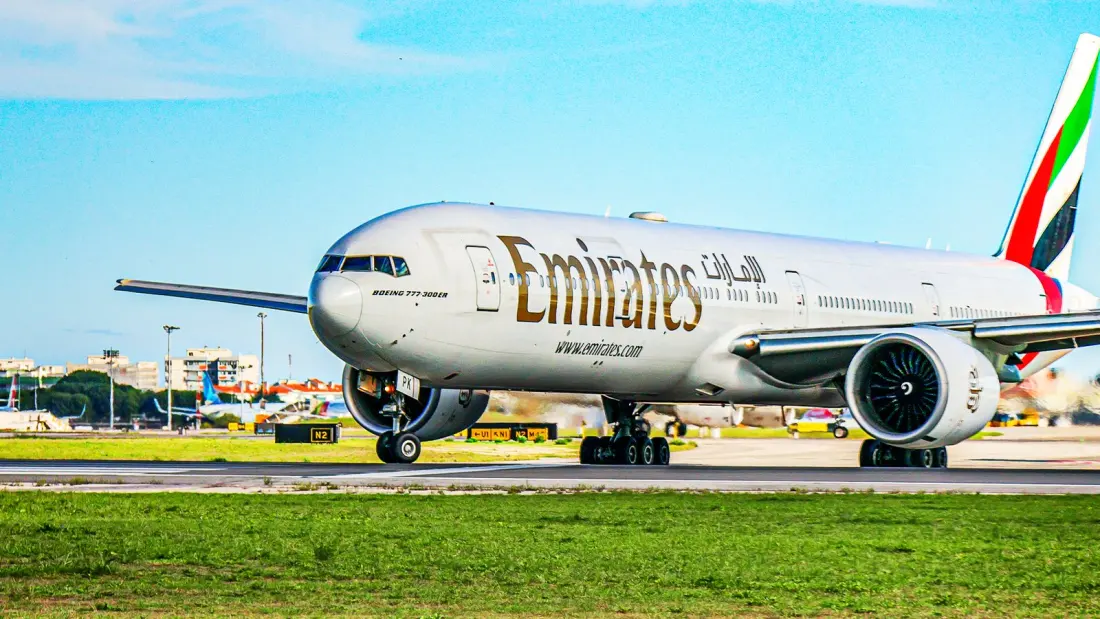
Emirates operates 291 aircraft, and with the exception of a single A319, every one of them is a widebody. That includes 116 Airbus A380s by far the largest such fleet anywhere, complete with private suites and onboard shower spas plus 117 Boeing 777-300ERs, 18 777 freighters, 10 777-200LRs and 28 A350-900s. The next chapter is the Boeing 777X: Emirates has ordered 270 of them as long-term replacements for its ageing 777s and A380s, with the newest airframe spotted rolling out of the Everett factory this September.
United Airlines takes second place with 245 widebodies out of 1,149 total aircraft, all Boeing: 96 Dreamliners, 96 777s and 53 767s. Qatar Airways follows with 226 twin-aisle jets against just 31 narrowbodies, spread across four families: the A350 (64), 777 (93), 787 (61) and A380 (8). Qatar recently launched the world's shortest bookable A350 route, an 80-mile hop from Doha to Bahrain.
Delta ranks fourth with 180 widebodies, mostly Airbus A330s (81) and A350s (42), plus 57 767s a small slice of its 1,006-strong fleet. Turkish Airlines sits fifth with 164, including 37 A330s and 33 777-300ERs, and has big ambitions: 800 aircraft and 350 destinations by 2036, with premium economy cabins returning from 2028. Singapore Airlines, sixth with 138 widebodies, is the outlier its fleet is almost entirely twin-aisle, and it exclusively operates the A350-900ULR on the world's longest commercial flights, flown in an all-premium layout.
American Airlines (137 widebodies, including 70 787 Dreamliners) and British Airways (132, from A350-1000s to the last A380s in Europe) round out the list. Both carriers are dominated by narrowbodies, and BA's widebody count still bears the scar of 2020, when the pandemic ended half a century of 747 operations almost overnight.
For travellers, this list is more than trivia. Fleet size shapes route networks, hub connections and how easy it is to redeem points on long-haul awards. If you love flying on the A380, Emirates is essentially the only place left to seek it out at scale. If it's the longest flight in the world you're after, Singapore's ULRs are the ticket. And passengers with legroom to spare should watch Turkish Airlines: the airline says two-thirds of long-haul fliers would pay extra for comfort, and its 2028 premium economy rollout could make Istanbul a smart connection point for budget-conscious long-haul flyers.
Data source: Simple Flying