Two alpinists went to one of Nepal's remotest corners hunting for a first ascent. Weather and washed-out roads had other plans — and what they ended up climbing turned out to be the better story.
Swedish climber Fredrik Strang, with 18 expeditions to 8,000m peaks behind him, and Norwegian partner Sindre Kolbjornsgard set out this autumn for the Nyalu Lek area north of Simikot in far-western Nepal. Their brief was clear: an apparently unclimbed peak above 6,000m, an aesthetic line, manageable hazards, and an approach feasible for a small team. In a region with plenty of virgin 6,000m summits, finding a candidate was the easy part.
Getting there was not. The road from Surkhet to Simikot took two rough days, with landslides wiping out whole sections. Then the early-season snow arrived. The Nyalu La pass, at around 5,000m, looked impassable, and their chosen peak became unreachable. Rather than burn money they didn't have relocating across Nepal, the pair stayed put near Phendol Kermi Camp and started exploring whatever rose above their tents.
That improvisation produced three climbs. First came a 5,177m acclimatisation summit with no record of a previous ascent — straightforward low down, then knee-to-waist-deep snow above 4,500m. Next, a 5,227m peak, also unclimbed as far as records show, graded PD+ once they finally reached its mixed rock-and-ice ridge. British veterans Mick Fowler and Victor Saunders, whose own attempt on an unclimbed 'Peak 6010' further east had been snowed off for a second time, later found an easier line on that same mountain — proof, Strang notes, that the first route up is rarely the best one.
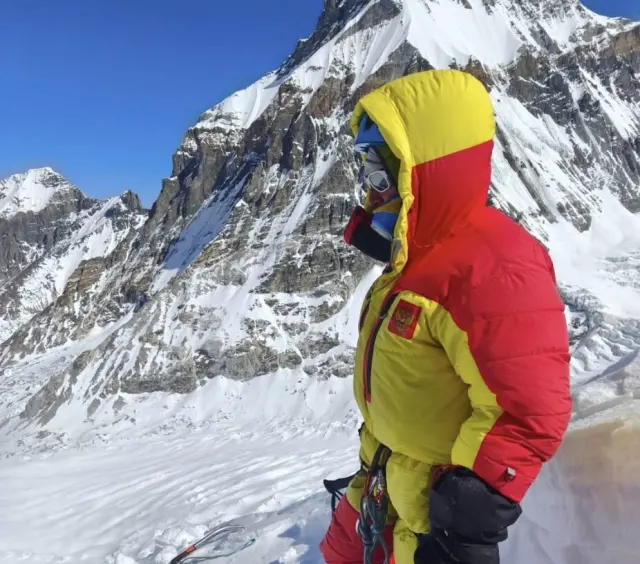
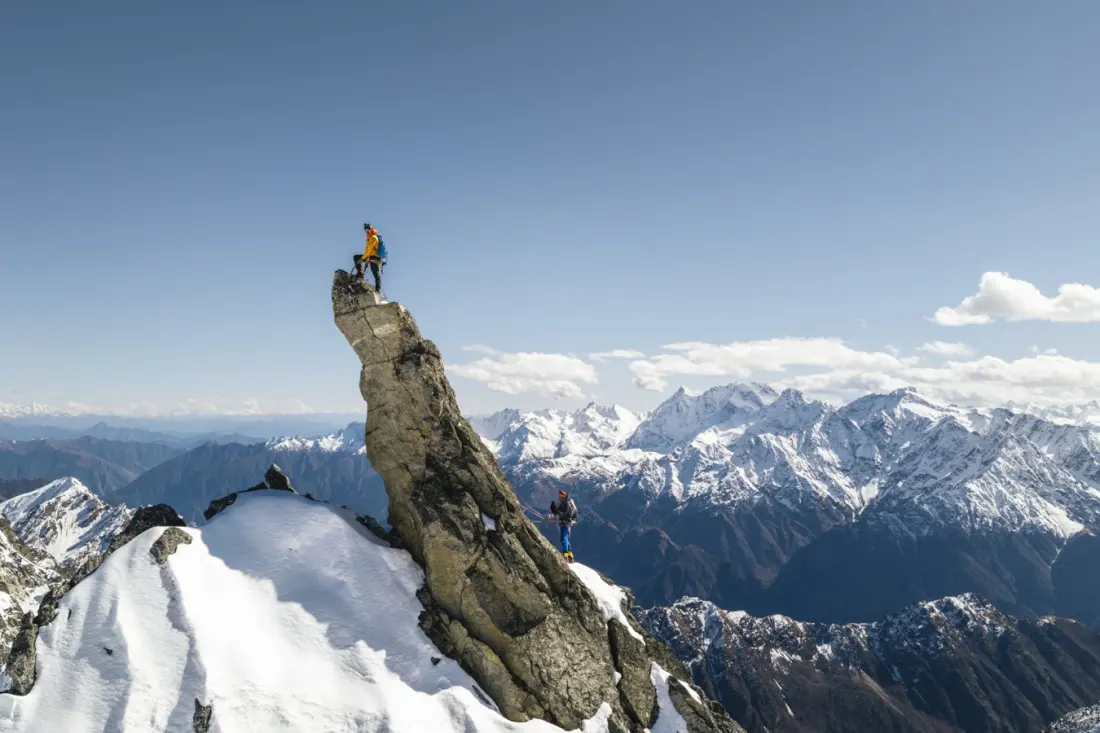
The highlight was a 5,337m fang of granite above Yangchya Lake, which they nicknamed Daara Peak (from the Nepali word for a projecting tooth) pending official sign-off. After one failed attempt on the northeast headwall, they returned on October 17-18 and climbed it in five pitches: crumbling rock, a bergschrund crossing, vertical granite good for cams, mixed ground with an M6 crux, and a delicate summit ridge carrying about 30cm of snow. On October 18 they stood on top, including the eight-metre overhanging pinnacle, finished via a lucky crack.
What Strang keeps coming back to isn't the grade. It's the silence — no helicopters, no fixed ropes, no queues, none of the human machinery that now defines the normal routes on the 8,000'ers. He also flags the paradox: the more climbers seek out these last empty valleys for solitude, the faster that solitude disappears. His suggestion is gently provocative — maybe some summits are better left untouched, so future climbers inherit mountains that haven't all been ticked off.
For travellers, the piece is a nudge: western Nepal — Humla, Simikot, the Nyalu Lek area — offers genuine wilderness for trekkers and aspiring mountaineers, well away from the Everest crowds, if you can handle long approaches and autumn snow.