
One of Bloomsbury's most familiar hotel facades has had its moment. The Imperial, part of the Imperial London Hotels group, has reopened after a decade-long refurbishment that turns its once-divisive 1960s concrete architecture into the whole point of the design. It's also the group's first property styled as a lifestyle hotel — a shift away from traditional grand-hotel formality.
The building's history is a layered one. The original 1904 hotel, designed by Charles Fitzroy Doll, came with turrets, terracotta statues and even Turkish Baths, marble-lined public rooms and a winter garden. Much of that was swept away in the sixties for the modernist block that stands today. Rather than smoothing the building back into the past, architects Cube Design leaned into that sixties identity, restoring signature features and letting the concrete and geometry do the talking.
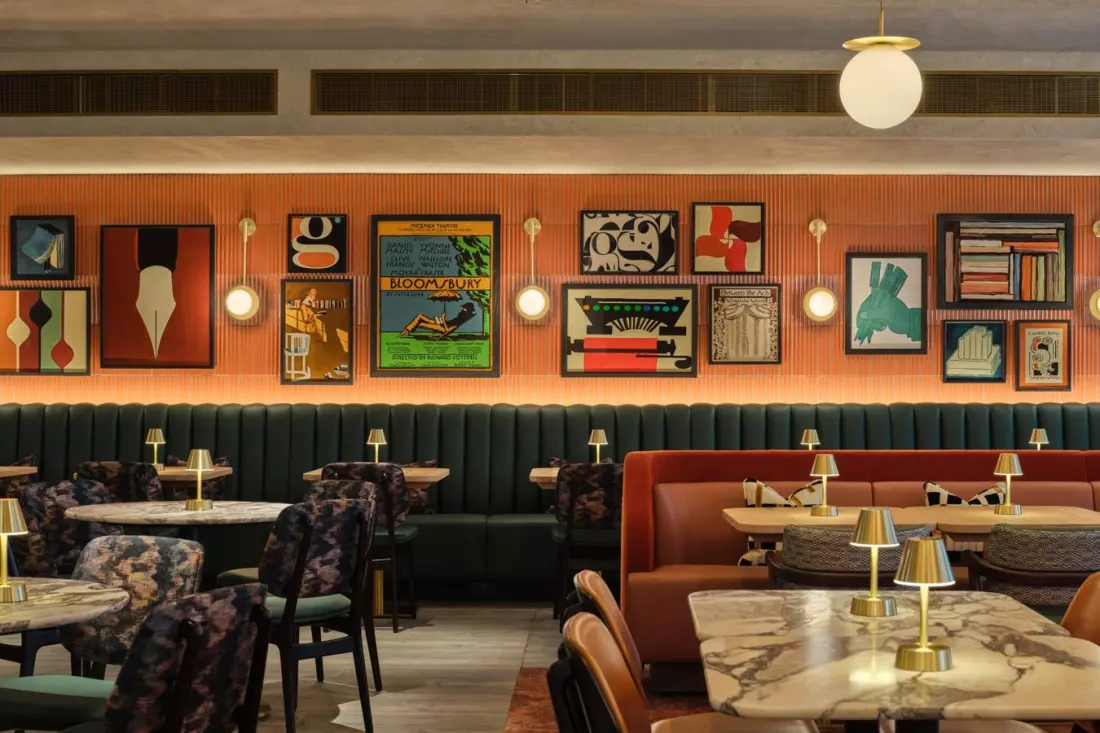
Inside, Trevillion Interiors and Keane Brands took cues from the era's creative crowd — the writers, painters and reformers who gave the decade its voice. There are bold shapes, patterned surfaces and warm tones drawn from a happy accident: the discovery of original burnt orange glass tiles in the mezzanine floor. Wood panelling, sculptural lighting and terrazzo sit alongside mid-century furniture, and guestrooms — 357 in total — keep the hotel's geometric windows, some framing Russell Square directly. A handful of rooms come with private gardens and outdoor tubs, a genuine rarity in central London.
The fun is in the details. Rooms have retro GPO Audrey phones, guests can borrow Chopper bikes for free, and shelves are stocked with design-led board games, books and magazines put together with local collaborators. In the Bell Room & Terrace, relics from the Victorian original — a galleon that once crowned a turret, plus the building's clock and bells — reward anyone who wanders in. Art lovers get a bonus too: Adam Ellis Studio Art House supplied more than 500 original prints, hung throughout the hotel as defining features rather than decoration.
The headline addition is Arcus, a 327-square-metre rooftop bar and restaurant that claims to be Bloomsbury's first and only rooftop venue, with near-360-degree views over London. Downstairs, the Edit Bar & Lounge works as a day-to-night space for coffee, work sessions or evening drinks, and it's open to locals as well as guests — a deliberate move to root the hotel in the neighbourhood.
Why it matters: central London is short on hotels where the architecture itself is the attraction. The Imperial sits right on Russell Square, steps from the British Museum and the leafy garden squares that give Bloomsbury its literary reputation, making it a smart base for travellers who want culture without Covent Garden prices. Design enthusiasts, sixties architecture fans and anyone who's ever walked past the building and wondered what's inside now have a proper reason to check in. With Arcus open to the skyline and a restored piece of London history below it, the hotel is positioning itself for its next 120 years.