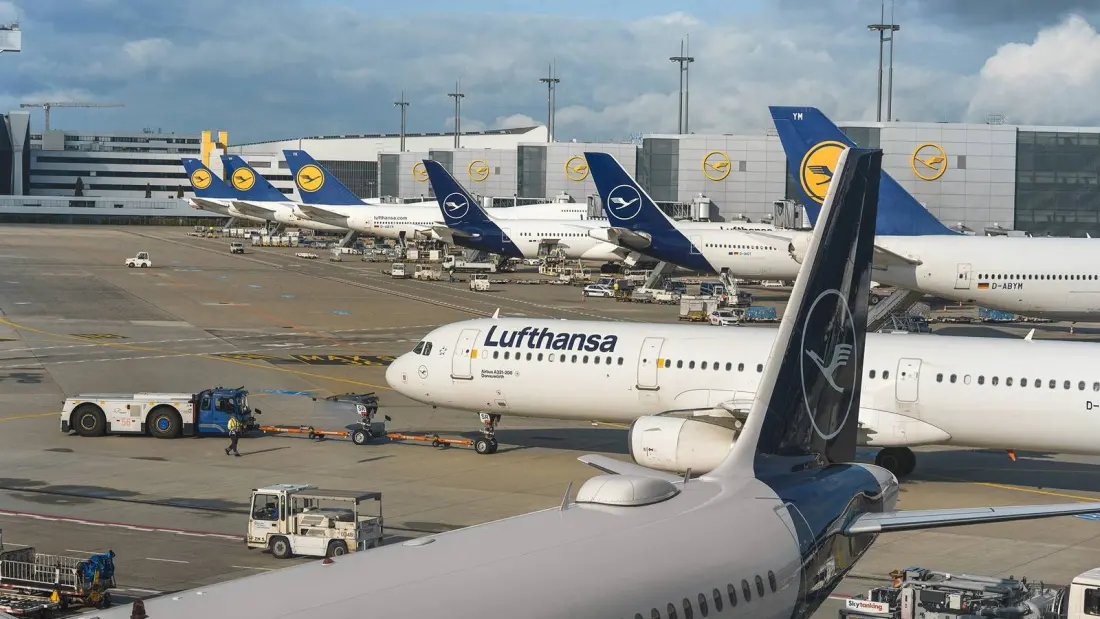
German health authorities are investigating an unusual malaria outbreak connected to Frankfurt Airport, and it has turned deadly. Three people have died — two airport employees and a resident of Schwanheim, a neighbourhood just north of the terminals — while four more workers fell ill and later recovered. None of them had travelled to a malaria-endemic region.
The culprit is what's known as airport malaria: an infected mosquito hitches a ride on an aircraft or inside luggage, survives the flight in a warm pocket of the cabin or a suitcase, then bites someone after landing. All the victims were infected with Plasmodium falciparum, the parasite behind malaria tropica, the most dangerous form of the disease, which attacks red blood cells. Malaria cannot spread from person to person, which is what makes a cluster like this so rare — and so puzzling. It's still unclear which flights the stowaway mosquito or mosquitoes arrived on.
Fraport, the airport's operator, has confirmed that six employees have contracted malaria since July. The airport has set out traps around its terminals, and trapped insects are being sent to a laboratory in Belgium for testing. Germany's public health and disease control agency is also involved in the investigation. Frankfurt is one of Europe's busiest hubs — home base for Lufthansa and Condor, with four runways and around 63 million passengers a year — so the implications reach well beyond one terminal.
For travellers, the practical takeaway is modest but worth knowing. The far more common malaria scenario is the reverse one: you get bitten abroad, feel unwell after returning home, and need to tell your doctor where you've been. But insects do occasionally survive the trip in bags. If you suspect something has ridden home in your luggage, don't unpack indoors. Leave the bag outside or in a garage, wash all clothing and fabrics on a hot cycle for at least 30 minutes, and vacuum the bag thoroughly — seams, pockets and zippers included — before sealing and binning the vacuum contents. A garment steamer run along fabric edges, or a few hours in a hot parked car or direct sun, will finish off any survivors.
Who should care about this story? Essentially anyone flying long-haul through major hubs, plus travellers returning from tropical regions who should stay alert to fever and flu-like symptoms in the weeks after getting home. For the vast majority of passengers the risk remains vanishingly small — airport malaria cases are genuinely rare worldwide — but the Frankfurt cluster is a reminder that aircraft move more than just people, and that health authorities take that seriously when it counts.