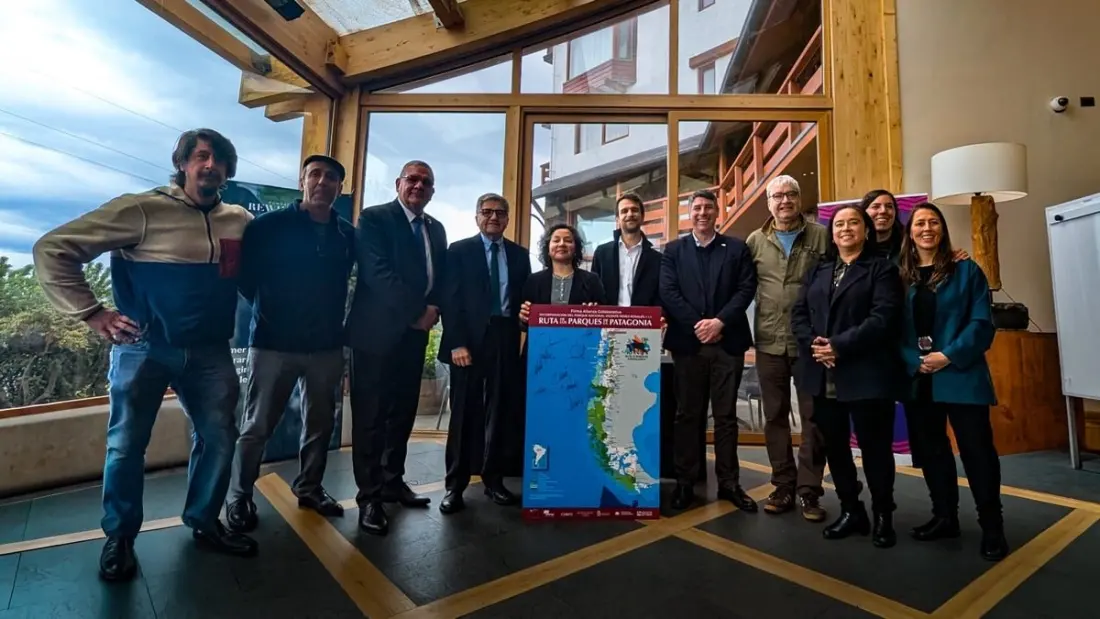
Vicente Pérez Rosales National Park, created by decree back in 1926 and Chile's oldest protected area, has officially become the 18th national park on the Route of Parks of Patagonia. The agreement was signed in Puerto Varas, the Lakes Region town that now positions itself as the northern gateway to the whole route.
The timing is no accident. The park marked its centenary in August, and its inclusion in the route coincides with a broader shift in how Chile manages its wild places: responsibility for protected areas is moving from the forestry agency CONAF to the newer Biodiversity and Protected Areas Service (SBAP). Officials on both sides framed the signing as a signal of long-term commitment to conservation-backed tourism.
The Route of Parks of Patagonia is a conservation and tourism project spanning Chilean Patagonia, linking national parks from the Lakes Region all the way down to Aysén and Magallanes, much of it along the famous Carretera Austral. The idea, first championed by conservationist Douglas Tompkins and now advanced by the foundation Rewilding Chile, is to tie nature protection to local livelihoods so communities benefit from keeping landscapes intact rather than developing them away.
Vicente Pérez Rosales brings serious footfall to the route. It is one of Chile's most visited parks, known for the emerald waters of Lake Todos los Santos, the petrified forests around Osorno Volcano, and the Petrohué waterfalls. Puerto Varas, on Lake Llanquihue, already funnels travellers south towards Patagonia, so formalising the park's place on the route essentially gives the trail a polished, well-serviced front door. Sernatur, the national tourism service, notes that roughly 60 percent of international visitors come to Chile for its natural attractions, and a good share of them travel this route.
What changes for travellers? Mostly, better coordination. The signing commits local government, tourism bodies, and conservation groups to promote responsible travel, connect the park with communities and businesses along the route, and add the park to the Route of Parks Passport — a stamp-collection style programme that rewards visitors who explore multiple parks. For anyone planning a Patagonia overland trip, it also strengthens the case for starting in the Lake District rather than flying straight south: volcano hikes, lake crossings to Bariloche across the Andes, and a soft-launch into the longer Carretera Austral drive.
The project's backers are explicit that this is as much about economic development as scenery. A regional programme called Transforma is channelling public-private cooperation to connect entrepreneurs and small businesses along the route with tourism demand. If it works, expect better local guides, food, and accommodation between Puerto Varas and the far south over the next few years.
For now, the takeaway is simple: Chile's most storied park is now the official starting point of one of the world's great park-to-park routes, and the infrastructure around it is only getting better.