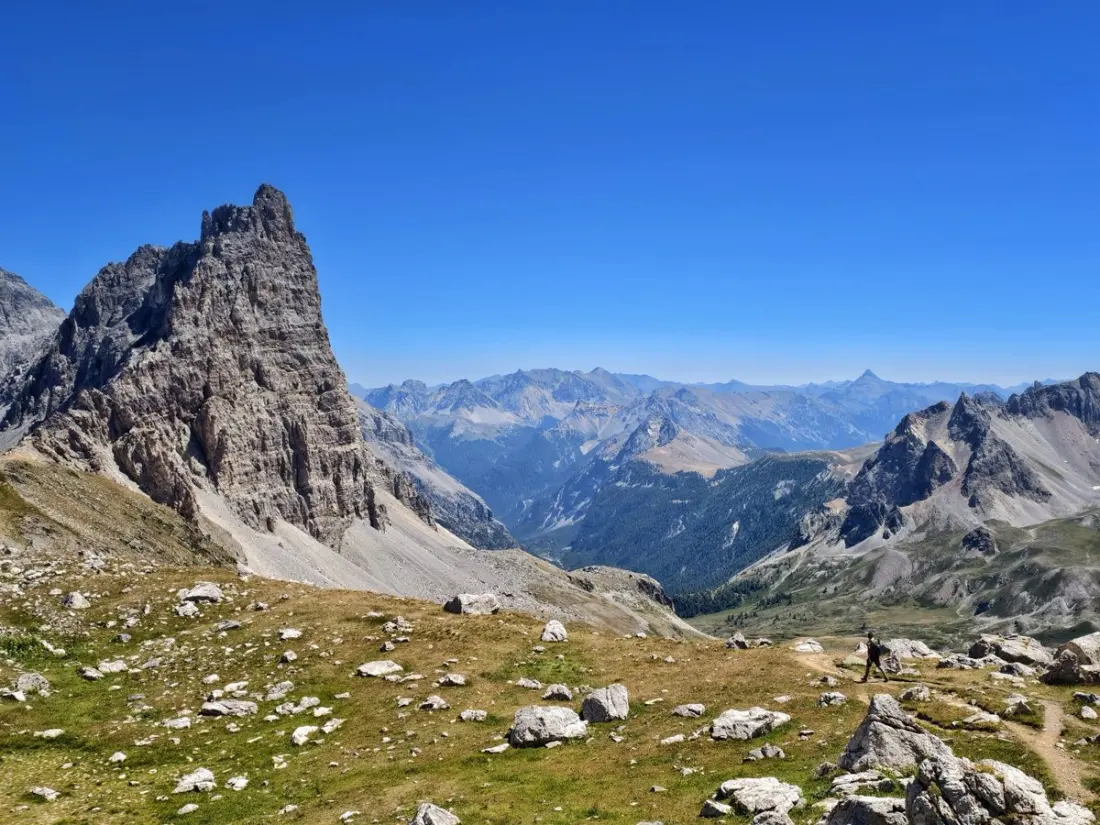
A New Zealand hiker spent the European summer walking the Hexatrek and other trails through the French, Italian and Swiss Alps — roughly two months of mountain passes, rocky climbs and cold nights. No sponsorship, no free kit, just an honest scorecard: three items that over-delivered and one highly regarded piece that flopped.
First up, the Atom Packs Pulse 40L. Coming from a battered decade-old Osprey Exos 48L, the writer worried 40 litres was too small and the pack too flimsy for five-day food carries. Those fears died quickly. The pack survived the flight from Auckland to Geneva via Dubai without a mark, carried loads up to around 8kg with excellent weight transfer through the hip belt, and shrugged off off-trail brambles without a scratch. Nifty touches include a snack pocket on the base, a removable hip belt, and a roll-top that lets you shrink or grow the volume as needed.
The Altra Lone Peak 9+ also earned praise, and for a specific reason: longevity. The writer has worn Lone Peaks since 2015 but always found the foam and grip died around the 500km mark, leaving 500 unusable kilometres of 'flat tyre' walking. The 9+ fixes the second half of that problem with a Vibram sole. After 900km of Alpine trail, grip was still excellent and the cushioning held up to about 800km. Zero blisters across weeks of big elevation days — and like previous versions, they needed no break-in at all.
The surprise star was the Coros Nomad watch. With free, detailed worldwide maps downloaded via the Coros app, plus imported route files, the writer navigated hundreds of kilometres of tangled Alpine trails without once pulling out a phone. The killer feature is the deviation alert: stray off your route and the watch beeps and buzzes within seconds, saving wasted kilometres and battery life. It barely drains a power bank either.
Then the failure. The Timmermade Serpentes 30F quilt — a cult ultralight item — fell apart in practice, literally. Above the foothills, on nights around 3°C and well within its temperature rating, the down migrated off the writer's shoulders and pooled at the sides of the sleeping mat. Side sleeping seems to be the culprit: at such an extreme weight-to-warmth ratio, there's simply not enough down to stay put over a shoulder all night. The result was shivering wake-ups every couple of hours, sleeping in every layer of clothing, and periodically shaking the feathers back into place. Worse, when the writer raised it with the manufacturer, the reply was essentially that it was a skill issue — an unhelpful answer for someone with four decades of tent-sleeping experience.
The takeaway for anyone planning a long trek: test your sleep system in genuinely cold conditions before you fly, and if you're a side sleeper, be wary of quilts that chase the absolute limit of weight savings. The pack, shoes and watch market, meanwhile, has rarely looked better.