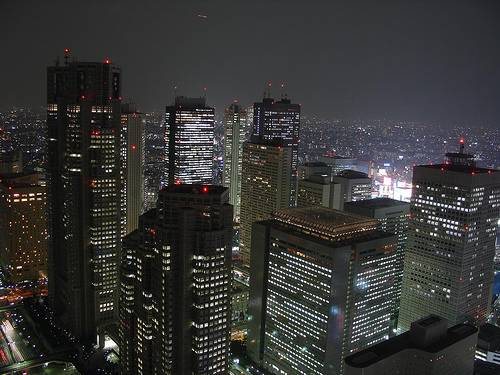
Tokyo has quietly become a testing ground for a new way of staying. As project work stretches from days into months, travellers are ditching nightly hotel rates and two-year leases in favour of serviced apartments and furnished monthly rentals — and the market is booming. Grand View Research forecasts Japan's aparthotel, serviced-apartment and co-living sector to grow 14.4% annually from 2025, reaching roughly US$7 billion in revenue by 2030.
The logic is simple. A standard Japanese rental contract assumes years of occupancy, while hotel rack rates pile up brutally over a month. Monthly accommodation sits in the gap. Corporate and business travellers already account for over 45% of global serviced-apartment demand, according to Coherent Market Insights, and Mordor Intelligence expects serviced apartments to be Japan's fastest-growing accommodation class through 2031.
But the monthly route comes with fine print. Minimum stays of 30 days are common, cancellation windows can run weeks, and 'fully furnished' might mean a bed and a table — no cookware, no linens, no guarantee of a chair that survives an eight-hour workday. Utilities, cleaning and internet are often billed separately, so a rate that looks cheaper than a hotel can lose its edge once the extras land. The advice from operators and mobility teams alike: get the total monthly cost in writing, read the extension policy before paying, and ask for photos of the actual unit rather than a model apartment.
The workspace has changed too. A desk alone no longer cuts it when a working day spans two time zones — travellers now check desk depth, chair support, outlet placement and whether the internet connection is private rather than shared across the building. Hybrid work has turned the room into an office, and the best operators are publishing those specs.
Location matters differently on a five-week assignment than on a four-night trip. Commute reliability, last-train timing, grocery access and evening noise outrank tourist proximity. Tokyo's transport pedigree helps: the city topped a 2019 Economist Intelligence Unit survey of 26 Asia-Pacific bleisure destinations, with ease of transport a key factor. For long stays, the source suggests Ebisu for residential calm with Yamanote and Hibiya line access, Nihonbashi for meetings clustered around Tokyo Station, Shibakoen for a quieter corner of Minato, and Yotsuya for central-but-peaceful Marunouchi and Namboku connections. Trendy districts like Shibuya, Daikanyama and Shimokitazawa suit weekends and fashion runs, but can stretch the commute to major office districts.
For anyone planning an extended Tokyo work trip, the playbook is: confirm minimum stay and notice periods first, compare the full monthly cost across an extended-stay hotel, a serviced apartment and a furnished rental, verify extension terms in advance, and pick the neighbourhood by your actual commute. A US$3,000 monthly budget can work for one person — if you know exactly what it buys.