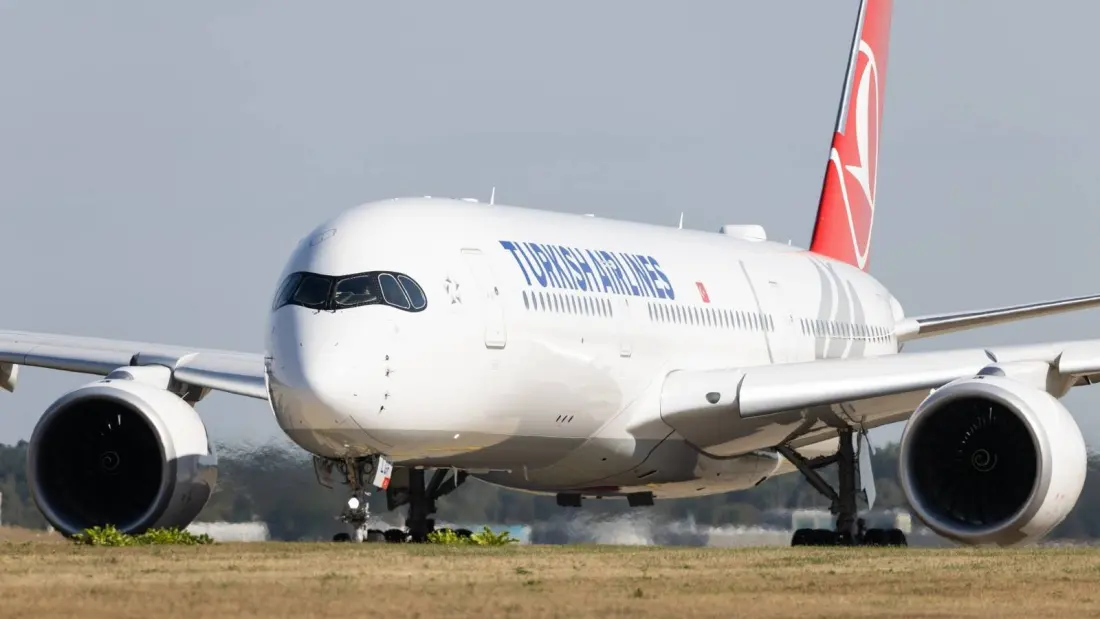
A routine departure turned into a lesson in radio phraseology on September 15, when a Turkish Airlines Airbus A350-900 operating flight TK30 to Istanbul taxied onto runway 4L at Newark Liberty International without ever being cleared for takeoff.
The sequence, reconstructed from tower audio shared online, started innocently enough. The crew was told they were next for departure, and the controller asked them to confirm they were ready. The confusion crystallised when the pilots stopped short of the hold short line. The tower then said something like "continue for the runway" — instead of the standard "continue your taxi, hold short of runway 4L" — and the crew read it as permission to line up and wait. Shortly afterwards, they told the tower they needed "30 seconds" before starting the takeoff roll, suggesting they fully believed they were cleared.
The controller quickly caught the error and ordered the aircraft off the runway, then delivered the call no pilot wants to hear: a phone number to call. In US aviation, being told to copy a phone number means a possible pilot deviation investigation is waiting once you land. The conversation with the Newark supervisor afterwards can end as a professional chat — or be escalated to the FAA, with fines or licence suspension on the table in the worst case. Pilots have one safety valve: filing a report with NASA's Aviation Safety Reporting System within ten days, which can shield them from punitive action for an honest mistake, provided nothing similar happens within five years.
Why should this matter to anyone who isn't a pilot? Because it's a tidy illustration of how close-run aviation safety can be, and how the system is designed to catch slips before they become accidents. At a congested airport like Newark, with departures stacked and runways in constant use, an aircraft sitting on an active runway without clearance is a genuine hazard — think near-misses like the one at Tokyo's Haneda earlier this year. The crew here also missed a second layer of defence: when in doubt about an instruction, pilots are expected to query the tower rather than assume. Ambiguous phrasing from the controller clearly played a part, but the rules put the burden on the flight deck to confirm before entering a runway.
For nervous flyers, the takeaway is oddly reassuring. The error was spotted within seconds, corrected before anything got close to another aircraft, and documented through a formal process. For aviation enthusiasts, it's a rare public window into how precise — and how fragile — cockpit-to-tower communication really is, and why controllers and pilots drill standard phraseology so relentlessly. A single shortened instruction at a busy American airport was enough to put a wide-body jet on an active runway, and a single sharp-eared controller was enough to fix it.