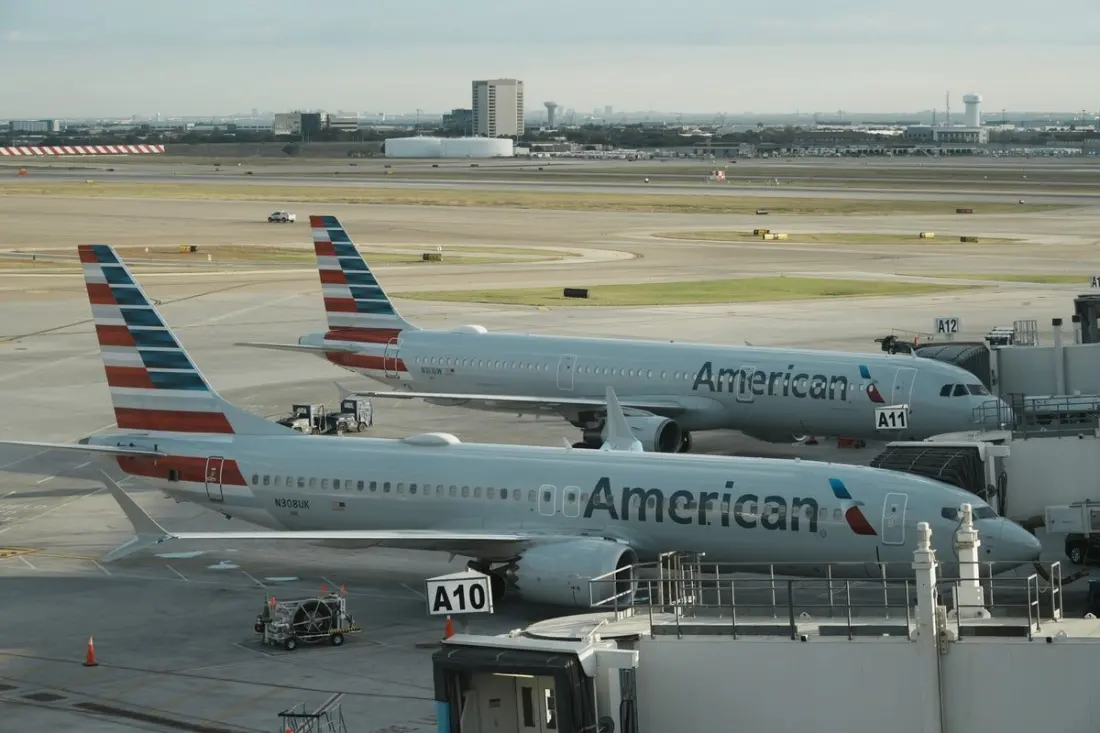
Federal investigators are looking into an incident at Ronald Reagan Washington National Airport in which two American Airlines aircraft apparently made contact on the taxiway, leaving one plane missing part of a winglet.
The episode unfolded on a Friday as one American Airlines flight bound for Dallas was taxiing towards the runway for takeoff, with a second American aircraft queued behind it. Air traffic control audio captured a controller instructing one of the flights to hold short of the runway, only for the pilot to admit the plane had crept over the hold-short line and had 'swapped paint' with the aircraft beside it. A tower exchange followed in which the controller relayed that the airline suspected a clip; the other pilot confirmed contact had been made. A winglet — the upturned tip at the end of the wing — broke off one of the aircraft.
No injuries were reported, and American Airlines confirmed both planes were pulled from service for inspection. The airline did not immediately offer further comment.
For anyone flying through the US capital's busiest airport, the incident adds to an uncomfortable run of headlines. Reagan National was the site of the deadliest aviation accident in America in years: on January 29, 2025, an American Eagle regional jet collided with a US Army Black Hawk helicopter over the Potomac River, killing all 67 people aboard both aircraft.
The wider US system has also had a bruising stretch. On November 13, federal officials ordered a nationwide ground stop that disrupted thousands of flights, later traced to a single overloaded router in Arkansas. Regulators have since called for $50 billion to modernise the country's ageing air traffic control infrastructure.
Why should travellers care? Ground collisions rarely make holiday plans fall apart, but they do cause cancellations, delays and the headache of rebooking — worth factoring in if you're flying American out of Reagan National in the coming days, as two aircraft are temporarily out of rotation. More broadly, the pile-up of incidents has put US aviation safety and infrastructure under scrutiny, which may translate into tighter procedures and occasional disruptions at congested airports like DCA. Keep an eye on flight status alerts and build in a buffer if you're connecting through Washington on a tight itinerary.