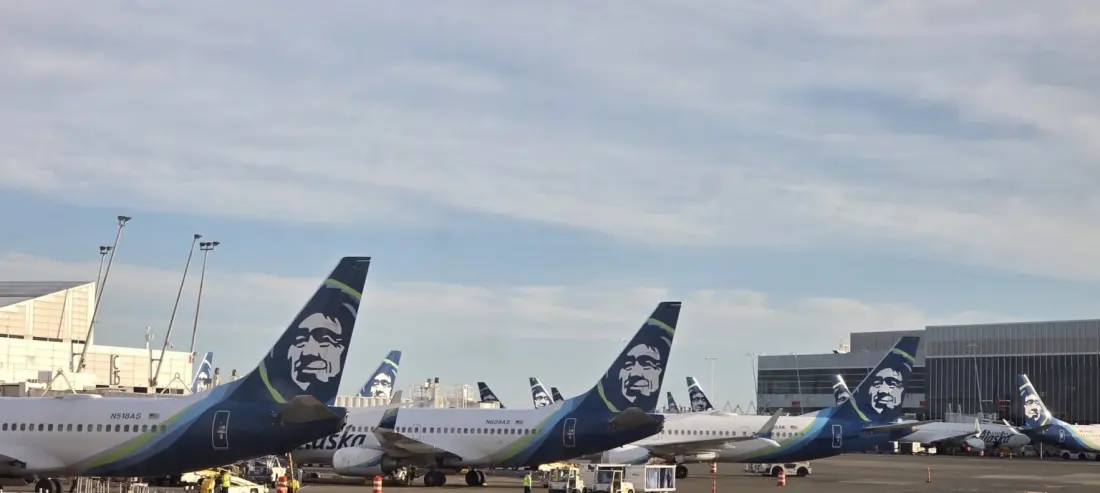
Late on a Tuesday night, the city of SeaTac — the 32,000-person municipality that Seattle-Tacoma International Airport sits inside — voted to freeze new construction permits for airport projects for six months. Under the ordinance, neither the city nor the Port of Seattle, which runs the airport, can accept a new permit application to build, expand or modify any airport-related facility until May 24, 2027. Work already permitted can continue, and safety repairs are exempt.
The move sweeps in all 31 near-term projects from the airport's master plan: taxiway extensions, a cargo warehouse, and — awkwardly — a new Chase Sapphire Lounge inside the existing terminal. The Port Commission approved that 16,000-square-foot lounge on October 27 with a 15-year lease expected to bring the Port roughly $7.9 million a year. There's a lounge shuffle underway at SEA: United is building a new club on Concourse B, The Club at SEA is due to take over United's old space near gate A9, and Chase inherits The Club's spot near A12 plus adjoining space, with handovers pencilled in for mid-to-late 2027. Those plans now hang on whether permits keep moving.
City officials, led by Mayor Mohamed Egal, frame the freeze as leverage over noise, air quality and traffic, with a public hearing set for January 12. The timing looks deliberate: the Port expects to finish its state environmental review by year end, and once complete permit applications are filed, they lock in the rules in effect that day. At stake is expansion that would lift capacity from 59.5 million to 64.1 million passengers by 2037 — an extra 4.6 million travellers a year and 96 more daily takeoffs and landings.
Whether the city can legally enforce this is doubtful. SeaTac previously signed an agreement exempting the core airport property from its development rules, a Ninth Circuit precedent bars cities from stalling runway and taxiway work at airports they don't own, and FAA grant obligations require the Port to keep the airport operating safely rather than waiting for emergencies.
The environmental arguments are real — University of Washington researchers have found ultrafine particles from arriving aircraft in communities under flight paths — but the money trail points elsewhere. SeaTac and the Port are negotiating a replacement for a 2028-expiring agreement under which the Port pays $1.4 million a year into the city's general fund. The city also claims it loses about $600,000 a year in tax revenue because the Port leased three employee parking lots. Read together, the freeze looks less like a green fight and more like a bargaining chip ahead of those talks.
For travellers, the practical impact is delay: the Port says it's prepared to litigate, but a prolonged standoff could push back the terminal expansion and the lounge openings many frequent flyers have been waiting for.