
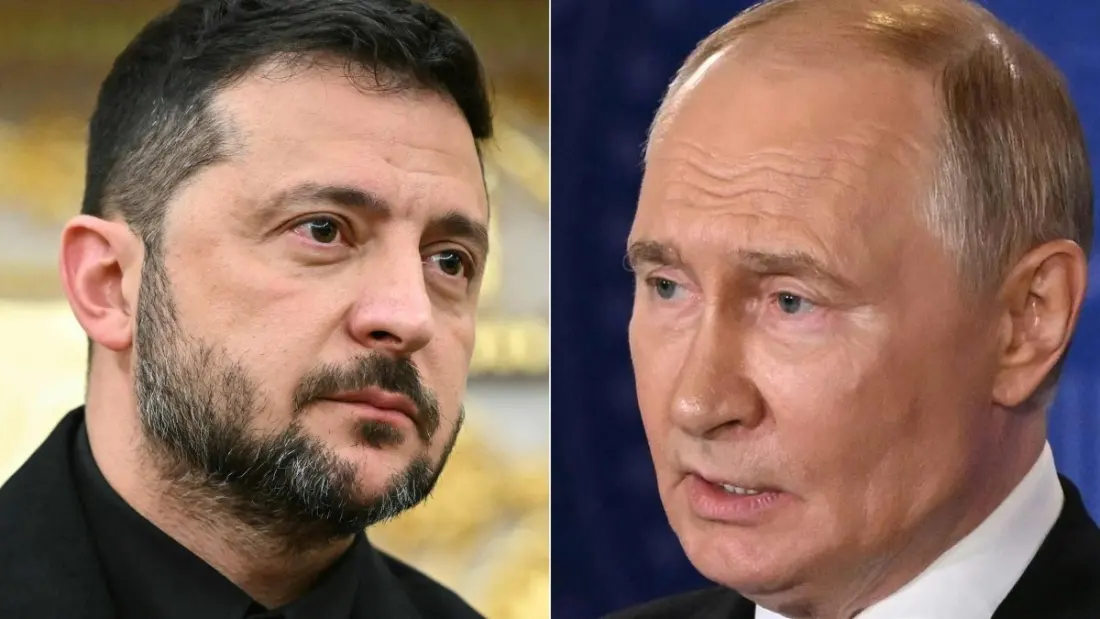
Ukrainian President Volodymyr Zelenskyy said on Monday that his country would take reciprocal steps to calm the conflict with Russia, but only if Moscow matched them. Speaking in his daily address, he pointed to what he called a strong proposal from the United States for a mutual halt to strikes on critical infrastructure, including energy facilities.
The statement came after US President Donald Trump told reporters that Kyiv and Moscow had agreed to stop targeting each other's energy assets. Trump has been vocal about the economic ripple effects of the war, blaming it — rather than the ongoing US-Israeli conflict with Iran — for a sharp rise in fuel prices at home. He also said he had urged Zelenskyy to end attacks on Russian diesel refineries, which have become a signature element of Ukraine's strategy against Russia's war economy.
Zelenskyy, however, was careful not to frame the possible pause as a concession. He argued that Russia was clearly feeling the squeeze from Ukraine's precise strikes on its economic targets, and he dismissed any sign of genuine Russian intent to end the war so far. The deal he dangled was conditional: if Washington can secure a sincere, long-term commitment from Moscow to stop the fighting, Ukraine will respond with its own de-escalatory measures.
The context matters for anyone watching the region. An earlier attempt by Trump to broker a cease-fire between Russia and Ukraine has been overshadowed in recent months by the US-Israeli war against Iran, which has now entered its seventh month. The renewed American diplomatic push on energy infrastructure suggests the White House is trying to bring the Ukraine file back to the foreground, partly driven by domestic pressure over fuel costs.
Why does this matter to travellers? Ukraine remains closed to leisure tourism under martial law, and the war continues to shape travel across Eastern Europe in practical ways — from airspace closures and longer flight routings around the Black Sea region to elevated fuel surcharges that trace back to strikes on Russian refining capacity. A genuine, lasting de-escalation would be the first real signal that regional travel conditions could eventually normalise, reopening one of Europe's largest countries to visitors and easing some of the cost pressures currently baked into airfares.
That said, this is diplomacy in motion, not a done deal. Zelenskyy himself noted that no authentic Russian readiness to end the war has been demonstrated, and a strike pause on energy infrastructure — even if implemented — would fall well short of a cease-fire. Travellers with plans anywhere near the region should keep monitoring official travel advisories from their foreign ministries, which remain firmly against all travel to Ukraine. For now, the practical takeaway is simply that the diplomatic temperature may be shifting, and with it, the long-term outlook for one of Europe's most significant open conflicts.