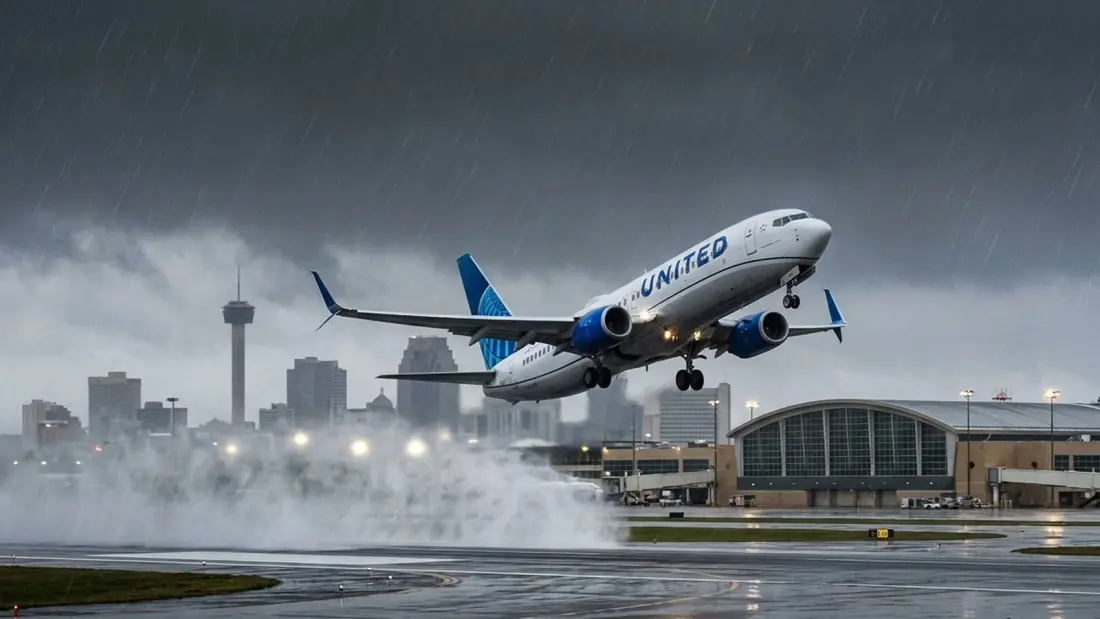
A short hop from San Antonio to Washington Dulles turned into a lesson in who really runs the show at 35,000 feet. United flight 471, a Boeing 737-700 scheduled to depart San Antonio International at 7:00 AM on a Friday in early November, was still taxiing to the runway when its crew pushed back on the routing air traffic control had just given them — because that routing pointed the aircraft straight through the worst of a severe thunderstorm.
Audio of the exchange, shared online by Aviation MP4, captures the captain querying the clearance. ATC's plan would have meant as much as four hours of rough weather — heavy rain and thunderstorms along the way, stretching what is normally a two-hour-45-minute flight by nearly an extra hour. Instead of accepting it, the crew said they would refuse the routing, consult United's dispatch, and asked to revert to an earlier plan that would have taken them south of the weather. Dispatch agreed: don't go through it.
That matters because the pilot in command, not the controller, holds the final authority over a flight's safety. Controllers propose clearances and flight paths, but captains can challenge them, request alternatives, and — in a genuine emergency — deviate from any clearance without asking first. In this case the system worked as designed: ATC re-evaluated the plan, dispatch backed the crew, and the jet was cleared on an alternative route. United later confirmed the flight landed safely, though the airline has not officially confirmed the exact date of the incident.
For travellers, there's a quiet reassurance in the story. When a flight takes an odd-looking detour or arrives late after skirting around weather, it's usually not a scramble or an oversight — it's a crew and an airline deliberately choosing the longer way round. Rough turbulence is rarely dangerous, but there's a difference between a bumpy patch and grinding through the core of a severe storm for hours, and crews are empowered to make that call even when it costs the schedule.
San Antonio itself remains one of United's better-connected Texas outposts: alongside the daily Dulles service, the airline and United Express fly nonstop from SAT to Chicago O'Hare, Denver, Houston Intercontinental, Newark and San Francisco. And if you're flying out of the region in storm season, a morning departure like this one is worth keeping in mind — early flights have the best odds of beating the afternoon thunderstorms that build over Texas and the eastern US in spring and summer.