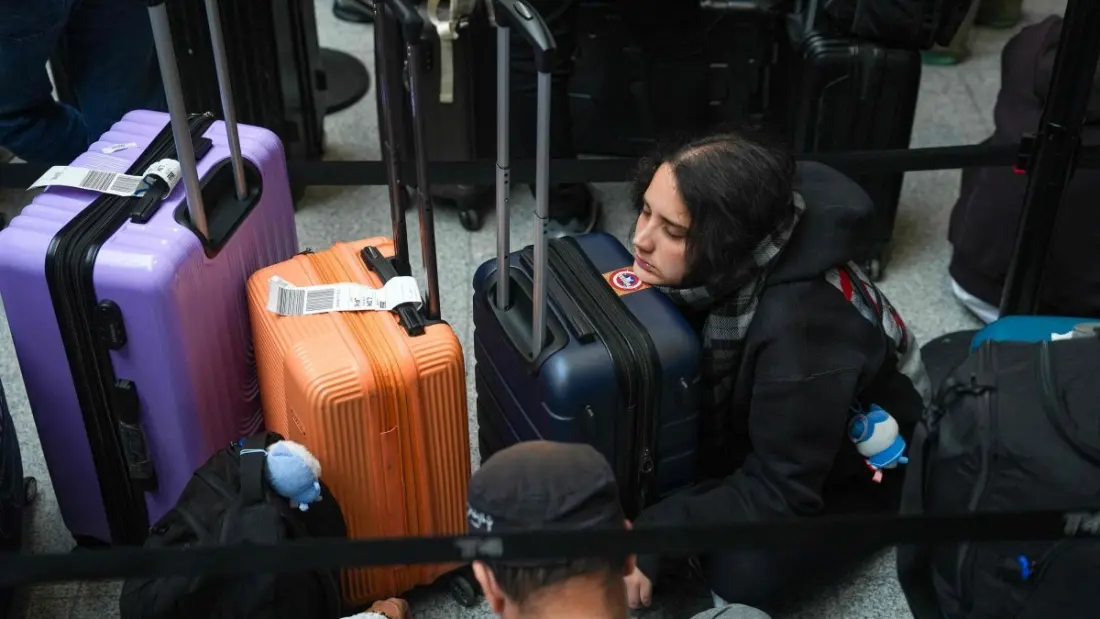
Anyone flying to, from or within the United States this week should build in some serious buffer time. US authorities warned on Sunday that the fallout from Friday's nationwide ground stop could keep disrupting flights into Monday, walking back earlier promises that things would be back to normal by the end of the weekend.
The mess began when botched upgrade work on air traffic control communication cables — old copper lines being replaced — forced the Federal Aviation Administration to halt takeoffs across the entire country on Friday. It was only the second time in US history, after the 9/11 attacks, that a full ground stop has been ordered over one of the world's busiest airspaces.
By Sunday morning, flight tracking site FlightAware had logged around 1,460 cancelled flights involving the US, and Transportation Secretary Sean Duffy acknowledged that getting planes and crews back into position would take longer than expected. "Probably fully normal tomorrow," he said, contradicting the FAA chief Bryan Bedford, who had predicted a Sunday recovery. Duffy also brushed off calls to resign, pointing to radar equipment dating back to the 1960s and appealing to Congress for $50 billion to modernise the system.
The political blame game kicked off quickly. President Donald Trump, breaking days of silence, pinned the debacle on his predecessor Joe Biden and urged Congress to fund an upgrade of the country's outdated air traffic control system. Democrats countered that his own party has controlled Congress for two years without doing so.
For travellers, the practical takeaway is simple: even once the technical fault is fixed, the knock-on effects linger. Aircraft and crews scattered across the country mean cancellations and delays can ripple for days after an incident like this. If you're booked on a US flight in the coming days, check your airline's app regularly, know your rebooking options, and consider travel insurance that covers disruption. Longer term, the episode is a reminder that America's aviation infrastructure is creaky — a factor worth weighing if you're planning tight connections through busy US hubs.