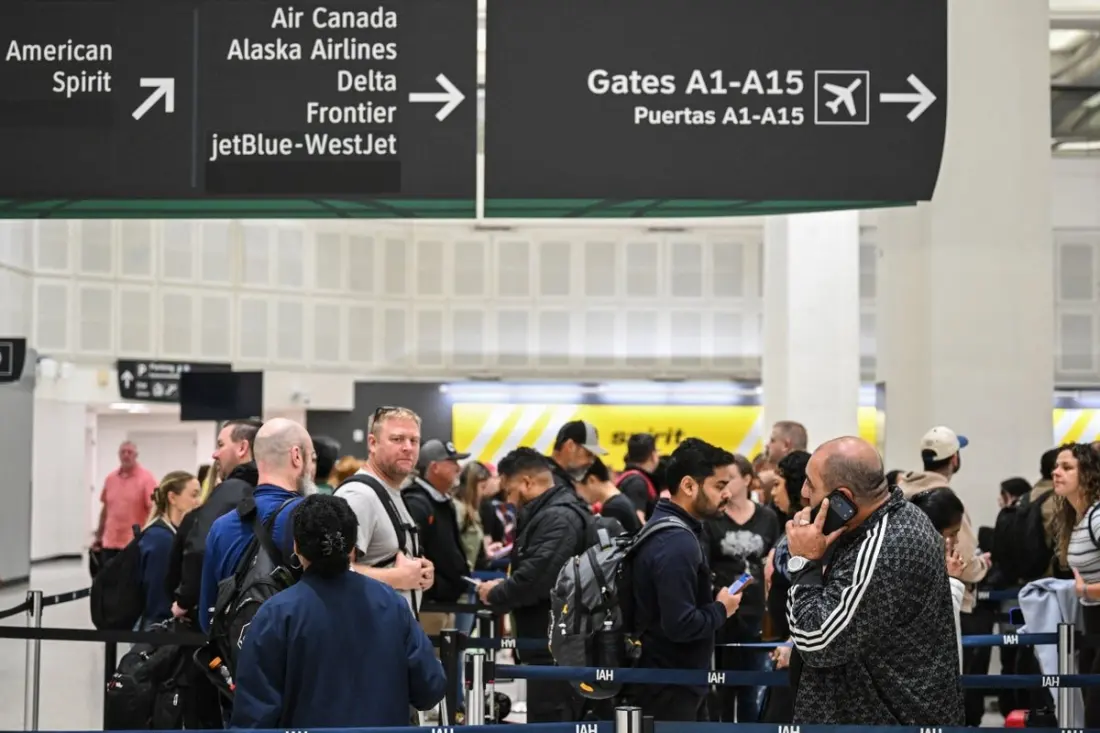
Roughly 9,500 flights were delayed or cancelled across the United States on Monday after a single telecom switch failed and workers accidentally sliced through a fibre optic cable in New Jersey — a one-two punch that knocked out the communications network the Federal Aviation Administration relies on to move planes.
The timing could barely have been worse. The outage hit at 9:45 a.m., just as 130 heads of state and dozens of foreign ministers were flying into New York for the UN General Assembly. Arrivals were suspended at all three of New York's major airports, two regional ones, Philadelphia, Washington Reagan and Boston. More than 100 flights diverted. The system took eight hours to fully recover.
Newark Liberty bore the brunt: over 600 cancellations — more than half the day's schedule — at what is one of United Airlines' main hubs. Things were mostly back to normal by Tuesday, though Newark still saw around 60 cancellations and 70 delays by mid-morning.
Transportation Secretary Sean Duffy has promised it won't recur, pointing to a rebuilt system with multiple telecom routes into every facility and no single points of failure. Whether that reassures travellers is another matter. A government report last week put the cost of telecom upgrades at $5.91 billion, up from $4.75 billion, and Congress has already earmarked $12.5 billion for modernisation. FAA Administrator Bryan Bedford says the antiquated copper phone lines still propping up parts of the network should be gone entirely by September 2027.
For anyone booking a US trip, the practical takeaway is that the American air traffic system is running on borrowed time until that work is done. A single cut cable in New Jersey can still ground the entire Northeast corridor. If you're flying through New York, Newark, Philadelphia, Boston or Washington — especially during big events like the UN General Assembly in September — build slack into your itinerary. Nonstop flights matter more than usual when rebooking queues stretch for hours, and travel insurance with delay cover is worth a look. Morning departures are also less likely to inherit the knock-on delays of an earlier meltdown.
The broader story is a system under repair but not yet fixed. Until 2027, expect incidents like this to make headlines — and expect your best defence to be flexible bookings, early flights and a plan B.