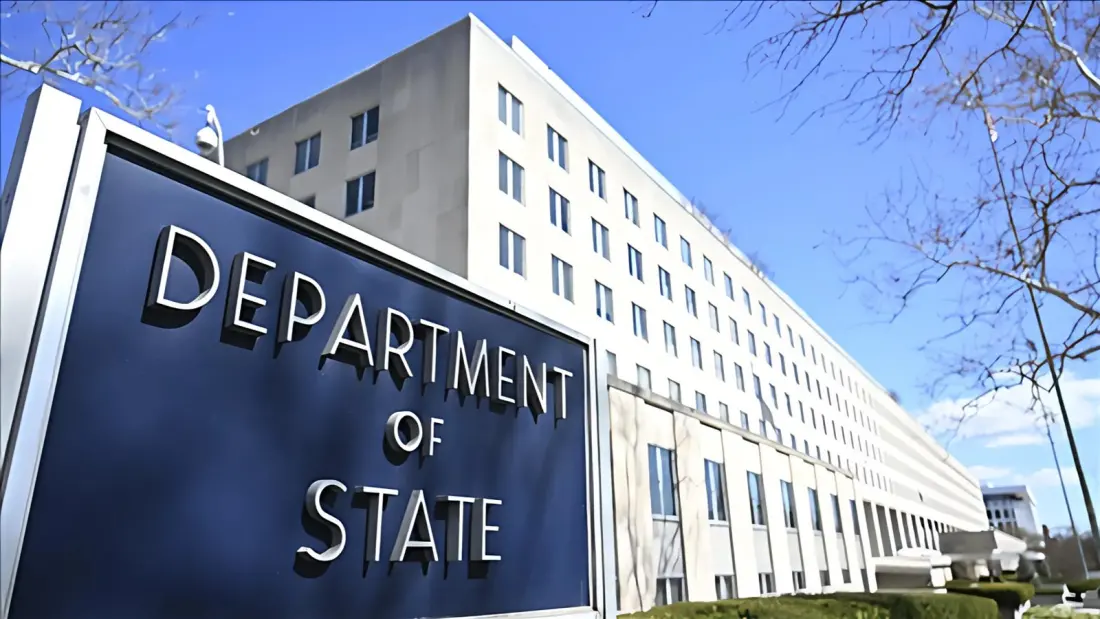
The US State Department has renewed its warning to American travellers about the Middle East, urging anyone planning to visit or pass through the region to seriously reconsider. The advisory, reissued on X on 19 September 2026, points to a "complex" security environment where an unforeseen escalation could trigger flight cancellations, airspace closures and wider travel disruption at short notice.
The catalyst for the latest reminder is a flare-up between Iran-backed Houthi rebels in Yemen and Saudi Arabia. The Houthis claimed missile and drone attacks on "sensitive" sites in Riyadh, announced just hours after flames and thick black smoke were seen above the Saudi capital's airport. In response, US government employees in Saudi Arabia now need special authorisation to travel to the cities of Taif and Yanbu.
The State Department's message goes beyond the immediate Saudi-Yemen flashpoint. It warns that the conflict could escalate rapidly, that US diplomatic facilities have been targeted both inside and outside the region, and that Iran-aligned groups may target American interests and associated businesses worldwide. The warning also tells Americans already in the region to keep a close eye on airport and airline operations, since routes and schedules can change with little or no warning.
In practice, much of this advice isn't new. The Middle East has sat under elevated US travel advisories since the US-Israel war on Iran broke out in late February. Iran, Iraq, Lebanon, Syria and Yemen carry the red "do not travel" designation, while Bahrain, Israel, the West Bank and Gaza, Jordan, Kuwait, Oman, Qatar, Saudi Arabia and the UAE are at orange "reconsider travel" level. The government has refreshed the message every few months, particularly as airspaces across the region have gradually reopened.
The geopolitical temperature makes the renewals feel warranted. President Donald Trump has again threatened to destroy Iran in a Fox News phone call, and Iran's military command has said any new assault would be answered with strikes on US bases, interests and allies.
The numbers show how hard tourism has been hit. Dubai International Airport saw passenger traffic drop 31.3% year-on-year in the second quarter of 2026, while aircraft movements across the wider Middle East fell 32.1% over the same period. International tourism growth globally slowed to just 0.4% in the first half of the year, with the Middle East conflict, elevated oil prices and stubborn inflation all weighing on demand and pushing up travel costs.
For travellers, the practical takeaway is straightforward: if a Middle East trip is on your list for the near term, check your government's latest advisory for each specific country rather than treating the region as one block, book flexible or refundable fares, and have a backup routing in case an airspace closes. Travellers of other nationalities should look for similar guidance from their own foreign ministries, as allied governments often tighten advice in step with Washington.