
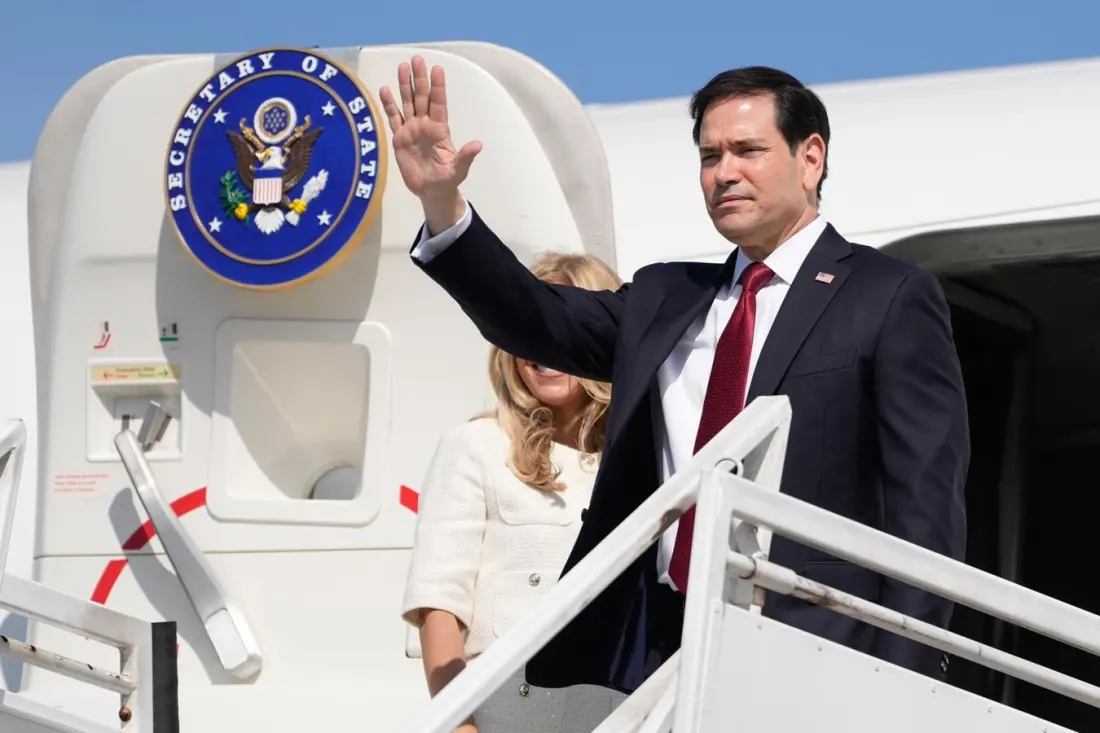
Washington has rolled out a fresh round of sanctions against South Africa, this time in the form of travel restrictions. US Secretary of State Marco Rubio announced that visas will be revoked or denied for foreign nationals deemed responsible for, or complicit in, policies the Trump administration says enable uncompensated land seizures, race-based discrimination and incitement of violence against minority groups. No named officials have been singled out so far, though a lobby representing white minorities has previously pushed for action against figures in the African National Congress, the party of President Cyril Ramaphosa.
South Africa's government has pushed back hard, dismissing the allegations as baseless and the product of misinformation. The dispute has been building since Trump returned to office, with Washington pointing to a contentious law allowing expropriation of unused private land without compensation in some cases, affirmative action policies, and a small number of violent crimes against white farmers as evidence of a broader anti-white stance. Pretoria rejects that framing outright.
The numbers matter for context: South Africa's white population is roughly 4.5 million out of 62 million people, and Afrikaners — descendants of 17th-century Dutch and French settlers — were the group at the centre of the apartheid system that ended in the 1990s. The current tensions also have a geopolitical layer: the US has been sharply critical of South Africa's genocide case against Israel at the International Court of Justice.
This is not an isolated measure. During Trump's second term the US has already barred South African officials from G20 meetings held in America, begun phasing out aid for South Africa's HIV treatment programme, and set up a refugee pathway for Afrikaners based on claims of a humanitarian emergency that South Africa disputes. The US ambassador's official account has signalled that the visa policy is merely "the first step" in further escalatory measures.
For travellers, the practical picture is unchanged for now: these measures target specific officials and government policy, not tourists. South Africa remains open to visitors from the US, UK and Europe as before, and there is no travel advisory against tourism. What's worth watching is the broader relationship — if sanctions escalate, the ripple effects could show up in areas like flight routes, currency swings (the rand is sensitive to political news) and the cost of trips. Anyone with a safari, Cape Town or Garden Route trip on the books should keep an eye on exchange rates rather than worry about entry rules. For South Africans hoping to visit the US, ordinary tourist visa processes are unaffected for now, though the political temperature is clearly rising on both sides.
The takeaway: this is a diplomatic fight between governments, not a crackdown on visitors. South Africa's tourism industry — one of the country's key employers — continues to welcome international travellers, and the country's national parks, winelands and coastal routes are as accessible as ever. Follow the story if you have trips planned either direction, but don't let headlines rewrite your itinerary.