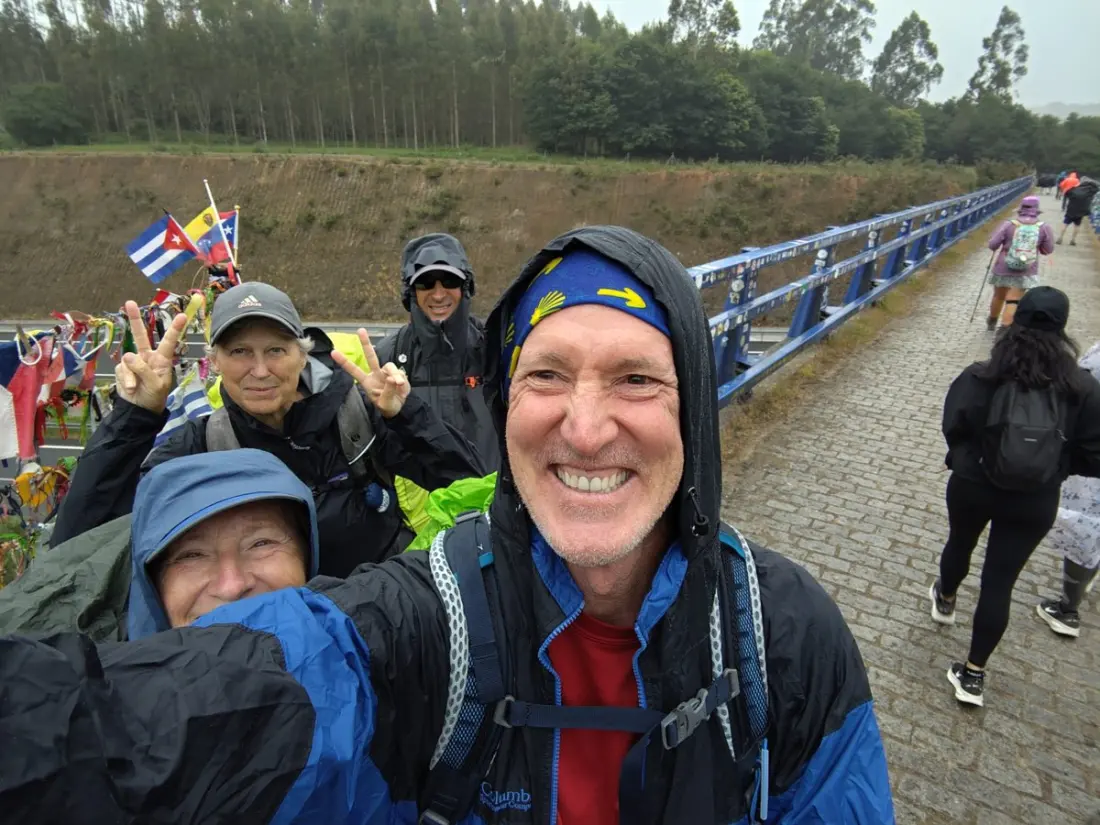
A coast-hugging bus ride, tearful hugs at a bus station, and a late Burger King run: that's how one pair of long-distance hikers wrapped up the Santiago leg of their Camino before flipping the map upside down.
The couple had logged 545.6 miles by the time they reached Finisterre, the traditional 'end of the world' finish point west of Santiago de Compostela. With them was their 'tramily' — trail family, in thru-hiker speak — a group that had formed over the weeks of walking. From Finisterre, the whole crew boarded a local bus back to Santiago. The route covers only about 60 miles, but it took over three hours as the bus wound along Galicia's coastal cliffs, stopping in nearly every small town. Waves crashed far below; in places the drop to the ocean was guarded by nothing more than a low stone wall. Some passengers found it thrilling, others spent the ride fighting carsickness.
In Santiago came the farewell. Their friends were heading east to explore Europe by train and bus; our hikers pointed south, toward Porto, Portugal — walking against the flow of virtually every other pilgrim on the trail. That's the quirk of this final leg: all the yellow arrows and scallop-shell markers point northbound toward Santiago, so walking the 'wrong way' means constant map-checking and frequent course corrections. Anyone considering a southbound Camino segment should budget extra attention for navigation.
Their two-week plan samples the region's variety: first the Portuguese Central Route, then three days on the Spiritual Variant (Variante Espiritual), and finally the Coastal and Littoral Routes along the Atlantic. Since they didn't have time to walk all the way to Porto, they'll hike as far south as possible, bus into the city for a rest day, then fly home via Paris.
Day one of the southbound push took them five miles to Millandoiro, a modern, comfortable suburb of Santiago. Their hotel felt upscale for the price, and an evening grocery run turned into a small revelation: a supermarket inside a local mall with a dedicated kitchen area — tables, microwaves, utensils — where they heated prepared meals. A minor miracle for tired legs, and a handy tip for pilgrims staying anywhere with a similar setup.
Why does this matter to a regular traveller? It shows the Camino isn't a single fixed route. Once you reach Santiago, you can keep going — west to Finisterre and Muxía, or south into Portugal on a mix of inland, spiritual, and coastal variants. You can also stitch pieces together on a two-week window without committing to the full month-plus classic. Expect affordable lodging, easy waymarking if you go the standard direction, and a social scene where strangers become family within a week or two.
One practical note from the story: trail food can be a lottery, especially burgers. Sometimes the first meal after the trail is a predictably ordinary fast-food chain — and after 545 miles, that's exactly what you want.
Credit: The Trek