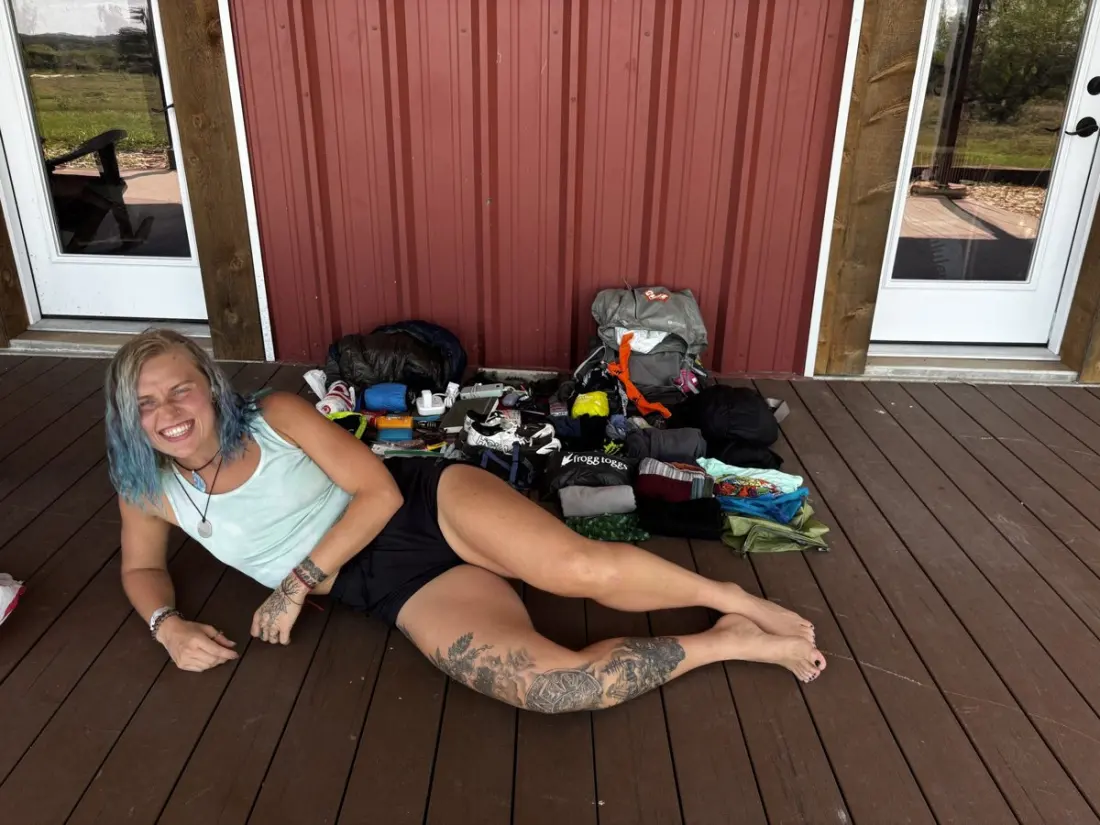
When a seasoned Appalachian Trail thru-hiker started planning the Camino de Santiago, the instinct might have been to shave every gram. Instead, Marley Kreiser's kit comes in at a base weight of 23.4 lbs (about 25.6 lbs worn and all) — deliberately heavier than an ultralight setup, and for good reasons that hold real lessons for anyone planning a long walk in Spain.
The key insight: the Camino isn't the AT. The Appalachian Trail demands self-sufficiency — shelter, cooking gear, food storage — because you're living in the woods. The Camino threads through towns and villages the whole way, with pilgrims sleeping in albergues (hostel-style bunkhouses) and eating in cafés and grocery stores along the route. You don't need a kitchen; you need a sleeping bag liner, ear plugs for snoring dorm-mates, and a quick-dry towel.
Kreiser's approach rests on a few practical principles. First, reuse before replace: her Gossamer Gear Mariposa pack (mouse-chewed but functional) and Enlightened Equipment Revelation quilt came straight from the AT, saving thousands. Second, budget matters — the trip was decided just three months out, so savings went toward fresh baguette, local wine, and bunks rather than new gear. Footwear is a mix of Hoka Speedgoat 7 trail runners and Xero Shoes sandals, with Injinji liners and Darn Tough socks for blister prevention.
The interesting part is what an AT hiker would never carry: a laptop, a journal, an oracle card deck, and a set of "hippie town clothes" — harem pants and a tank top that feel like herself. That's because this Camino isn't the endpoint. There's no return ticket. The plan is to keep travelling — maybe staying in Spain, maybe backpacking Europe, maybe studying holistic medicine in Asia — so the pack doubles as a travel kit, with European adapters, a power bank, an extension cord, passport copies, and €150 in emergency cash.
Why should this matter to you if you're eyeing the Camino? Because it's a realistic template. Pilgrims routinely overpack for a route where anything forgotten can be bought in Spain. The essentials that actually earn their weight: a sleeping bag liner (many albergues require or strongly suggest one), quality socks and blister care (KT Tape, needle and thread), ear plugs, a lock for hostel bunks, rain gear, and a power bank for charging wars at crowded bunks. Creature comforts are allowed — just choose ones that genuinely keep you sane on a 500-mile walk.
The framing is charming, too: Kreiser calls it the "acoustic version" of backpacking Europe — stripped down, nothing extra, but everything essential still there. For first-time long-distance walkers, that's the real takeaway. Pack for the trip you're actually taking, not the one gear forums say you should.