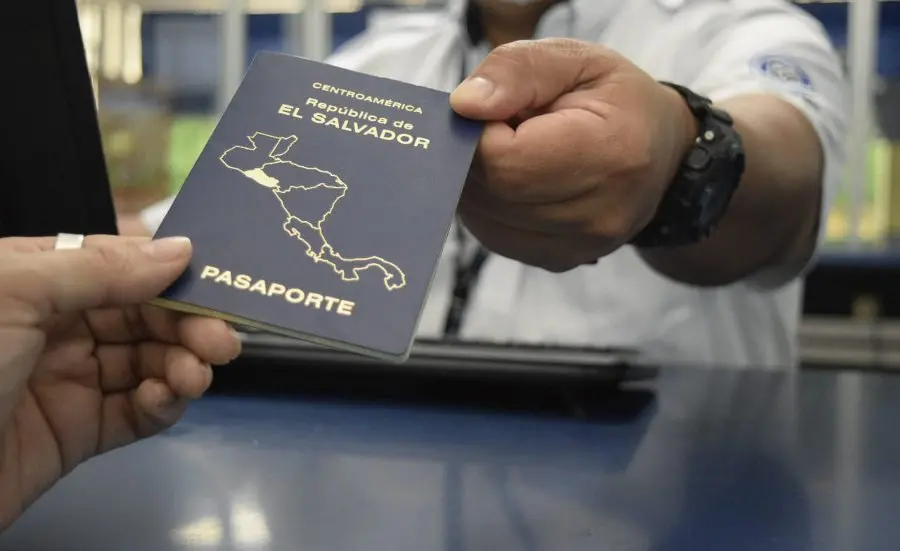
El Salvador's passport currently sits 36th in the Henley Passport Index, letting holders reach 129 destinations without arranging a visa in advance. That's a solid mid-table position globally — and it puts the country right in the middle of the Central American pack, just behind Guatemala (35th, 130 destinations) and ahead of Honduras (37th, 128). Costa Rica and Panama lead the region at 28th and 29th respectively, while Belize trails far behind at 51st with only 99 visa-free destinations.
The ranking has shifted around in recent years. El Salvador held 39th place in 2023 and 2024, climbed to 35th in 2025, and the mobility score has hovered in the low 130s. One thing worth understanding: a passport's rank isn't just about what its holders gain. Because scores are shared across many passports, El Salvador can drop a few spots even if its own access doesn't change — simply because other countries added new visa-free deals.
The index itself, published by Henley & Partners, is built on IATA data and its own research, covering 199 passports against 227 destinations. It's updated monthly, and every destination reachable without a pre-arranged visa adds one point. Note the fine print: visas on arrival and electronic travel authorisations count toward the score, but traditional visas and e-visas requiring advance government approval do not.
For Salvadoran travellers, the practical picture is fairly broad. Europe's Schengen area — Spain, France, Italy and the rest — is open without a pre-arranged tourist visa, as are Latin American heavyweights like Argentina, Colombia and Brazil. Within Central America, the CA-4 agreement means most adults can cross into Guatemala, Honduras and Nicaragua using just their national ID card (the DUI), no passport needed.
Why does this matter? Because for Salvadorans, travel is often personal — family spread across the United States, Spain, and elsewhere means trips home for weddings, graduations and reunions are a regular part of life. Every country that drops its visa requirement cuts both the cost and the admin of those trips. The same goes for students, entrepreneurs and anyone heading abroad for work. The caveat, of course, is that visa-free access is an invitation, not a guarantee: border officers can still refuse entry, and a tourist stamp never grants the right to work or live abroad.
If you hold a Salvadoran passport and you're planning a trip, the takeaway is simple: check the current entry rules before you book, since the list of visa-free destinations changes as countries update their policies. For everyone else, it's a useful snapshot of how Central American travel freedom compares — strong in Costa Rica and Panama, competitive in the northern triangle, and still improving in Nicaragua and Belize.
Original source: El Salvador Info