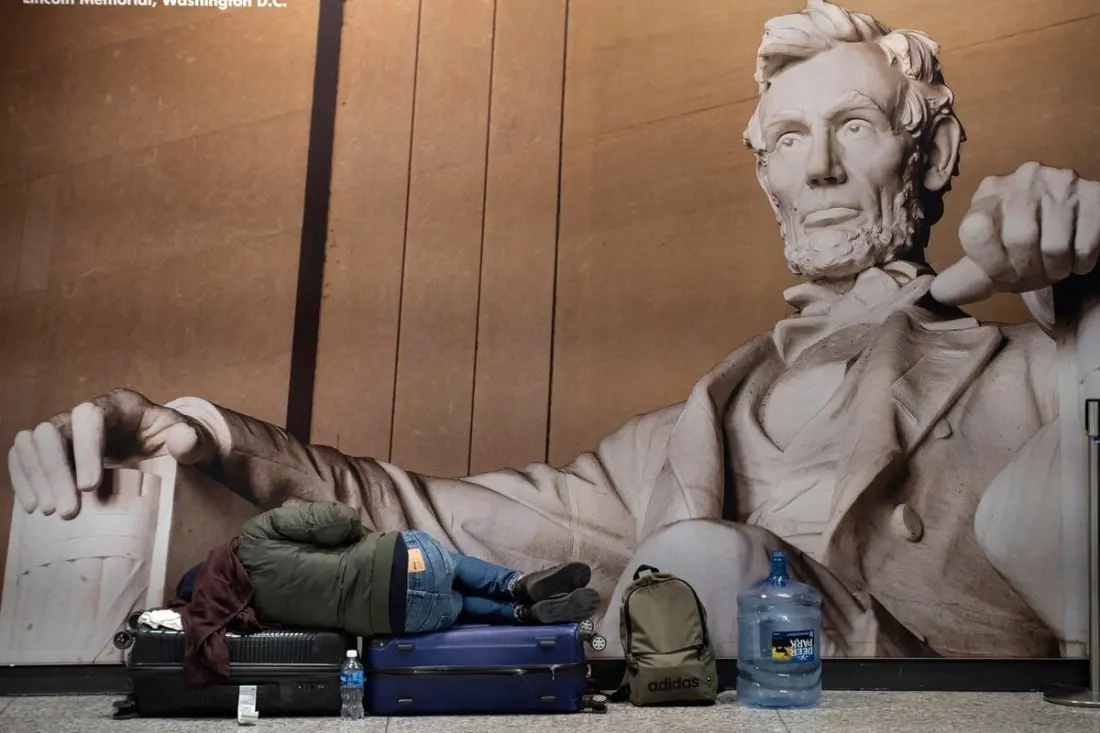
A four-hour flight outage doesn't sound catastrophic until you do the maths. One couple flying from Jacksonville to Chicago for their anniversary ended up spending $400 on an Uber from Detroit — a four-hour drive — after their rebooked flight and a hotel night became pointless. Angelina and Kyle Phoenix didn't get their checked bags until midnight, by which point driving made more sense than flying. They're not alone: up to a million travellers were caught in the same ground stop, and the costs radiated well beyond airfares.
The practical fallout looked like this across US airports: emergency childcare, eye-watering taxi fares, abandoned holiday rentals, and luggage stranded in terminals with no announcements about which carousel held which cancelled flight. William Ware, a 24-year-old flying home to Chicago to look after his young child, got stuck in gridlocked traffic outside LAX, missed his flight, and could only find a hotel in Long Beach — more than 20 miles away. His rebooked ticket might be refunded. His lost day with his kid won't be.
And that's the number nobody can reimburse. The FAA itself values passenger time at roughly $66 an hour, and a Federal Reserve economist estimated last year's 43-day government shutdown produced about a million extra hours of delays at six airports, worth around $66 million. The International Air Transport Association says delays have been growing faster than flight schedules since the pandemic, costing airlines and passengers about $10.9 billion between 2015 and 2025.
What made this week worse was the pattern. Even as travellers were still dealing with the ground stop, United Airlines halted flights for 90 minutes after a separate malfunction, and major US banks reported slowdowns — days after Microsoft's global IT meltdown. Officials blamed a faulty router and ageing infrastructure; Transportation Secretary Sean Duffy suggested the shutdown could cost billions. But plenty of passengers aren't buying it. One Philadelphia traveller said he was told his nine-hour delay was down to "a hole in the tire", and many interviewed said they wanted more believable answers.
The wisdom circulating on social media is worth taking seriously for your next trip: buy travel insurance, avoid checking a bag when you can, keep cash and charging options handy for the moment a four-hour drive beats the rebooking queue, and be decent to airline and airport staff — they're as much in the dark as you are. Mostly, though, the advice is acceptance. In a ground stop, almost nothing is within your control, and the travellers who coped best were the ones who stopped fighting it early.
For anyone flying during peak US travel weeks — this all unfolded just ahead of Thanksgiving, when the TSA screens more than two million passengers a day — the lesson is to build slack into your plans and know what a fallback costs before you need one.