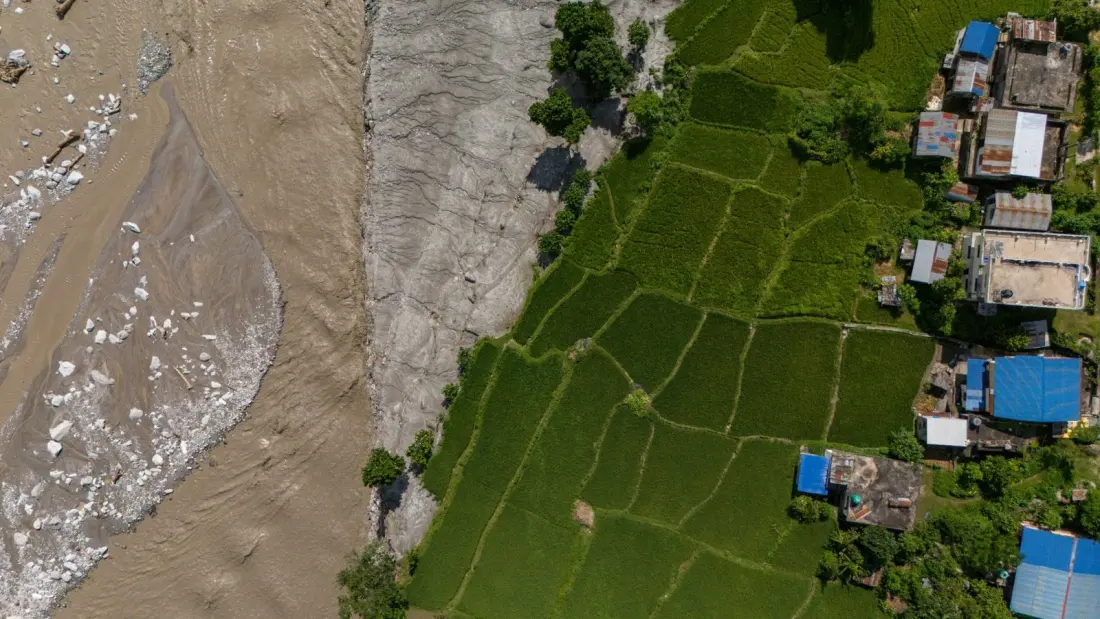
On 8 July 2025, a flood surge from the Purepu Glacier on the Chinese side of the Himalaya tore through Nepal's Rasuwa district, destroying the border bridge at Rasuwagadi, killing or leaving missing at least 28 people and wrecking 60% of the Timure dry port — a Rs2.8 billion trade facility that was 81% complete. The bridge was rebuilt quickly. The dry port was still under repair when the valley flooded again.
Reporting by Nepali Times argues the damage is about more than freak weather. For centuries, Tamang communities in the Trisuli Valley farmed rice on the flat land near the river and built their homes higher up the slopes — a layout that quietly managed flood risk. Over the last 70 years, that pattern has been inverted. Roads pushed through river valleys because they're the cheapest routes; houses, shops, warehouses and border infrastructure followed the tarmac; and settlement now clusters exactly where the water goes when the mountains shed it.
Nepal is a striking case of climate injustice: it contributed almost nothing to the warming destabilising the Himalayan watershed it depends on, yet it keeps losing bridges, trade routes and lives faster than it can rebuild them. The World Bank has offered Rs25 billion in emergency assistance and the government is mobilising about Rs20 billion more. But the deeper question, the report argues, is whether that money will simply restore the same floodplain corridors that failed — or change how and where development happens. The benefits of these corridors flow to traders, contractors and consumers far away; the losses land on the shopkeeper in Timure, the porter at the truck park and the family on the cheapest land.
For travellers, this matters in practical terms. The Rasuwa route is the main overland crossing between Kathmandu and Tibet, and monsoon-season closures here are no longer rare events but recurring ones. Anyone planning overland travel in Nepal's hill districts between June and September should expect disruption, check road status locally, and treat riverside lodges and highway stops with the same caution the article urges for planners. The monsoon is when these valleys are at their greenest — and at their most dangerous.
There's also a slower change worth watching: if reconstruction funds push Nepal to rethink building along floodplains, the look and rhythm of travel through the Trisuli corridor — and highway valleys across the country — could shift over the coming decade. For now, the advice is simple: enjoy the mountains, but give the rivers room.