
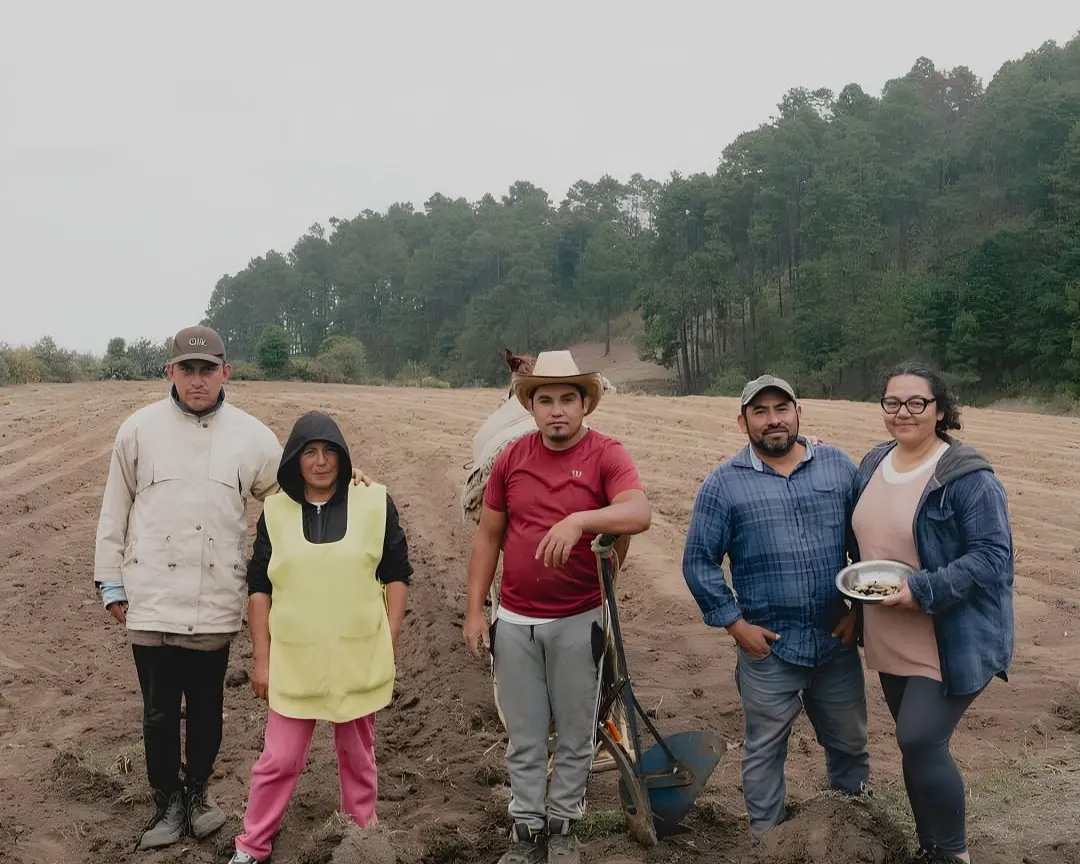
The highlands outside Villa del Carbón, a small town northwest of Mexico City in the State of Mexico, look unremarkable at first glance: small plots of corn climbing steep volcanic slopes, tended by families who plant, harvest and save seed the way their great-grandparents did. But these fields are guarding something extraordinary. Mexico is the birthplace of maize, domesticated around 10,000 years ago from a wild grass called teosinte, and this is one of the regions where native corn varieties are still grown the traditional way.
Mexico's connection to corn runs deeper than agriculture. The poet Ramón López Velarde opened his famous poem Suave Patria by describing his country's surface as "made of corn," and the Maya held that the gods fashioned humankind from corn dough. At the peak of Mesoamerican civilisation, the country likely hosted hundreds of native corn breeds, known as landraces — locally adapted varieties shaped over centuries by farmers saving and selecting seed. Experts today count 64 landraces nationwide, 59 of them native to Mexico, the highest maize diversity anywhere on Earth.
That diversity is under real pressure. Industrial agriculture and globalised food systems favour a handful of uniform hybrid varieties, and native corn is losing ground. Family farmers in places like Villa del Carbón are the last line of defence, relying on ancestral knowledge — when to plant, which seeds to save, how to read increasingly erratic weather on high-altitude fields. Climate unpredictability has made an already demanding practice riskier: native varieties are adapted to local conditions, but those conditions are shifting.
Why should a traveller care? Because corn in Mexico isn't a commodity — it's the backbone of the entire food culture. The tortillas, tamales, tlacoyos and atoles you eat are only as varied as the maize behind them. Nixtamalisation, the ancient process of treating corn with alkaline solution that makes it nutritious, produces completely different flavours depending on the landrace used. Every variety that disappears narrows what ends up on your plate.
For food-focused travellers, the area around Villa del Carbón and nearby mountain towns in the State of Mexico offers something increasingly rare: a chance to taste landrace corn in milpa country, where corn is grown alongside beans and squash as it has been for millennia. Rural tourism initiatives and cooking experiences centred on native maize are growing across central Mexico, from market visits in Toluca to traditional cooking classes closer to the capital. Supporting them — eating at small family fondas, buying locally grown heirloom corn products, visiting regional markets — puts money directly toward the farmers keeping these varieties alive.
It's also a reminder to eat thoughtfully when you travel in Mexico. Seek out tortillas made from native corn rather than industrial masa, ask where the maize comes from, and try regional specialties tied to specific local varieties. A simple street quesadilla can be a direct link to 10,000 years of farming history — as long as the fields that produced it survive.
This story was reported in depth by Roads & Kingdoms.