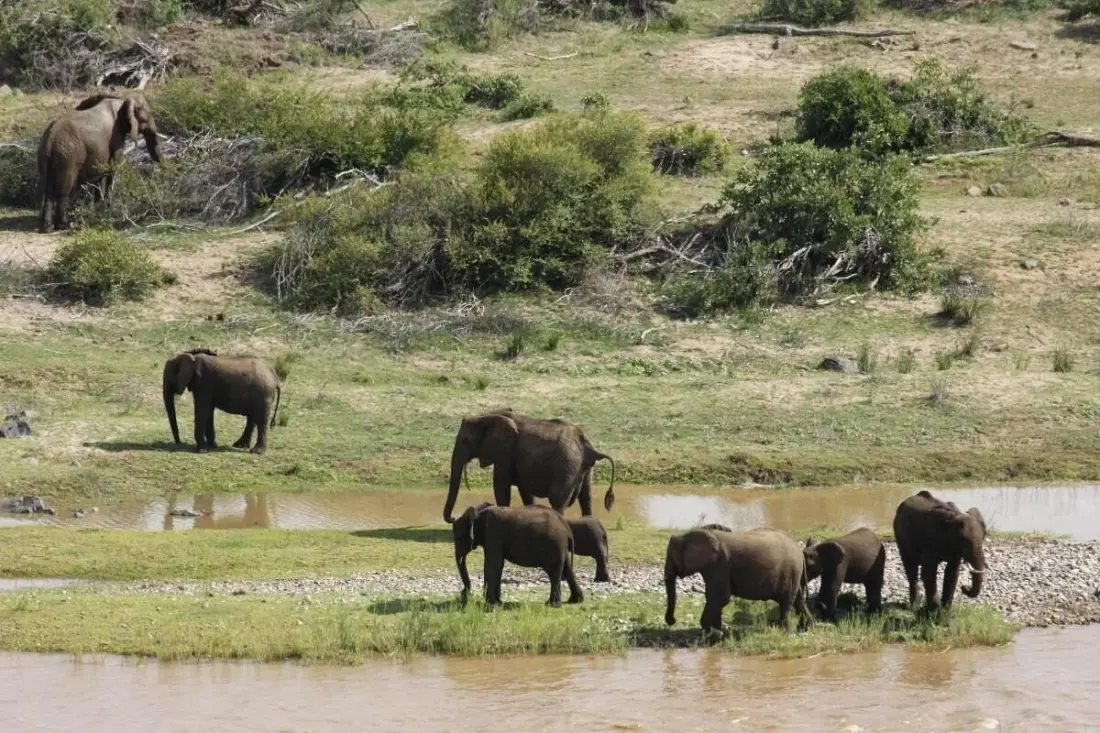
Seeing an elephant in Kruger National Park isn't hard - the reserve holds herds from the southern bushveld right up to the mopane woodlands near the northern border. But knowing where to point the car makes the difference between one distant sighting and a full day of memorable ones.
Start in the south with the H4-1 between Skukuza and Lower Sabie. It's Kruger's most famous game-viewing road, tracking the Sabie River through riverine vegetation where elephants share the water with hippos, buffalo and predators. The Nkuhlu Picnic Site makes a good mid-route stop.
For a more elevated vantage point, head to Olifants Rest Camp, which sits high above the Olifants River. The viewpoints around the camp are worth lingering at, especially when animals are drawn to the water. It's not just elephants either - crocodiles and plenty of birdlife use the river system.
Further north, the Letaba River area around Letaba Rest Camp consistently delivers. The S47 road follows the river past Mingerhout Dam, a reliable spot for elephant activity, and the H1-6 between Letaba and Mopani crosses the river at a bridge worth checking.
The same H1-6 leads to Mopani Rest Camp, a base for the quieter northern section of the park. Elephants are commonly found here, and you'll share the roads with far fewer vehicles than in the busy south.
Keep going to Shingwedzi: the S50 route along the Shingwedzi River towards Kanniedood Dam is one of the better bets when water is scarce elsewhere, with elephants and other game concentrated along the river.
Timing matters. Elephants are in the park year-round, but the dry winter months concentrate everything around rivers, dams and waterholes - which makes finding them much easier. Build your drives around early mornings and late afternoons, when animals are active. In the midday heat, expect elephants to be dozing in shade or standing in water.
One final note: these are wild, powerful animals. Stay inside your vehicle, never block a road or try to attract an elephant with food or noise, and if one comes close, stay calm and follow park officials' instructions. No photograph is worth it.
Kruger's rest camps let you string these areas together on a self-drive itinerary over several days, which is really the best way to do it - arrive, stock up, and let the river routes dictate your days.