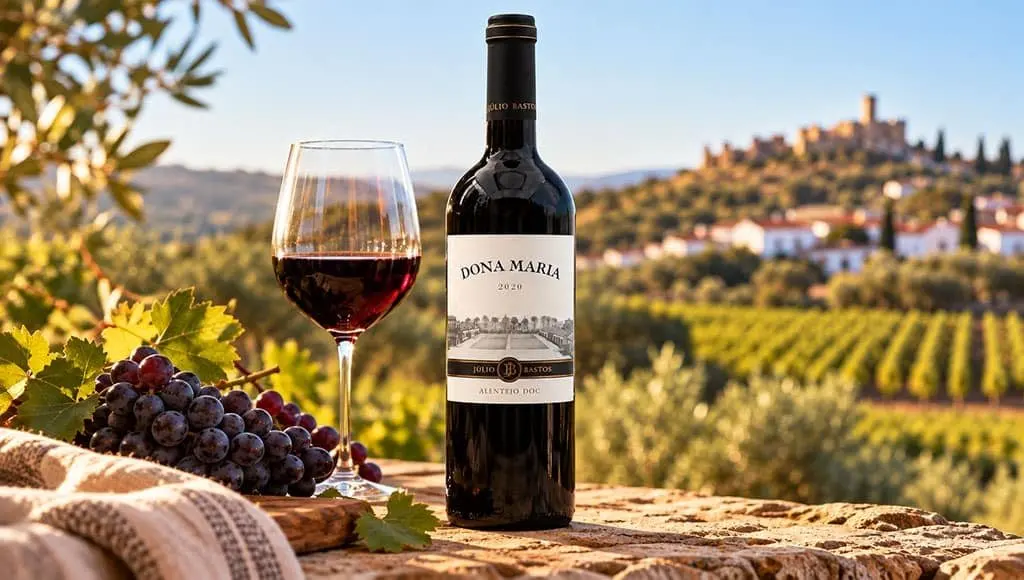
A bottle like Dona Maria Tinto 2022 is a good entry point into Portuguese wine for anyone who finds the country's native grape names intimidating. The wine blends Touriga Nacional — Portugal's signature red variety — with three grapes most drinkers already know from France: Alicante Bouschet, Cabernet Sauvignon and Syrah. The result is a full-bodied, approachable red aged six months in a mix of French and American oak, showing plum and dried fruit, leather, smoke and dried herbs, with firm tannins that give it real structure. It's best served at 16–18°C, and it retails at Apolónia for €11.95 — solid value for a DOC-level wine.
The interesting part is what the label tells you about how Portuguese wine works. DOC stands for Denominação de Origem Controlada, Portugal's top classification, and each DOC writes its own rulebook covering permitted grapes, winemaking methods and ageing. Some regions restrict their DOC wines to traditional varieties to protect local identity. Alentejo takes the opposite approach and allows international grapes alongside its own.
That openness has paid off. Warm-climate-friendly French varieties have helped Alentejo producers win over international buyers and grow exports steadily over recent decades. For visitors, it means you can order a DOC Alentejo red that tastes familiar yet still distinctly Portuguese — a gentle bridge into the wider world of Portuguese grapes, where names like Trincadeira, Aragonez and Alfrocheiro await once your confidence builds.
Alentejo itself is worth the trip beyond the glass. It's Portugal's largest wine region, a broad interior plateau of olive groves, cork oaks and whitewashed hill towns, producing reds that are riper and rounder than the leaner styles you find closer to the Atlantic coast. Wine tourism here is more low-key than in the Douro or Alentejo's flashier neighbours: family estates, unhurried tastings, and prices that rarely make you wince. If you're holidaying in the Algarve, note that the Apolónia supermarket chain — where this bottle is stocked — is a reliable source of Portuguese wines at honest prices, so you can taste your way through the country's regions without leaving the coast.
For travellers, the takeaway is simple: if you're unsure where to start with Portuguese wine, pick a blend you half-recognise. A wine like this one pairs well with grilled meats, hearty stews or a plate of aged cheese, and it costs about the same as a glass of wine back home in many cities. Once you've calibrated your palate, move on to the single-varietal Touriga Nacionals that made Portugal famous — the same grape, just with the training wheels off.
Story via Portugal Resident.