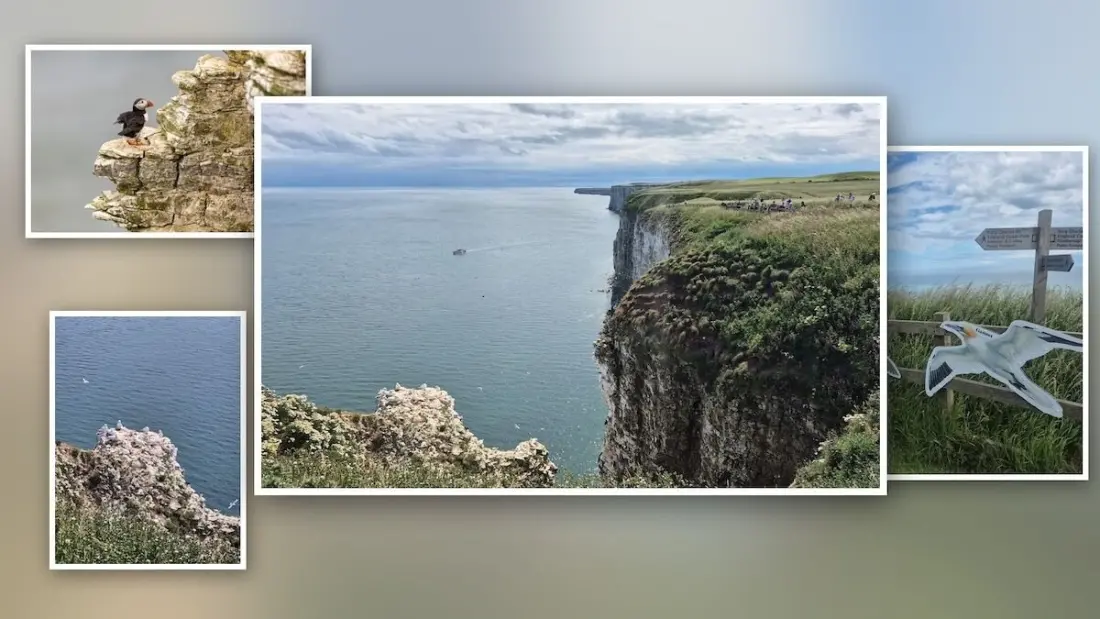
On the chalk cliffs of Yorkshire's east coast, roughly half a million seabirds crowd the ledges each spring and summer. Atlantic puffins are the headline act — about 1,500 breeding pairs nest here — and Bempton Cliffs, run by the RSPB, is widely considered the most accessible place in England to watch them. Peak puffin season runs May to June, though the cliffs stay busy from March to August with gannets (England's only mainland colony), kittiwakes, guillemots and razorbills all in residence.
What makes Bempton worth more than a quick photo stop is how it works. The RSPB is a conservation charity that grew out of a Victorian campaign against feathers in fashion, and its 220 UK reserves — over 170 open to the public — are funded by memberships, donations, grants and visitor income. Your entry fee and shop purchases feed straight back into habitat work. Volunteers are the backbone: around 12,000 people give their time, including the sharp-eyed spotters on the clifftop who'll happily point a beginner's binoculars at the right ledge. Puffins, with their 20-inch wingspan and habit of nesting in crevices and burrows, are genuinely tricky to find alone.
The reserves have form when it comes to conservation wins. Minsmere in Suffolk was set up in 1947 after avocets — absent as breeding birds for a century — returned to wartime-flooded pastures, guarded by ex-soldiers under Operation Zebra; the bird now features in the RSPB's logo. At Loch Garten in Scotland, volunteers ran round-the-clock protection for nesting ospreys from 1954, drawing 14,000 visitors in under two months.
Puffins need that kind of help now. Climate change and overfishing have landed them on the UK's Red List of conservation concern, alongside 69 other species, and one in six UK species faces extinction. A bright spot: the 2024 ban on industrial sandeel fishing, following a 25-year campaign, could see puffins and kittiwakes downgraded to Amber.
For travellers, the practicalities are refreshingly easy. Bempton is one of the rare nature reserves you can reach without a car — the station is about a mile's walk from the cliffs, and you can break the journey at Filey or Bridlington for fish and chips. Marked trails, viewing platforms and hides let you watch without disturbing the birds, and the RSPB runs regular events from guided walks to binocular open weekends aimed at complete beginners. Visitor numbers hit 135,561 in 2025, up 18% on the previous year, which is good news for the cafes and guesthouses in this quiet corner of England. Partnerships like the one with Holiday Cottages, which restores a square metre of woodland per booking, extend the conservation loop further.
Even in winter, when the puffins are long gone out to sea, the cliffs hold their own appeal — the camaraderie of shared binoculars, the roar of the North Sea, the sense of a place worth returning to. For anyone who wants their holiday to leave things slightly better than they found them, this is about as straightforward as it gets.