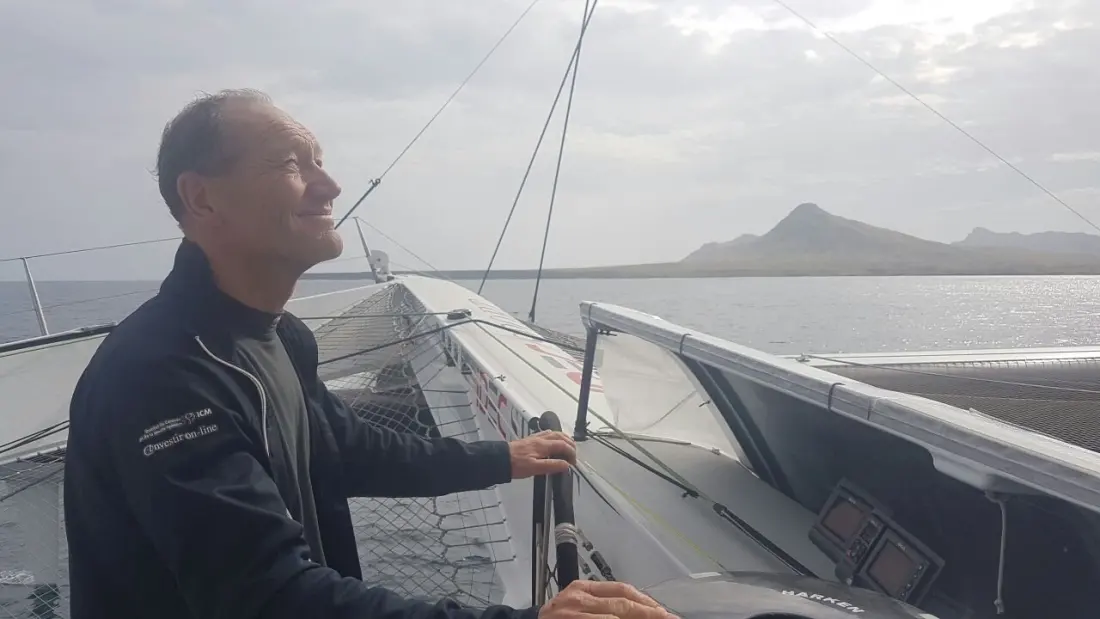
One of ocean racing's most famous names has had a scare in one of its most storied races. French offshore sailing legend Francis Joyon capsized on Monday 2 November in his 60-foot ORMA trimaran, roughly south-west of Ireland, while racing in the vintage Multihull class of the 2026 Route du Rhum. Reports say the veteran skipper is safe and well, with a rescue operation underway to reach him.
Joyon is a giant of the sport. He won the 2018 edition of the Route du Rhum outright, taking line honours on the giant Ultime trimaran IDEC Sport in one of the race's most dramatic finishes. Seeing him in trouble in a much older boat is a sobering moment for anyone who follows the transatlantic classic from Saint-Malo to the Caribbean.
The incident also puts the spotlight back on the ORMA 60 class, the fearsome trimarans he was sailing. Through the 1990s and early 2000s these boats were the stars of offshore grand prix racing — blisteringly fast, fiercely contested and utterly thrilling to watch. But their extreme power-to-weight ratio left tiny margins for error, and capsize after capsize followed. The punishing 2002 Route du Rhum was the turning point: a string of high-profile structural failures scared off sponsors, insurance premiums soared, and by the late 2000s the class had effectively vanished from the circuit. Joyon's capsize is a reminder of why.
Why should a traveller care? The Route du Rhum is one of the great fixtures of the sailing calendar, and its bookends are both fantastic trips. The start from Saint-Malo, usually in early November, draws huge crowds to the Brittany walled city for a week of festivities in the race village, while the finish in Pointe-à-Pitre, Guadeloupe, turns the Caribbean island into a party. And the vintage multihull class has become a beloved part of the modern race, giving these old rockets a second life and fans a chance to see machines that defined an era.
For now, the focus is on Joyon's rescue — but his capsize is a vivid reminder that even the most seasoned sailors are at the mercy of the Atlantic, in boats that were always living on the edge.