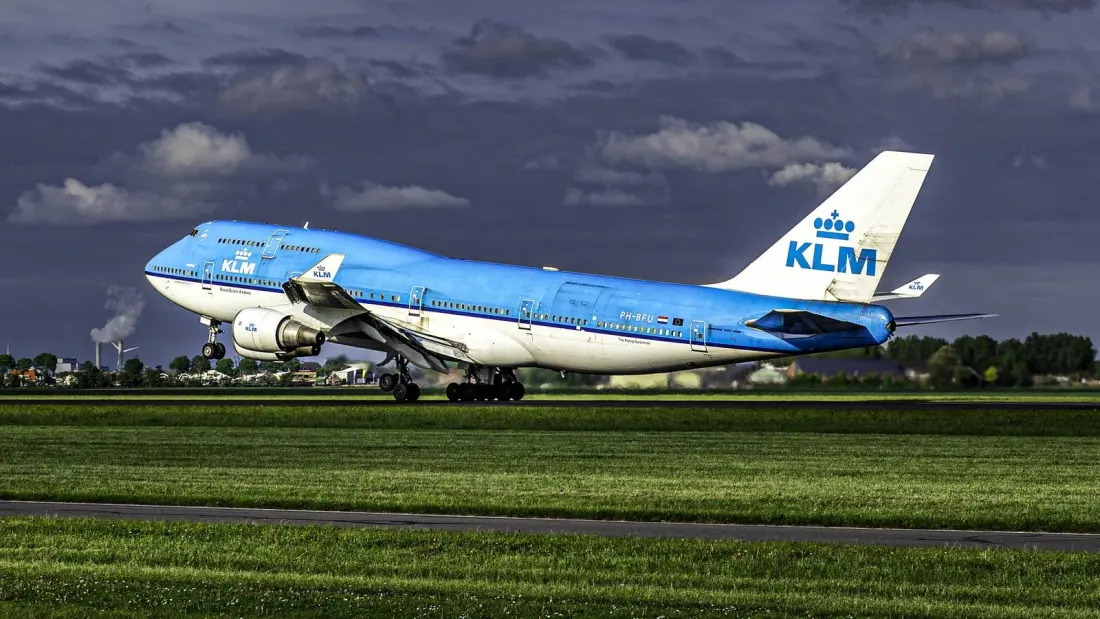
When Boeing rolled out the 747-400 in the late 1980s, it did something almost unheard of in commercial aviation: it built a single airframe that could take three competing engines from three rival manufacturers. Carriers could choose the Pratt & Whitney PW4056, the General Electric CF6-80C2B1F, or the Rolls-Royce RB211-524G/H, each producing roughly 56,500 to 63,300 lbf of thrust.
The logic was commercial, not sentimental. Long-haul airlines in that era were fiercely loyal to engine makers because of existing overhaul shops, spare parts stockpiles and pilot training. A carrier flying CF6-powered DC-10s or RB211-powered L-1011 TriStars could add the 747-400 without buying duplicate tooling, retraining mechanics or holding a second spare-engine pool. Boeing simply refused to let engine preference push a customer toward a rival widebody. Flag carriers like British Airways, Lufthansa and Cathay Pacific used that flexibility to keep maintenance budgets lean while expanding intercontinental networks.
The choice also reflected two genuine engineering philosophies. GE and Pratt & Whitney offered proven two-spool designs — simpler mechanically, with fewer bearings and seals, and easier overhauls. Rolls-Royce went with its distinctive three-spool RB211, splitting the compressor into three sections spinning at their own optimal speeds. That gave better efficiency across altitudes, quicker throttle response for go-arounds and greater surge margin, at the cost of specialist shop tooling during heavy checks.
There was a risk-hedging benefit too. An airworthiness directive on a single engine family can ground an entire fleet overnight, costing millions per day. Some airlines deliberately split 747-400 orders across two engine types so one technical issue could never freeze their whole timetable. Others played GE, P&W and Rolls-Royce off each other to negotiate better power-by-the-hour maintenance deals.
That golden age of customer choice didn't last. When Boeing launched the 747-8 in the mid-2000s, it went sole-source with the GEnx-2B. Certifying three nacelles, pylons and flight-deck logic sets costs hundreds of millions of dollars, and a wing optimised for one tightly integrated engine is simply more efficient than one designed to hang three different geometries. The industry followed: sole-source engine deals are now standard on programmes like the Airbus A350, making the 747-400 the last great monument to airline-driven design.
Why should a traveller care? Because this philosophy shaped the planes you still fly on. The 747-400 remains a favourite of aviation fans, with passenger examples increasingly rare but freighters still trundling cargo worldwide — and a handful of passenger 747s, including those with exclusively crowned upper decks, still operating with some airlines. If you've ever flown on a Queen of the Skies, the engine hanging under the wing was chosen decades ago through one of the most customer-driven engineering sagas in aviation history. As the type heads toward retirement, spotting one before they're gone is a genuine bucket-list item for anyone who loves flying.