A laptop in a hold bag, a water bottle on the floor, a tray table left down — none of these sound dramatic, but each one can turn dangerous in an emergency. Cabin crew run through a strict pre-takeoff routine on every flight, and regulators like the US FAA and European safety authorities back them up: everything loose must be secured before the aircraft moves, because takeoff and landing are when accidents and evacuations are most likely.
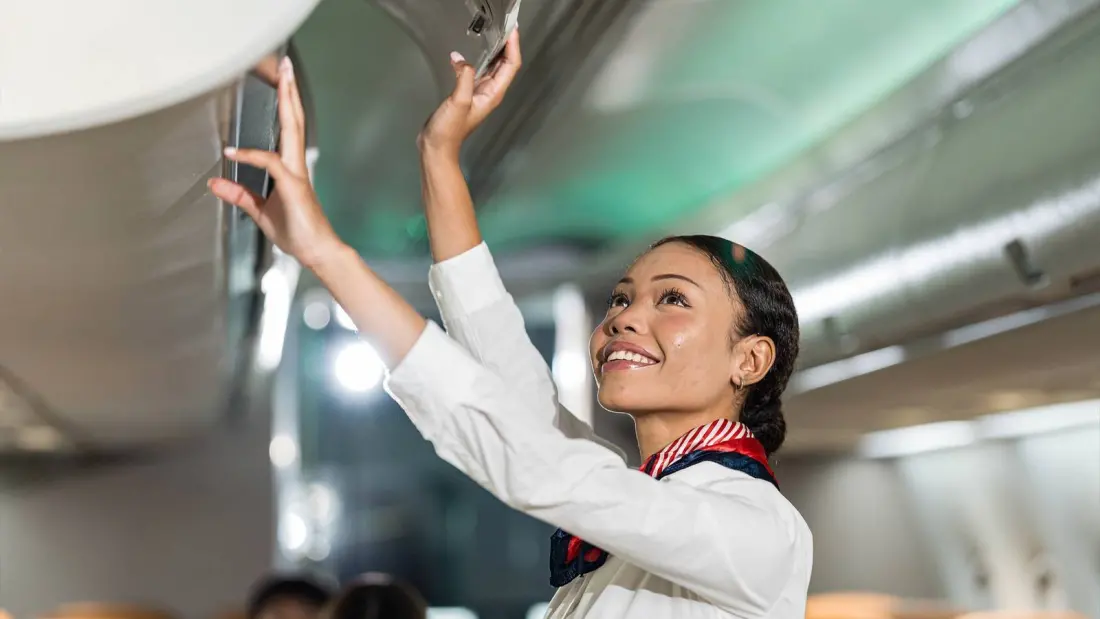
The obvious starting point is wheeled luggage and big cabin bags, which belong in the overhead lockers — wheels to the back, stored on their side to make the space work. Crew will happily help you find room but can't lift your bag for you; if you can't raise it yourself, you've overpacked. Oversized bags get offloaded to the hold. Lockers aren't decorative either: they're engineered to withstand around 9g of forward deceleration, so a 20 kg bag can effectively weigh 180 kg in a sudden stop. They stay latched for taxi, takeoff, landing and turbulence — the improvements made after the UK's Kegworth accident showed what happens when bags come out mid-crash.
Smaller items — handbags, backpacks, jackets — go under the seat in front or on the coat hooks, except in exit rows and bulkhead seats. There, everything must go in the overhead bins, because those floors and exits have to stay completely clear for an evacuation. A smart habit for long-haul: pull out what you'll need for the first 30 minutes (headphones, medication, a book) before boarding and keep it in the seat pocket, so you're not digging through bins at altitude.
Laptops and anything with a lithium-ion battery come with their own rules. Spare batteries, power banks and vapes must stay in your carry-on, never in checked luggage — cargo fires are brutally hard to fight at 32,000 feet, while crew are trained to handle battery fires in the cabin. Overheating incidents now average one to two per week globally, which is why Delta, for one, bans charging power banks during taxi, takeoff and landing and wants them accessible, not buried in a bin.
Loose personal clutter matters too. Newspapers on the floor of an exit row can trip people or block an escape route, so hand unwanted items to the crew. A neat trick for nervous flyers: keep passport, phone, keys and cash in a small plastic bag in your pocket — if you ever have to evacuate, you leave everything else behind, no exceptions.
Finally, the fittings from every safety video: tray tables latched, seatbacks upright, footrests and armrests stowed, window blinds up so crew can see outside. The reason is the 90-second rule — aircraft must be evacuatable in under 90 seconds, roughly the time it takes for flashover in a post-crash fire. Once crew have completed their 'cabin secure' check and reported it to the flight deck, takeoff can begin.
None of this is the crew being fussy. It's a choreographed safety sequence, and knowing it in advance makes boarding less stressful for you — and gets everyone in the air on time. Story sourced from Simple Flying.