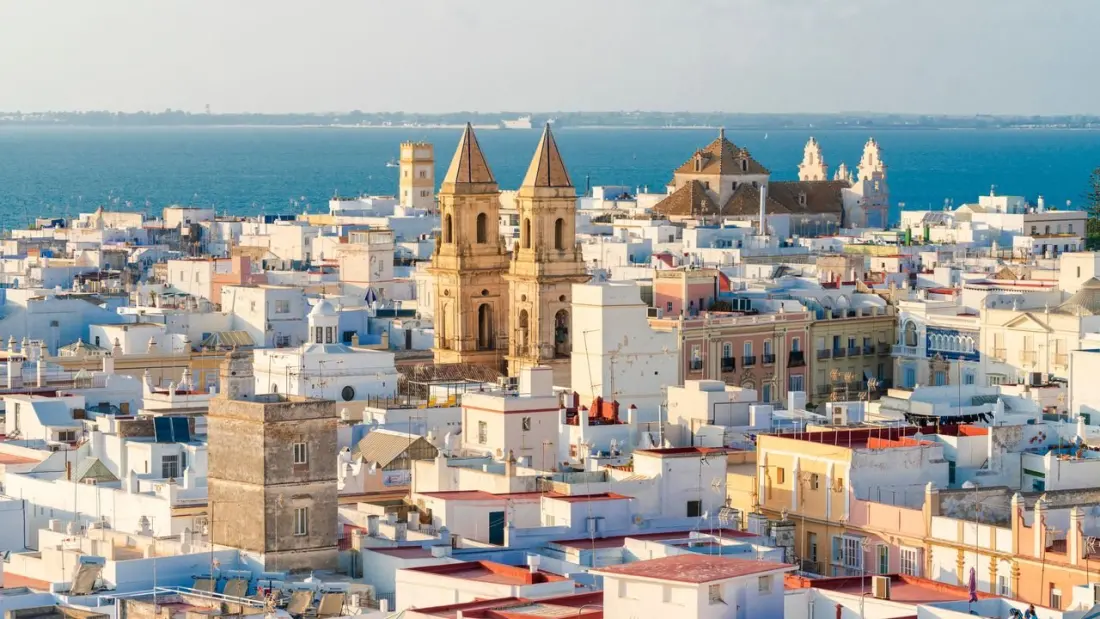
San Sebastián usually gets the crown, but Spain's food writers keep quietly pointing south. Cádiz — the ancient Atlantic port widely considered western Europe's oldest continuously inhabited city — sits at the centre of a province packing serious culinary firepower: the world's most sought-after bluefin tuna, sherry's historic heartland and, since Ángel León's Aponiente picked up three Michelin stars in nearby Puerto de Santa María, Andalusia's first triple-starred restaurant.
The city itself, founded by the Phoenicians as Gadir around 1200 BC, occupies a narrow sandy arm curling into the Atlantic. Pastel buildings softened by salt air have earned it the nickname 'Spain's little Havana', and the walkable old town mixes Roman ruins, cobbled alleys and La Caleta, a golden horseshoe-shaped city beach. It's compact, atmospheric and built for grazing.
Seafood dominates. The Mercado de Abastos, dating to 1838 and one of Spain's oldest food markets, is the daily engine room — fishmongers selling sardines and prized tuna, locals haggling for shellfish, and a neat local hack: buy a fish from Marisco Camilo and nearby Bar Carrusel will fry it for you for just the cover charge while you drink cañas. Modern stalls have crept in too, from Gadisushi's excellent tuna-belly sashimi to empanadas, regional Payoyo cheeses and gelato.
The La Viña neighbourhood is the dining epicentre. Casa Manteca, a tavern running since 1953 with bullfighting photos on the walls, serves cold chicharrones with lemon and crispy shrimp fritters on butcher paper — a fino sherry alongside is the move. Freiduría Las Flores keeps the old chippie tradition alive with battered cuttlefish wrapped in paper, while El Faro, on La Viña's edge, does quick tapas at the marble bar and proper white-tablecloth seafood dinners. For something more contemporary, Dutch chef León Griffioen earned the city's first Michelin star in 2023 at Código de Barra with tasting menus built on retinto beef and almadraba tuna. And if you only drink at one place, make it Taberna La Manzanilla, a family-run 1932 bar serving nothing but sherry from century-old casks, tabs still chalked on the counter.
Day trips stretch the province further. Jerez de la Frontera, recently voted Spain's capital of gastronomy, pairs historic bodegas with a lively tabanco and tapas scene. Sanlúcar de Barrameda completes the sherry triangle and pours its famously dry manzanilla alongside langoustines. And down the coast in Barbate, bluefin tuna is caught with Phoenician-era almadraba netting techniques — so good that roughly 70% is exported to Japan.
For travellers, the appeal is a food city with all the craft of the famous names at a fraction of the crowd levels. You can eat superbly for very little, walk everywhere, drink world-class sherry where it was made, and still have a beach a few steps from lunch. Cádiz won't stay under the radar forever.