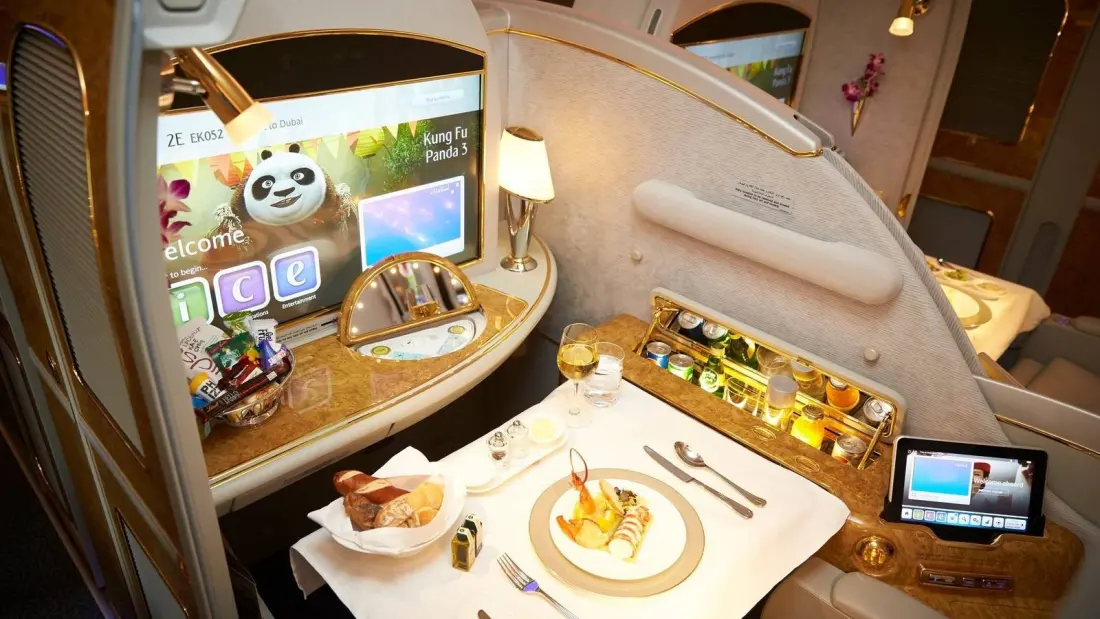
If you've booked a long-haul flight recently, you may have noticed something: the top tier of the cabin isn't first class any more. It's business. Across the industry, traditional first class is quietly being retired, and the reasons say a lot about how premium travel works now.
The core problem is simple maths. A single first class seat can take up the footprint of two or even three business class seats, and it often flies emptier. Business class, by contrast, tends to fill up reliably — especially on corporate-heavy routes — and costs less to fit out, maintain, staff and cater. For airlines chasing profit per square metre of cabin, the choice is increasingly obvious.
Business class itself has done the damage. Modern products like Qatar Airways' Qsuite and ANA's 'The Room' offer lie-flat beds, sliding doors for privacy and chef-designed dining. The gap between what business and first class deliver has narrowed so much that even affluent flyers and corporate travel departments now see business class as the sweet spot — comparable comfort, more justifiable price.
Demand patterns back this up. IATA and Centre for Aviation figures show international premium travel grew 11.8% year-on-year in 2024, with 116.9 million premium passengers — but that's still just 6% of all international travellers, and most of them are in business, not first. The Middle East has the highest share of premium flyers (14.7%), Europe carries the largest total volume, and Asia-Pacific is growing fastest, though economy there is expanding even quicker.
The result is a split market. American Airlines is dropping first class from international long-haul routes in favour of expanded Flagship Suites business cabins. Korean Air has cut first from most long-haul services, and Thai Airways plans to phase out its Royal First Class over the next few years. Yet others are going the other way: Etihad is putting first-class suites on its A321LR narrowbodies, Air India is re-introducing first on its A350-1000s, and Air France (La Première) and Lufthansa (Allegris First) are refreshing their ultra-luxury products. Emirates, famously, keeps doubling down.
For travellers, the practical takeaway is this: on most airlines, the best seat in the house is now a business class seat, and that's where new investment is flowing. If you want a true first class experience, it's becoming concentrated among a smaller group of carriers — often Middle Eastern and Asian flag carriers — rather than being the default top tier everywhere. Meanwhile, premium economy keeps growing as the middle option for those who want extra space without business fares.