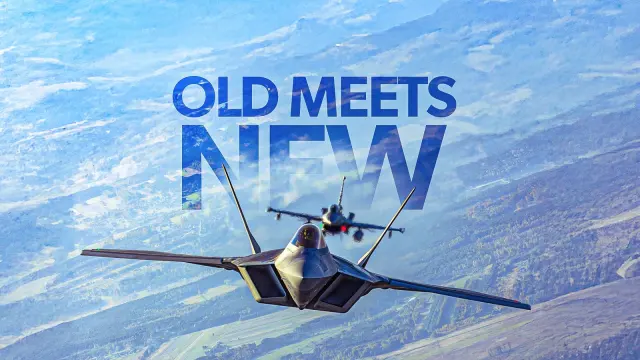
The Northern Mariana Islands could soon host thousands of US military training operations a year, under a proposal that would bring activity to the region's main airports and one of the Pacific's most historic airfields.
The Department of the Air Force has published a notice in the Federal Register kicking off an environmental impact statement for proposed exercises at Saipan, Tinian and Rota international airports, plus Tinian North Field — the WWII base from which the aircraft carrying the atomic bombs on Japan departed in August 1945.
Under the preferred plan, each airfield would handle up to 1,200 fixed-wing and 320 rotary-wing operations annually. That covers takeoffs and landings by planes, helicopters, drones and gyroplanes, supported by up to 550,000 gallons of fuel per site and up to 1,000 personnel on the ground at any one time. Temporary infrastructure, munitions handling including chaff and flares, and associated support services are all part of the package. Two alternatives are on the table: a 20 percent higher tempo of exercises, or a no-action option.
The Air Force frames the plan as a way to build its ability to deploy forces rapidly across multiple dispersed sites in the Indo-Pacific, and says exercises could also involve other US service branches and allied or partner nations. It insists there are no plans to build or modify existing airspaces or expand munitions use beyond what earlier environmental reviews have already covered, and it commits to complying with the Endangered Species Act, the National Historic Preservation Act, coastal zone rules and the Clean Air Act.
What happens next: a 30-day public scoping period, with meetings on Saipan (Nov 18 at Pacific Islands Club), Tinian (Nov 19 at Tinian Western Lodge) and Rota (Nov 21 at the Mayor's Office). Written comments can be submitted at any point. The draft EIS is expected in autumn 2027, with the final version due in summer 2028 — so any exercise activity is still years away.
Why it matters for travellers: the CNMI — Saipan, Tinian and Rota — is a laid-back US commonwealth in the western Pacific popular with divers, history buffs and Japanese and Korean holidaymakers. Civilian flights use the same international airports the military wants to train at, and anyone planning a trip in the late 2020s should watch how the balance between tourism traffic and military operations shakes out. On the flip side, Tinian's WWII heritage, including North Field's massive runways and atomic bomb pits, is already one of the islands' biggest draws, and the plan underlines how central these islands are to Pacific military history. Noise, aircraft movements and occasional access restrictions are the practical things to keep an eye on as the review progresses.