Denver's airport is what happens when planners get everything right: a pinwheel layout of parallel runways that can work independently, with zero crossings. Most older US hubs never got that luxury. They added runways wherever land allowed, and the result is runways that cross each other — which cuts capacity and forces air traffic controllers to sequence arrivals and departures carefully to keep aircraft apart.
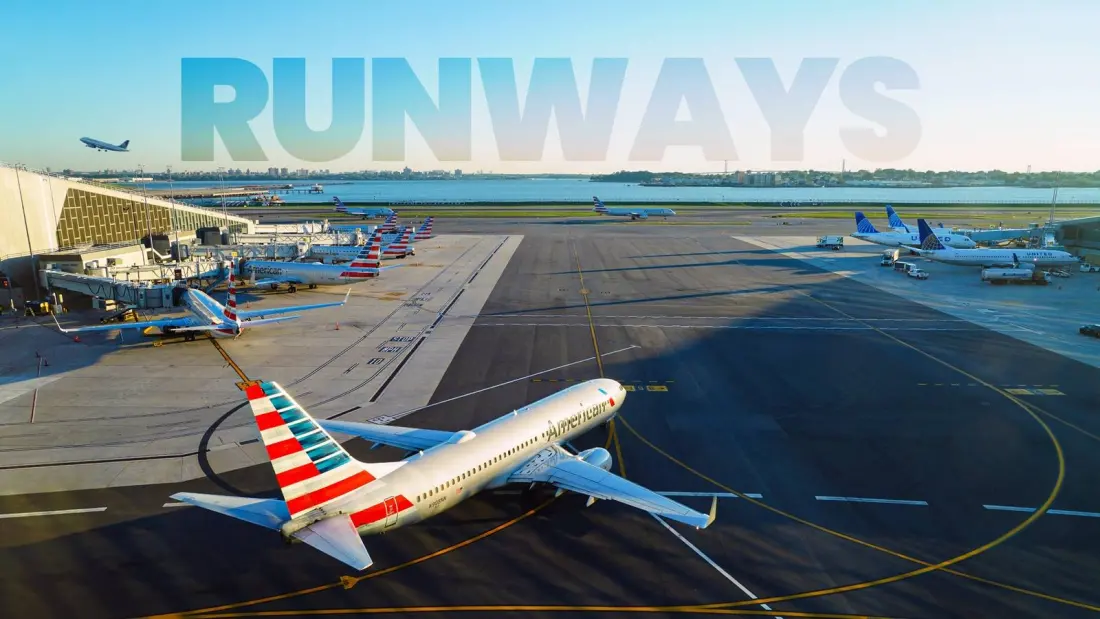
The sharpest example is New York's LaGuardia. Just two runways remain from its original four, each 7,002 feet, crossing at the airfield's northwestern corner. Demand far exceeds what that layout can handle, which is why LGA is one of only three slot-restricted airports in the US, alongside JFK and Washington National. Wedged between neighbourhoods and water, it cannot expand — so expect the crunch to persist.
Chicago Midway, the city's original airport before O'Hare took over in the 1950s, has four runways and four intersection points. Southwest Airlines accounts for over 90% of its commercial traffic, and the airport is landlocked on every side. The layout isn't a commercial bottleneck because Midway isn't at capacity, but it demands constant care — one of the four runways is so short and narrow that it can be mistaken for a taxiway.
Detroit Metro is the opposite case: a Delta fortress hub with over 70% market share, six runways, 147 gates and more than 300,000 annual movements. Four of its runways are parallel north-south strips; two east-west runways cross some of them, creating four intersections. In practice, though, the east-west runways sit mostly idle unless crosswinds make the parallels unusable, so the crossings rarely complicate the daily routine.
San Francisco International is the one most travellers will have felt. Bounded by water on three sides, it runs two pairs of parallel runways set at right angles, with four crossing points. Its famous side-by-side landings were recently curtailed by the FAA, which now requires spacing between arrivals — a change that has cut arrival rates and lengthened delays, especially with the fog this bay-side airport is known for. United, the dominant carrier here with over half the market, uses SFO as its main gateway to Asia and Oceania.
Boston Logan wins the intersection count outright: six runways, six crossings, and no room to grow. Runway 15L/33R, at just 2,557 feet, is reserved for light aircraft, while airliners are assigned based on shifting New England winds. Despite the tangled geometry, controllers typically work only a few runways in one direction at a time, so Logan's layout is a flexibility asset rather than a liability.
Why does this matter if you're booking flights rather than flight paths? Intersecting layouts are behind a lot of the routine delays at LGA and SFO in particular. If your schedule is tight, JFK's longer parallels or Newark may offer more resilience out of New York, and building buffer time into SFO connections — especially in summer fog season — is wise. The constraints aren't going anywhere: most of these airports have been boxed in for decades.