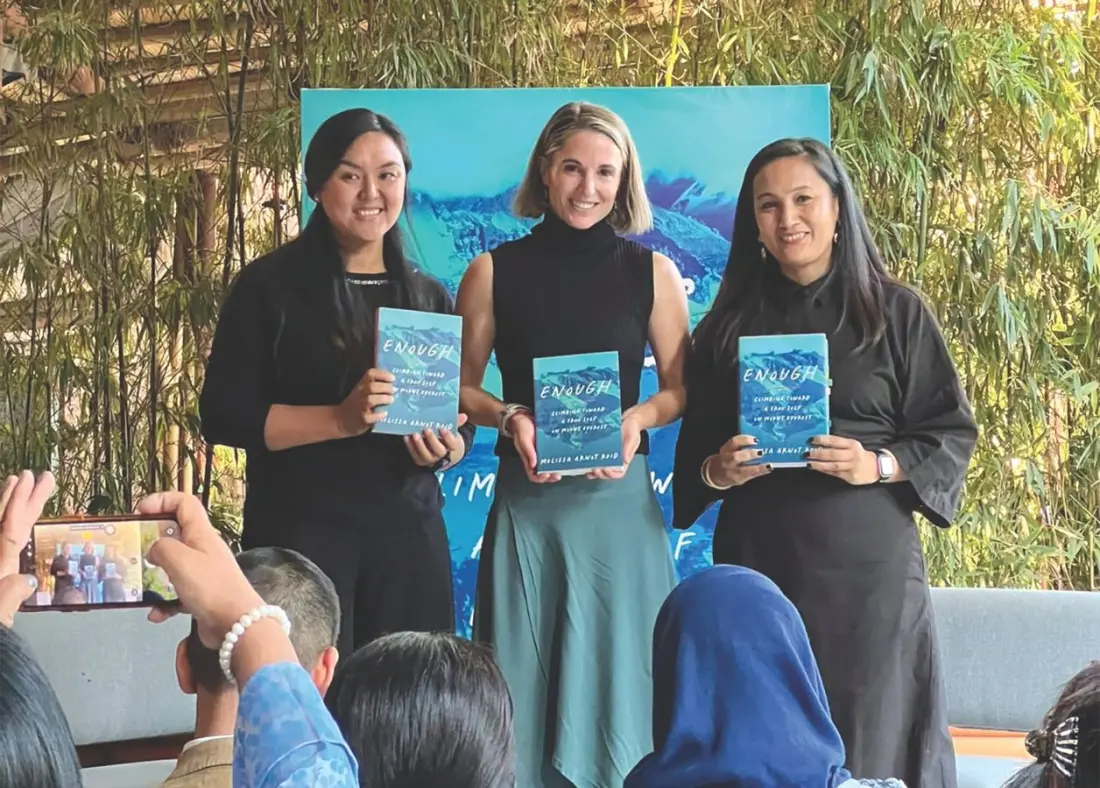
Everest memoirs tend to follow a familiar formula: suffer, summit, triumph. Melissa Arnot Reid's 'Enough: Climbing Toward a True Self on Mount Everest' (Penguin Random House, 290 pages) breaks that mould, and it's a more interesting read for it. Launched in Kathmandu in October, the book is a frank, sometimes uncomfortable account of a guide whose record-breaking résumé masks a harder story about ego, grief and eventually stepping back.
Reid's credentials are serious. She has stood on Everest six times as a guide, and in 2016 became the first American woman to climb it without supplemental oxygen and return alive — only six other women have managed that. She started out at 19 guiding on Mount Rainier in Washington state, after a difficult childhood split between Colorado and Montana, and first arrived in Nepal in 2008 at 23. She summited Everest on her first attempt, then spent nearly a decade chasing the no-oxygen goal that defined her.
The book opens, tellingly, with a moment of failure: Reid accepting an oxygen mask just below the summit in 2010 and treating it as defeat. From there it moves through the disasters that shaped modern Everest — the 2014 Khumbu Icefall avalanche that killed 16 Nepali guides, the 2015 earthquake-triggered avalanche at Base Camp that killed 18 people, and the infamous 2013 Camp II brawl between Sherpa rope fixers and European climbers Simone Moro and Ueli Steck, which Reid helped defuse.
The emotional core is her relationship with Chhewang Nima Sherpa, a climbing legend who had summited Everest 19 times before dying in an avalanche on Baruntse while on an expedition with Reid. Meeting his widow and young sons afterwards led Reid to co-found The Juniper Fund, which now supports 300 people across 88 Nepali families who depend on mountaineering work. In one of the book's closing scenes, she climbs with Lakpa Tenzing Sherpa — Chhewang's son, who was 10 when his father died — on Mount Rainier, letting him lead.
Reid is candid that the manuscript started as private writing, not a book, and it shows: she admits to disliking her younger self and doesn't shy away from her own bad decisions or thin empathy at times. She also writes about how women mountaineers are routinely overshadowed by male record-chasers, even as their numbers grow. The title's point lands quietly: the real milestone wasn't the oxygen-free summit, but recognising she'd had enough.
For anyone drawn to Nepal's trekking and climbing world — whether you're eyeing Everest Base Camp or just curious about the industry behind the summit photos — this is a rare insider account that's honest about both the glamour and the human cost. It reads as introspection first, adventure second, so pick it up for the reflection rather than adrenaline.