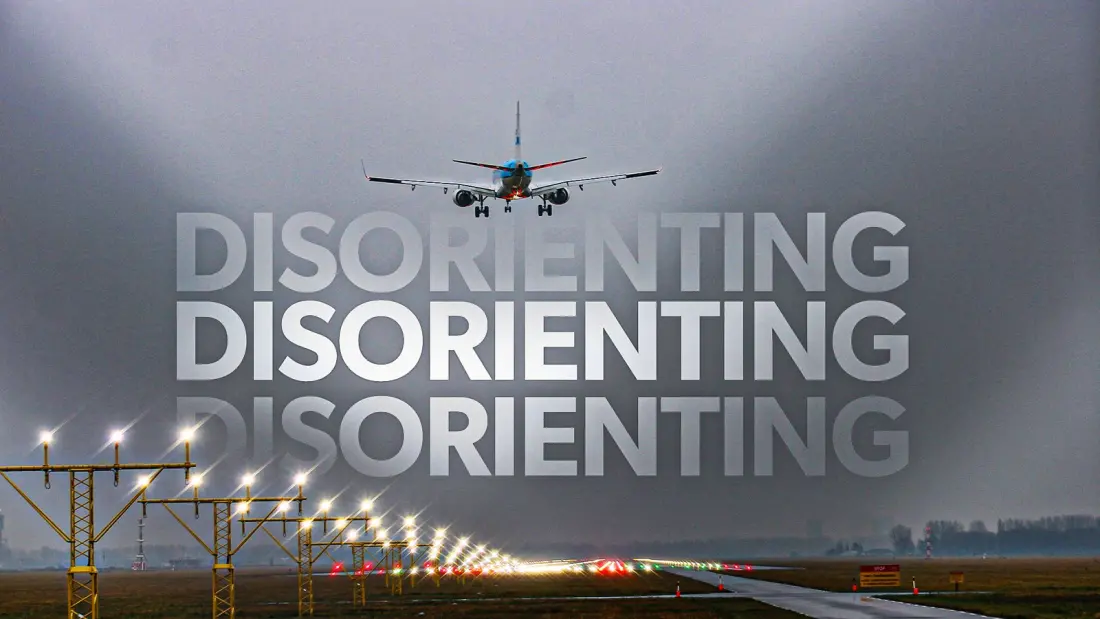
Landing an aircraft at night is a different skill from landing in daylight. The ground cues pilots rely on — buildings, fields, roads, the contrast between runway and surroundings — vanish, and in some places the lights that remain actively lie to the brain. The FAA has a name for the most dangerous version: the black hole effect, where runway lights floating over unlit water or terrain make the aircraft seem higher than it is, tempting the crew to descend below the safe glidepath. A piece from Simple Flying highlights five airports where the night picture is especially treacherous.
Honolulu's Daniel K. Inouye International is the classic case. Red-eye arrivals from the US mainland cross roughly 2,500 nautical miles of empty Pacific before dawn, and on a moonless night the final approach can offer nothing but runway lights in a void. Crews brief the risk every time and typically fly the instrument landing system down rather than switching to visual references early.
Nice Côte d'Azur has its own twist. The approach to runways 04L and 04R crosses dark Mediterranean water, while behind the airport the lights of the city climb steeply into the Alpes-Maritimes foothills. That band of hillside lighting can be mistaken for the horizon, making the approach look steeper than it is — so airlines generally require a full instrument approach at night, whatever the visibility suggests.
Madeira's Cristiano Ronaldo Airport is arguably the most tightly controlled of the five. The runway sits on a platform held up by 180 pillars some 70 metres above the Atlantic, with terrain climbing to over 6,000 feet within nine nautical miles. Captains must have flown there in daylight before operating at night, need at least 200 hours on type, and must have landed at Funchal within the past six months or completed simulator training.
Juneau, Alaska, removes the margin for error entirely. The airport sits in a narrow valley ringed by 3,500-4,000-foot mountains and the Gastineau Channel, all invisible after sunset. Deviating from the instrument procedure here doesn't mean drifting toward water — it can mean a mountainside under a mile from the runway centreline.
Finally, Rio de Janeiro's Santos Dumont threads approaches across Guanabara Bay between Sugarloaf Mountain and hillside suburbs whose scattered lights sit at dozens of different altitudes, offering no reliable horizon at all. Add it up, and these airports share a lesson: what looks obvious out the window at night often isn't, and the instruments are the only honest witness.