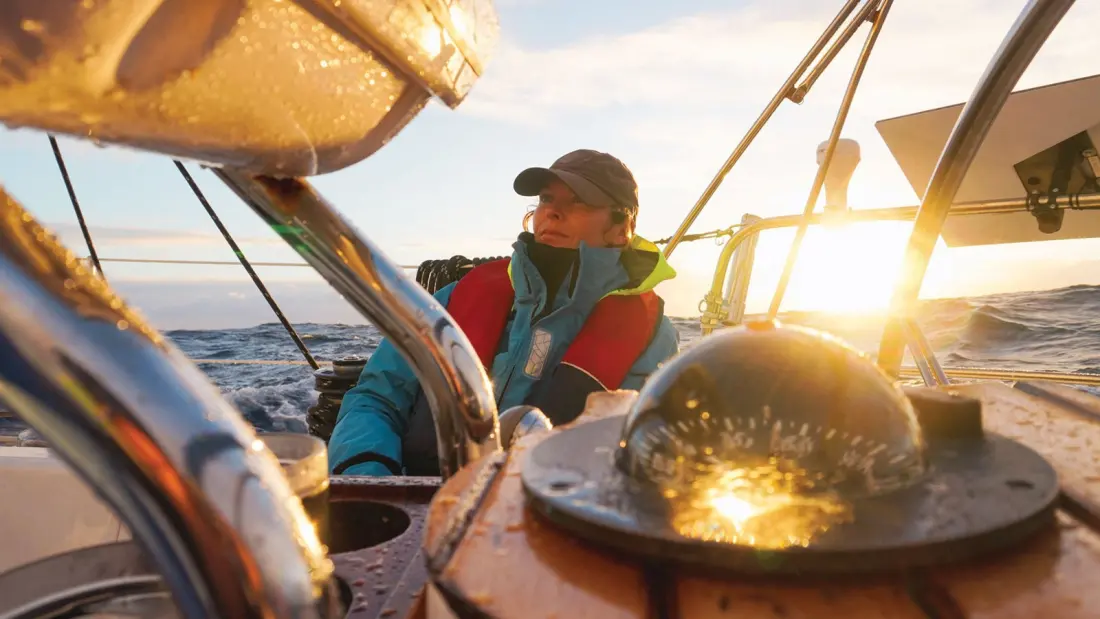
Ask most sailors what keeps a passage safe and they'll point at kit: storm jibs, harnesses, a well-serviced engine. A piece in Yachting World argues the real safety equipment is psychological — and it lays out four rules for managing the human side of life offshore, drawn from passages on boats ranging from 15m to 55m.
The first rule is the '3-Day Rule'. For roughly 72 hours after leaving dock, the crew is running on a brain that hasn't caught up with the ocean. The inner ear senses constant motion while the eyes insist the cabin is still — a mismatch that produces seasickness, fog and poor judgment. Add a broken-up watch schedule that scrambles cortisol and melatonin, and a brain still trying to problem-solve like it's in an office, and you get the grumpy, silent first days familiar to anyone who's done a passage. Around day three, the rewiring completes: sleep consolidates, balance adapts, and the cockpit suddenly fills with people again. Knowing this is normal — and temporary — helps skippers avoid overreacting to early-passage friction.
Next comes fighting monotony on long legs, where boredom is treated as a genuine hazard. The crew runs a 'something different every day' rule — themed dinners, a half-way celebration, baking — because a daydreaming brain is the one that misses a squall. That novelty is balanced by small daily rituals: 2am noodles mid-watch, a sunset quiz, a morning workout. Rituals break an endless blue horizon into human-sized chunks; novelty keeps everyone alert enough to react when it matters.
Rule three is blunt: be a good human, and pick your crew accordingly. Joph Carter, captain of the Swan 90 Freya with more than 100 offshore passages behind him, prioritises character over everything — boats 'become very small after a few weeks at sea'. The article's test case is the dirty mug at 4am: washing it takes ten seconds you won't miss, leaving it tells your crewmate their rest matters less than yours. Small courtesies compound into a cooperative boat; small resentments compound into a dysfunctional one.
The final rule is a 'low-panic culture'. Racer Erica Lush, who has skippered The Maiden Project and raced the Solitaire du Figaro, stresses empathy and checked egos as core sailing skills. On these boats a safety concern from anyone — including a complete novice — is acted on immediately, and the policy on reefing is binary: if someone calls for it, it happens, no debate. The logic is that beginners haven't yet learned to normalise risk, and in a crisis shouting only raises cortisol and breeds mistakes. Calm decks, clear instructions, solve rather than react.
For anyone booking a crewed offshore passage, an Atlantic crossing, or even a long coastal delivery trip, this is worth reading before you step aboard — or before you invite anyone onto your own boat. The gear matters, but the crew dynamic is what actually holds up in heavy weather.