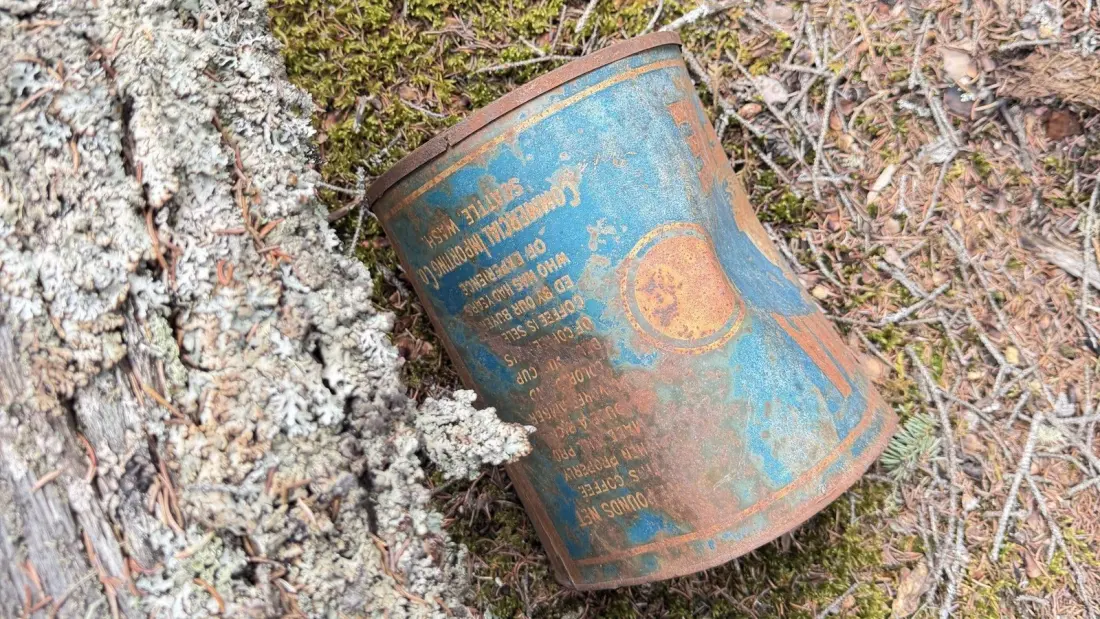
Tucked into the woods near Denali's frontcountry, there's a drainage ditch full of decades-old beer cans, glass bottles, coffee tins and broken household bits. A hiker's instinct says bag it all up and haul it out. The National Park Service says hands off — because this garbage is officially historic.
The writer behind this story, a guide-in-training at Denali, went digging into why. It turns out old dumps are one of archaeology's richest sources: people rarely write down what they ate, wore or threw away, so discarded objects are often the only record of daily life. Dr. Justin Cramb, an archaeologist at the University of Alaska Fairbanks, calls these middens — unglamorous, everywhere, and full of clues about how people survived in a place where groceries were nothing like a quick drive to the store.
The legal picture is more nuanced than "everything old is protected." Under the National Historic Preservation Act, sites generally need to be at least 50 years old and meet criteria for significance and integrity; the Archaeological Resources Protection Act covers resources over 100 years old with cultural value. Age alone isn't enough — an object has to teach us something, connect to a notable person or event, or fill a gap in the record. As Cramb puts it, a 50-year-old house isn't automatically a historic property.
And Denali has a surprising amount of human history to protect. Near Riley Creek, before the park absorbed it in 1932, there was a whole community: Maurice Morino opened the Mount McKinley Park Hotel on Thanksgiving Day 1921, feeding miners and trappers, with cabins, a trading post, a silver fox ranch and an unofficial gambling-and-bootlegging den nearby. Cabin foundations, debris and old dumps are what remain of that settlement — Morino's grave is still there. When visitors leave potentially historic objects in place, the surrounding context survives; the NPS advises asking staff if you're unsure.
The article also touches on a humbler point from Leave No Trace: even wandering leaves a mark. Trails, campgrounds and foot-worn paths are all traces, so the real goal is minimising what we add — while resisting the urge to "tidy up" things that are part of the historical record. Modern visitors, unlike Denali's early residents, have the infrastructure to pack out their own rubbish, so there's no excuse for adding to the pile.
For travellers, this reframes a walk in the woods. Those odd cans or cabin foundations you might stumble across near park roads aren't litter to report but evidence of lives that never made it into the books — and leaving them undisturbed is part of visiting well. If you're heading to Denali, keep an eye out for these quiet traces of McKinley Station, stick to established paths, and treat anything that looks more than a few decades old as part of the park's story, not a cleanup job.
Backpacker