
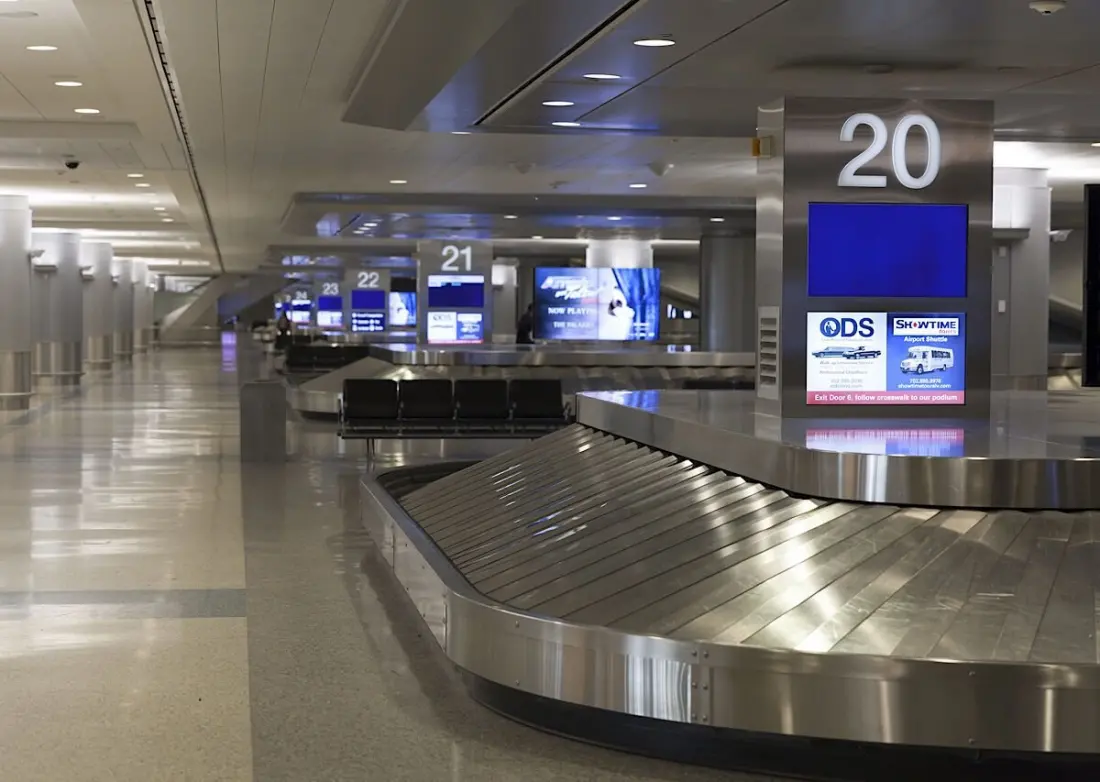
Ever notice that baggage claim is almost never close to your gate? According to a widely circulated story, that's not bad planning — it's deliberate. The tale goes that Houston's main airport was drowning in complaints about slow luggage delivery. Even after cutting waits to around eight minutes, passengers kept grumbling. So instead of hiring more staff, executives reportedly did something cheaper and cleverer: they relocated baggage claim to the far end of the terminal. With the longer walk giving ground crews a head start, travellers arrived at the carousel to find their bags already spinning. Complaints, the story goes, dropped to zero.
There's a catch: nobody has verified the Houston anecdote. It has circulated in different versions since at least 2012, when The New York Times cited it as an example of 'queuing psychology'. Some retellings say the walk grew from one minute to six; others mention a 12-minute round trip just to lodge a complaint. Matador Network reached out to United, American and the Houston airport system for comment and got no response. Still, the underlying psychology checks out. Researchers, including those connected to MIT's operations research community, have long shown that perceived wait time and actual wait time are very different animals. Uncertainty, boredom and no visible progress make a wait feel endless, while moving toward a goal makes the same stretch of time feel tolerable — even if the total elapsed time is identical or longer.
There's no federal rule on how fast your bags must arrive, but the industry's informal benchmark is about 20 minutes from gate arrival. Alaska Airlines has turned that into a promise: elite-status flyers get their bag within 20 minutes or receive points or a discount code. In reality, waits vary hugely. Small regional airports with a few narrow-body flights an hour might deliver bags in 10 to 15 minutes, while big international hubs unloading wide-body jets and transfers can easily run 30 to 40 minutes or more at peak times.
That variability is exactly why the long-walk trick works. It costs almost nothing compared to rebuilding a baggage system, and it buys the ground crew time. So next time you're trundling down a seemingly endless corridor to claim your suitcase, remember: the walk isn't wasted time — it may be the reason your bag is already waiting.
Why it matters for travellers: knowing that perceived waits matter more than actual ones can shape how you plan. Checking a bag at a major hub? Build in a buffer rather than booking a tight ground connection. And if you're in a hurry, a carry-on sidesteps the whole carousel gamble. — via Matador Network