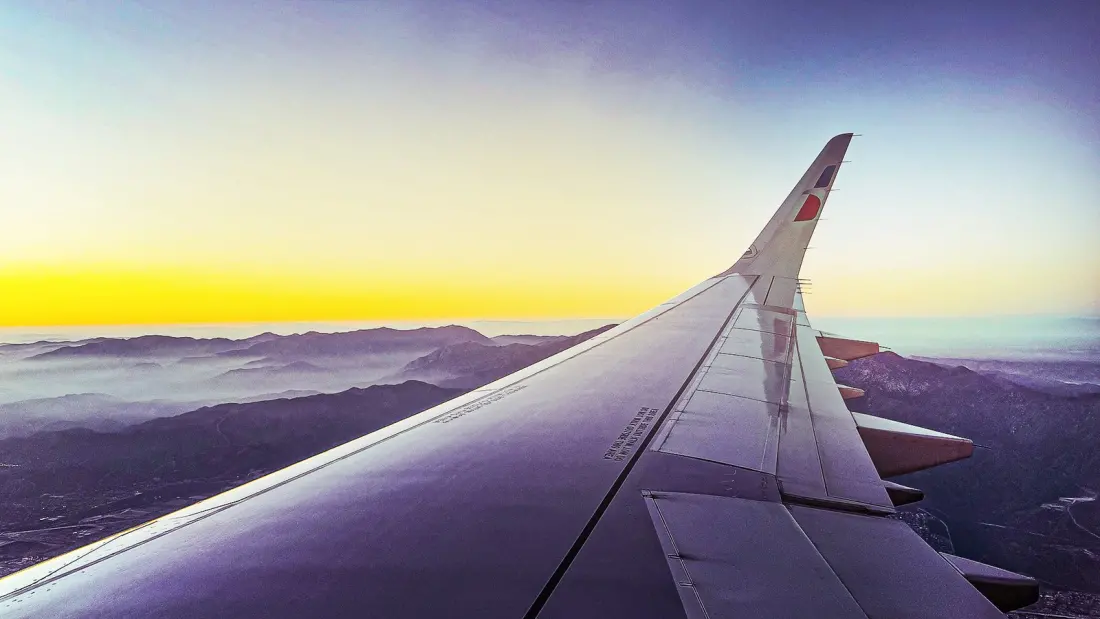
Every frequent flyer knows the feeling: a few minutes after take-off the engines ease back, the push in your seat fades, and the aircraft seems to pause mid-climb. In the US, that pause often happens around 10,000 feet — and there's a specific piece of air traffic control language behind it.
The phrase in question is "maintain one zero thousand." In FAA-speak, "maintain" means the aircraft must stay at that altitude until told otherwise. So a clearance to "climb and maintain 10,000" requires the plane to level off there and wait, often for a minute or two, before controllers clear it higher — say, to flight level 350. A different instruction, "climb via SID," instead sends the aircraft along a published departure route with its own altitude and speed limits, and the plane may sail straight through 10,000 without stopping.
So why 10,000? It's a convention, not a rule etched into aviation law. The altitude sits neatly between the busiest low-level arrival and departure flows around big airports and the quiet high-altitude cruise routes, making it a handy staging point for sequencing traffic and handing aircraft off from terminal controllers to en-route controllers. There's also a speed factor: the US 250-knot limit generally applies below 10,000 feet, so once a plane passes it, the crew can accelerate and the engines settle into a faster, often quieter, climb configuration.
Geography changes the script. Denver's airport already sits at over 5,400 feet, so departures there typically level off between 13,000 and 17,000 feet instead. Salt Lake City does something similar. At extremes like Bhutan's Paro or Pakistan's Skardu, stopping at 10,000 feet would mean parking in a mountainside. Tibet's Lhasa Gonggar airport sits at 11,710 feet — above the magic number entirely. Oceanic departures from places like Anchorage or Honolulu often skip the interim step altogether, climbing almost continuously to cruise altitude because there's little conflicting traffic. In Europe, controllers favour a staircase of interim levels — FL150, FL190, FL240 — rather than a single signature pause.
The descent mirrors this logic with a twist. Controllers deliberately separate commands — "reduce speed to 210 knots, then descend and maintain 4,000" — because managing speed and descent at the same time is genuinely tricky for jet aircraft. That long, flat stretch you feel before landing is usually the plane holding at the 250-knot limit, waiting its turn in the arrival queue. And once you're within about five miles of the runway, controllers hands off: no more speed changes, letting pilots focus on flaps, gear and a stable approach. A typical narrowbody touches down somewhere around 130–150 knots.
For travellers, this is the kind of knowledge that turns a mysterious lurch into something readable. The next time the cabin goes quiet shortly after take-off, you can guess you're holding at 10,000 in busy US airspace — and that the climb is about to resume once the controller says so.