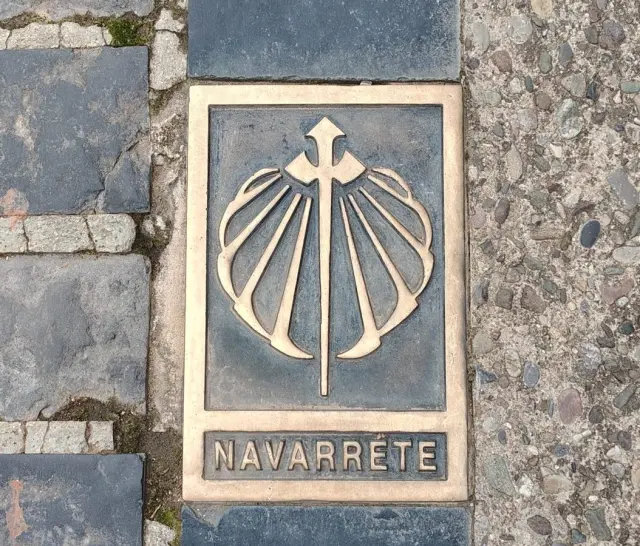
Somewhere between Pamplona and Logroño, on the Camino Francés, there's a fountain that pours red wine instead of water. It's at Irache, and one pilgrim's day there captures exactly why people keep walking this ancient route across northern Spain.
The writer behind The Trek's trail diary reached the Fuente de Vino in the morning. Built in 1991 and free to use, the fountain continues a tradition attributed to Benedictine monks who offered pilgrims a sip of wine for strength. After that, the day unfolded the way the Camino famously does: a chance coffee-stop conversation with a British walker turned into a full day of hiking together and what the writer calls the best conversation of the trip — career talk, faith, creativity — capped by arrival in the small town of Los Arcos.
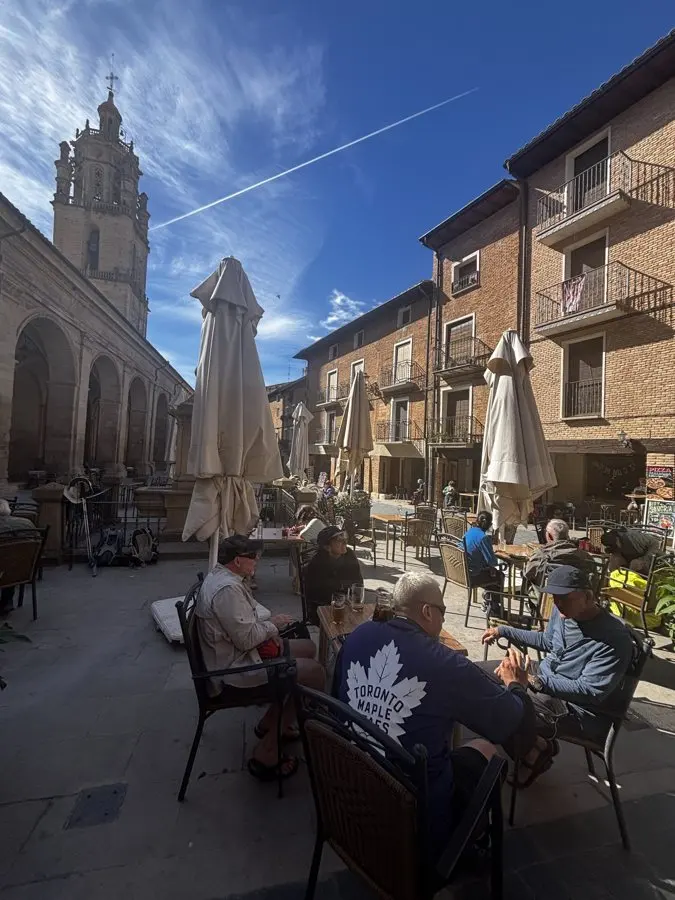
Los Arcos delivered the other half of the Camino experience: the courtyard. Pilgrims at the Isaac Santiago Pilgrims Hostel spent seven hours in the sun with sangria, paella and tortilla — the Spanish potato-and-egg omelette that's a staple snack along the route — plus Aquarius, the electrolyte drink pilgrims swear by. The writer noted a rhythm that surprises many first-timers: unlike on America's Appalachian Trail, most Camino walkers finish by midday and spend afternoons in communal downtime rather than grinding out extra kilometres.
The town itself rewards the stop, too. The Basílica de Santa María in Los Arcos sits atop a third-century Roman mausoleum that became a Christian basilica in the fifth century. Inside, every surface is painted, the ceiling is an embellished dome, and the altarpiece is covered in gilded statuary — a genuinely striking sight in a town most people have never heard of.
The day ended with improvised hospitality: an evening pasta session hosted by a group of Italian pilgrims in the albergue dining room, with blog-writing plans abandoned in favour of wine and cross-cultural company.
For anyone weighing whether to walk the Camino, this is the pitch in miniature. The route's appeal isn't only scenery — it's the built-in sociability. Shared bunks, fountain stops and courtyard afternoons mean strangers become friends within days. The Camino Francés from Saint-Jean-Pied-de-Port to Santiago runs roughly 780 km, but sections like this one (Estella–Los Arcos area, about a week in) can be walked in a few days if you don't have a month spare. Spring and autumn offer the most comfortable walking weather, and village albergues typically cost between €10 and €15 a night.