Cruise ships have quietly doubled in size over the past 25 years, and the race shows no sign of slowing. In 2000, the world's largest cruise ship was Royal Caribbean's Voyager of the Seas at roughly 137,000 gross tonnage. Today's record holder, Royal Caribbean's Icon of the Seas, launched in early 2024, measures 248,663 GT — nearly double — stretching 364.75 metres across 20 decks and carrying up to 5,610 passengers plus 2,350 crew.
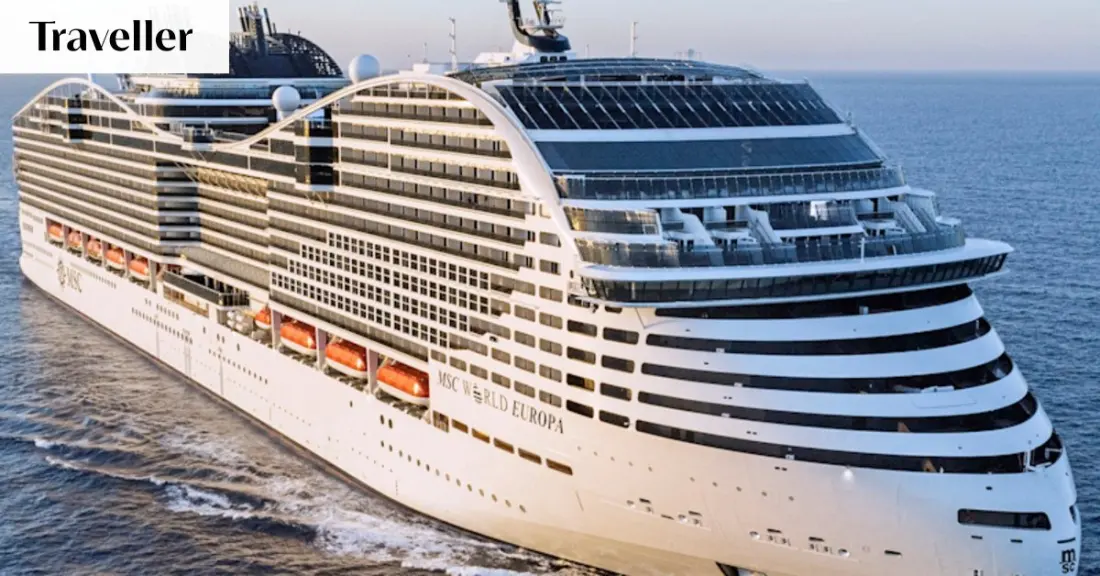
Royal Caribbean isn't stopping there. Icon has already been joined by sister ships Star of the Seas and Legend of the Seas, with two more Icon-class vessels on order. Norwegian Cruise Line's newest ship, Norwegian Aqua, carries a comparatively modest 3,571 passengers, but the line has four ships of around 225,000 GT and 5,000 passengers each planned for the 2030s. MSC, meanwhile, raised the stakes in 2022 with MSC World Europa, which holds 6,762 passengers — more than Icon despite being smaller by volume. MSC World America followed last year, MSC World Asia arrives at the end of this year, and more World-Class ships are in the pipeline.
The boldest numbers come from Carnival, which takes delivery of the first of three ships in 2029 that will each carry up to 8,000 passengers — the highest capacity ever, though at 230,000 GT they won't actually beat Icon for internal volume. Names and details are still under wraps.
The supersizing trend isn't limited to mass-market lines. Even luxury brands are creeping upward: Viking's newest ocean ships carry 998 guests versus 930 previously, Silversea's Evolution-class holds 728 passengers against the old 596, and Regent Seven Seas launches its largest ship ever, the 850-passenger Seven Seas Prestige, late this year. The economics are straightforward — bigger ships cost less per passenger to build and run — though luxury lines face a tricky question of whether premium-paying guests really want to share their holiday with hundreds more fellow travellers.
Where can you actually sail on these giants? Mostly the Caribbean, with the Mediterranean a distant second. Both regions have huge customer bases on the doorstep, which matters when you need to fill thousands of berths week after week.
There are real limits, though. No shipyard in the world can currently build or service anything larger than Icon, and plenty of ports physically can't handle these ships — low bridges, tight harbour corners and short quays all rule them out. Some destinations have banned very large vessels altogether following local opposition. So while cruisers clearly enjoy the scale, sociability and sheer quantity of entertainment on offer, the growth curve may flatten. For travellers, the takeaway is simple: if sailing on one of these floating resorts is on your list, the options are multiplying — but so are the crowds on board, so book early and pick your itinerary carefully.
Reported by Traveller (Sydney Morning Herald).