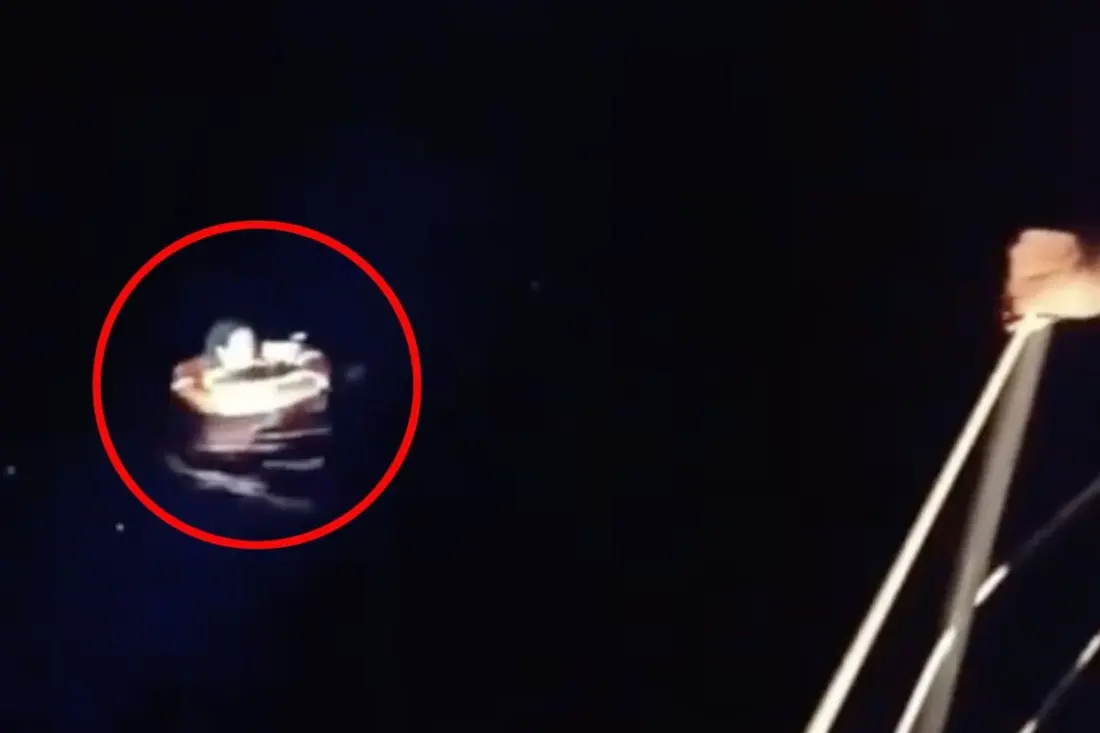
A 44-year-old passenger from El Salvador has been rescued alive after roughly 20 hours floating in the Ionian Sea, having gone overboard from a Royal Caribbean cruise ship off the Greek island of Zakynthos.
According to Greek coast guard reports, the woman jumped from the Odyssey of the Seas on the morning of Friday 9 October as the ship sailed towards Zakynthos, reportedly saying she wanted to disembark. Authorities were alerted straight away, triggering a large-scale search involving coast guard and patrol vessels, passing ships and a Super Puma helicopter from the Hellenic Air Force.
She was found in the early hours of Saturday 10 October by the MSC ROSELLA III, a cargo ship flagged in Madeira that had joined the search. What gave her away was a flashing light on the lifebuoy she had clung to through the night — a small piece of kit that almost certainly saved her life. Rescuers spotted her around 70 nautical miles south-west of Zakynthos, just two nautical miles from where she was reported to have entered the water, meaning she had drifted remarkably little despite the hours at sea.
The coast guard recovery vessel pulled her from the water conscious and alive, gave her first aid and brought her to the port of Katakolo, from where she was transferred by ambulance to hospital in Pyrgos for observation. The Katakolo Port Authority is investigating the incident.
Survivals like this are rare but not unprecedented. In November 2022, 28-year-old James Michael Grimes spent nearly 20 hours in the Gulf of Mexico after falling from the Carnival Valor before the US Coast Guard found him. And in August 2018, British tourist Kay Longstaff survived about 10 hours in the Adriatic after going overboard from the Norwegian Star, eventually picked up by Croatian coastguards.
For anyone cruising the Greek islands, the story is a reminder of two things. First, cruise ships are not ferries — you can't simply step off mid-route, and 'disembarking' at sea puts you in water that stays cold and choppy even in summer. Second, safety equipment matters: the flashing light on her lifebuoy is the single detail that connected rescuers with a survivor in the dark. Passengers on any sailing would do well to know where flotation devices are stored and how to signal, even if the odds of ever needing that knowledge are mercifully slim.
It's also a nod to the work of the search teams. Coordinating helicopters, patrol boats and volunteer merchant vessels across dozens of nautical miles of open sea overnight — and finding one person — is no small feat. The Hellenic Coast Guard, alongside the MSC ROSELLA III's crew, deserves the credit here.
Katakolo, the port where the woman was brought ashore, is itself a small Ionian cruise stop worth knowing: a quiet harbour town in western Greece that serves as the gateway to ancient Olympia.