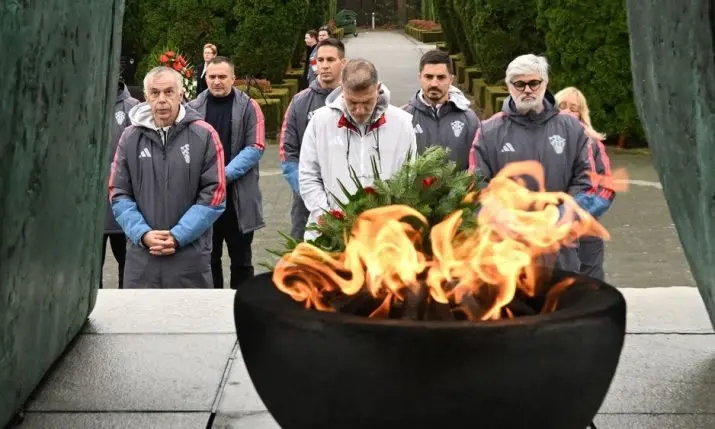
Croatia's football coach Slaven Bilić and his staff made an unplanned-feeling detour from match duty this week — straight to Vukovar, the Danube city that remains the emotional heart of the country's modern history. After beating the Czech Republic in nearby Osijek on Sunday, the delegation travelled to the city with mayor Marijan Pavliček and Boris Dragičević, head of the county football association, ahead of Remembrance Day on 18 November.
The group laid wreaths and lit candles at Vukovar Memorial Cemetery, then continued to Ovčara on the city's edge — home to the Ovčara Memorial House, the site most closely tied to the 1991 fall of Vukovar and among the most visited memorial locations in Croatia. Stops also included the scarred Vukovar Water Tower, the Croatian Defenders Memorial Home on Trpinjska Road, and the memorial room honouring Blago Zadro, the commander killed defending the city.
"It is very emotional in Vukovar," Bilić said during the visit, stressing that the memory of the city should never be allowed to fade. His words carry weight: the city endured an 87-day siege in 1991 before falling to Yugoslav forces that November, and the annual commemoration on 18 November honours the victims of both Vukovar and Škabrnja, plus all who died in the Homeland War.
For travellers, the story is a nudge to look beyond Croatia's coast. Vukovar sits in the eastern Slavonia region, and its memorial sites are open to visitors year-round — sobering but carefully presented stops that explain the war's impact on Croatia better than any textbook. The water tower, deliberately preserved in its damaged state, has become the city's defining landmark. Visiting around 18 November means witnessing the commemorations firsthand, when thousands of Croatians make a walking procession through the city and the atmosphere is at its most powerful. Pair it with Osijek, a short drive away, where a rebuilt Tvrđa old town and riverside cafés make an easy contrast.