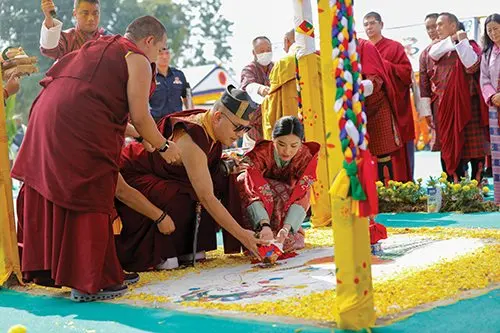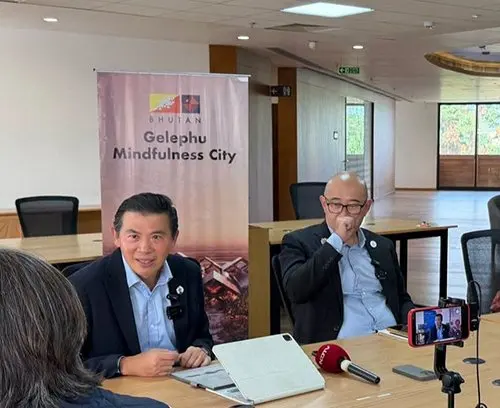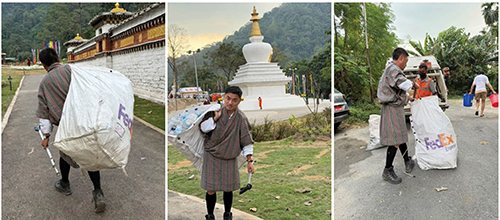
When thousands gathered in Gelephu for the raising of the 108 Jangchub Chortens at the Gelephu Mindfulness City, most people came away with photos and blessings. Gembo came away with a large sack of rubbish. Feeling unwell, he walked towards the first stupa to make a wish, spotted litter around the sacred site, and couldn't leave it. He picked it all up and carried the bag back to town for disposal — then posted the whole thing on Facebook and TikTok.
That instinct has been building for decades. Gembo, originally from Nabji in Trongsa, central Bhutan, first noticed the problem in 1998 while working as a tour guide. As development spread, waste piled up at the country's flagship attractions — particularly around Taktsang, the famous Tiger's Nest monastery. Tourists arrive expecting pristine Himalayan scenery, and he didn't want that reputation to slip, so he started clearing litter quietly at tourist sites. Colleagues sometimes hid while he collected trash; others accused him of showing off or fishing for bigger tips.
The turning point came when a guest — the founder of Happyness — suggested he document his work online, around the same time he saw Her Majesty the Gyaltsuen Jetsun Pema Wangchuck, Patron of the Environment, join a televised cleaning campaign. On 27 June 2019, he committed to a Saturday cleaning ritual: post every week, clean every weekend. Saturdays made sense because people have free time to join in.
The effort scaled up. Gembo has now cleaned and campaigned in all 20 of Bhutan's dzongkhags (districts) in a single 94-day sweep, crossing the country east to west and north to south, working through freezing cold and extreme heat. He's received two awards from the Department of Tourism on World Tourism Day, and he leads a small approved volunteer group called CleanWave — though he admits he mostly cleans alone because there's no funding for sacks, picker sticks, lunches and transport.
His story has a wider point for anyone who loves travelling in Bhutan. The country markets itself on unspoiled landscapes, and that image depends on habits, not just policies. Gembo argues that high lamas could help enormously by reminding devotees to respect their surroundings before big religious gatherings, where crowds generate predictable amounts of waste. He also leans on a distinctly Bhutanese observation: people copy what they see — good or bad — so visible good deeds spread.
The momentum isn't slowing. Next year he plans a 108-day walk combining cleaning, awareness-raising and adventure, timed to match the spiritual weight of the number. And as Gelephu Mindfulness City pursues its ambition of becoming a green city, he wants the post-event cleanups around the 108 chortens to become permanent practice rather than a one-off — with young Bhutanese taking ownership.
For travellers, the takeaway is simple: the pristine Bhutan you come to see is maintained by people like Gembo, often working solo and unpaid. Pack out what you pack in, watch your waste at trailheads and monastery grounds, and if you see someone picking litter — maybe join in. Around here, it's contagious.
Story first reported by The Bhutanese.