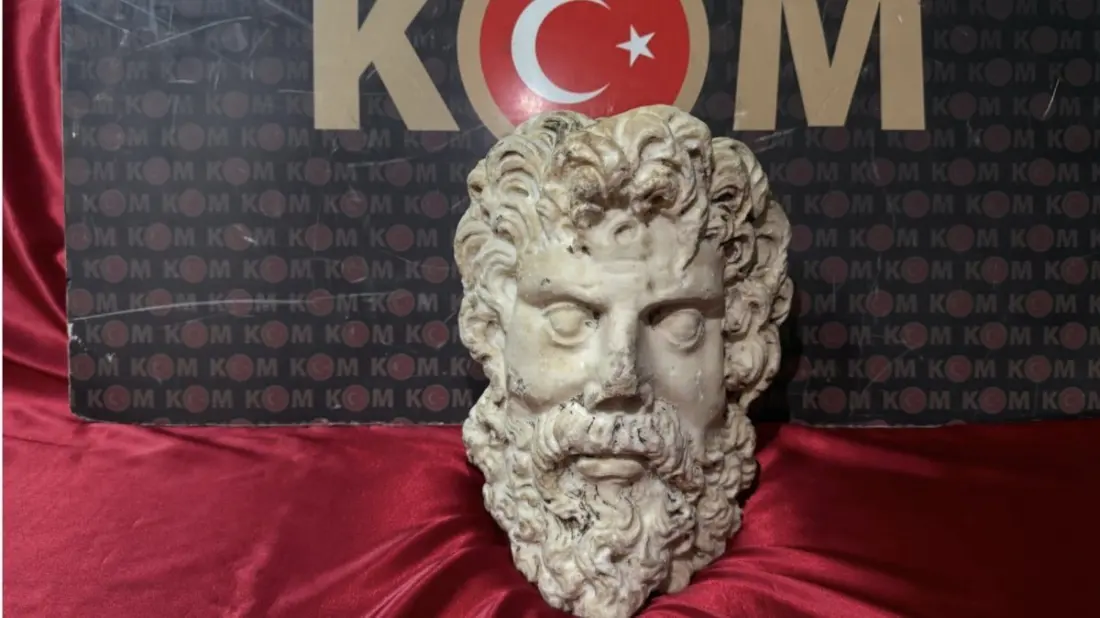
Police in Izmir, western Türkiye, have recovered a marble head of Zeus thought to be roughly 2,000 years old, dating from the Roman period. Three suspects were detained in connection with the attempted trafficking of the piece.
The operation was run by the Izmir Police Department's anti-smuggling and intelligence units, coordinated by the Izmir Chief Public Prosecutor's Office. Officers raided an address in the Konak district, the busy central neighbourhood that holds much of the city's seafront, bazaar and historic core, and seized the sculpture there. Authorities have not said where the head is believed to have come from originally, but Roman-era finds are common across the wider Aegean region, once dotted with temples and sanctuaries dedicated to Zeus and other Olympian gods.
Izmir sits at the heart of one of the densest archaeological zones in the Mediterranean. Within a couple of hours' drive you have Ephesus, Pergamon, Sardis and a string of lesser-known Ionian sites, which is precisely why the region is also a hotspot for artefact smuggling. Pieces like this Zeus head surface on the black market regularly, and Turkish authorities run frequent sting operations to intercept them before they leave the country. Recovered artefacts typically go into the custody of local museums — Izmir's Archaeology Museum holds an extensive collection of sculpture from exactly this era, so visitors may one day see the head on display there.
For travellers, the story is a reminder of how much unprotected heritage lies beneath the soil in western Anatolia, and how the line between a museum piece and a smuggled commodity can be a single police raid. If you're exploring the region, it's also a good nudge to stick to legitimate guides and sites: buying antiquities, however tempting a market stall trinket might seem, is illegal and fuels this trade.
Konak itself rewards a wander beyond the artifact headlines — the landmark clock tower, the Kemeraltı bazaar and the elevated Kadifekale castle ruins are all within easy walking distance, and the city's eating scene is arguably Türkiye's most underrated.