Bishkek keeps its winters going on infrastructure that is, quite literally, older than most of its residents. A senior engineer at the municipal heating utility Bishkekteploset has revealed that 68.6 percent of the capital's heating networks are worn out — a figure he shared on Birinchi Radio. Heating pipes are designed to last 25 years, yet some lines under the city have been running for 40 or even 50 years.
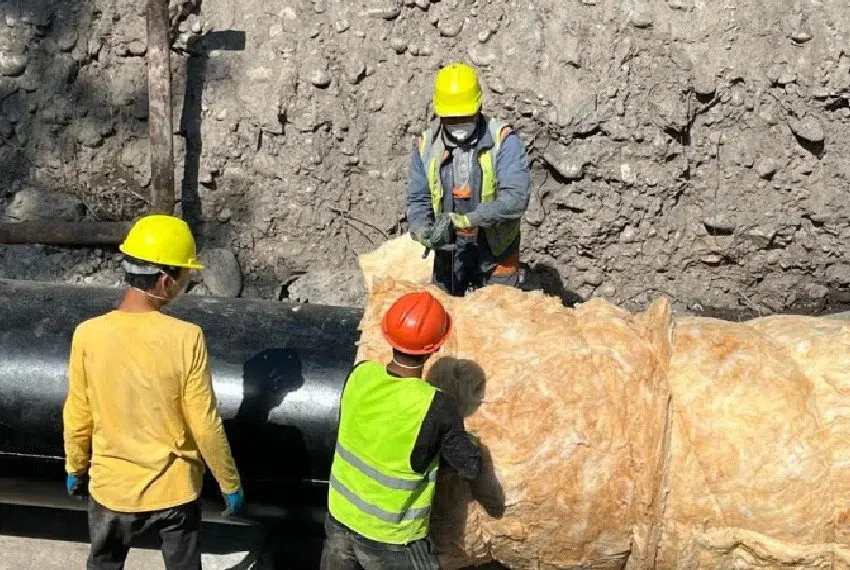
There is a small silver lining: the wear rate has actually improved, dipping below the 70 percent mark it previously exceeded. That is down to steady, if modest, replacement work. The utility swapped out 3,365 metres of pipeline in 2022, 3,666 metres in 2023, 3,770 metres in 2024 and 4,551 metres in 2025. Work in 2026 has so far reached 3,840 metres against a target of roughly 5,000 metres for the year. New trenchless technologies are being used, so crews no longer need to dig up long stretches of street to do it.
The scale of the system is significant for a city of Bishkek's size: Bishkekteploset maintains 481 kilometres of pipelines, 22 pumping stations and 2,482 individual heating units, and services 2,070 residential buildings. The city is also gradually decentralising its heating, moving neighbourhoods onto local boiler houses rather than relying on one sprawling network. Microdistrict No. 10, Gorodok Energetikov, Gorodok Stroiteley and the Uchkun microdistrict are in line for that switch this year.
So why should a traveller care? Bishkek is increasingly a base for trekking and horse-riding trips into the Tien Shan, and winter visits — for the ski slopes near the city or simply cheap, atmospheric city breaks — are growing. Central heating in Kyrgyzstan is not a luxury; with temperatures regularly dipping well below freezing, it is the difference between a comfortable stay and a miserable one. Older, corroded networks mean a higher risk of pipe bursts and local outages during the coldest months, and the start date of the heating season is decided year to year rather than fixed — so buildings can feel chilly in the shoulder weeks of October before the system switches on. The utility says it is ready for the coming season, and the slow-but-real progress on pipe replacement suggests the city is not letting things slide. Still, if you are booking an apartment in an older Soviet-era block rather than a modern hotel with its own boiler, it is worth asking about heating before you commit in winter.
For now, the practical takeaway is simple: Bishkek remains a great value, welcoming gateway to Central Asia's mountains, but its pipes are creaking. Pack layers, favour newer accommodation in the depths of winter, and don't be surprised if your guesthouse radiators come alive a little later than you'd expect.