Travellers planning an overland route through Kyrgyzstan's mountains this winter will need to factor in a new closure. The Kok-Art tunnel, a key link on the country's alternative North-South road, will shut to all traffic from November 1, according to the Ministry of Transport and Communications. No reopening date has been announced, so anyone driving between northern and southern Kyrgyzstan should assume the route is off the table for now.
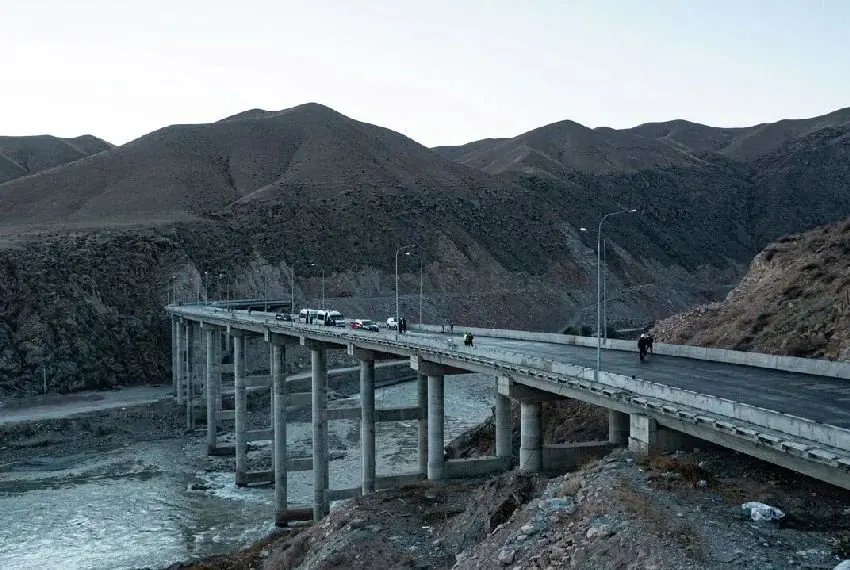
The tunnel sits high on the 125-kilometre stretch of road that links Manas city with the village of Kazarman in Toguz-Toro district, deep in the Jalal-Abad region. It's a serious piece of engineering at 2,521 metres above sea level, and the ministry says the closure is purely a road safety measure — a familiar pattern in a country where heavy snow and ice can make high-altitude passes dangerous from late autumn through spring. Until now the tunnel had been running on restricted hours, open daily between 6 a.m. and 8 p.m., so drivers were already having to plan around it.
For locals and freight, the closure matters commercially. For travellers, it changes the practical geography of the country. The alternative North-South road was built to take pressure off the main Bishkek–Osh highway and to open up the remote interior around Kazarman — a jumping-off point for treks toward Saimaluu-Tash, one of Central Asia's largest petroglyph sites. With the tunnel shut, journeys between the north and the south will need to route via other roads, which typically means longer driving times and, in winter, their own weather-related risks.
If you had a self-drive trip, shared taxi route or cycling itinerary pencilled in through Kazarman this season, check with local transport sources before setting out. Kyrgyz road authorities tend to reopen high passes and tunnels in spring once conditions improve, but dates are rarely fixed in advance — this announcement, notably, comes with no reopening timeline at all. Anyone heading that way should keep a buffer day or two and be ready to switch to the main north-south corridors.
The wider picture is still positive for anyone eyeing Kyrgyzstan. The Kok-Art tunnel only opened in recent years as part of a major upgrade of the road network, and it dramatically cut journey times across the interior. Winter closures aside, the road has steadily opened up one of the country's least-visited corners to independent travellers — wild valleys, nomad summer pastures and some of the best off-the-beaten-path horse trekking in Central Asia. In other words, the closure is seasonal housekeeping, not a sign the route is going away.
Bottom line: if your winter plans involve crossing Kyrgyzstan north to south by road, build in extra time, confirm current conditions locally, and save the Kazarman road for spring or summer. The mountains will still be there — and at 2,500 metres, so will the snow.