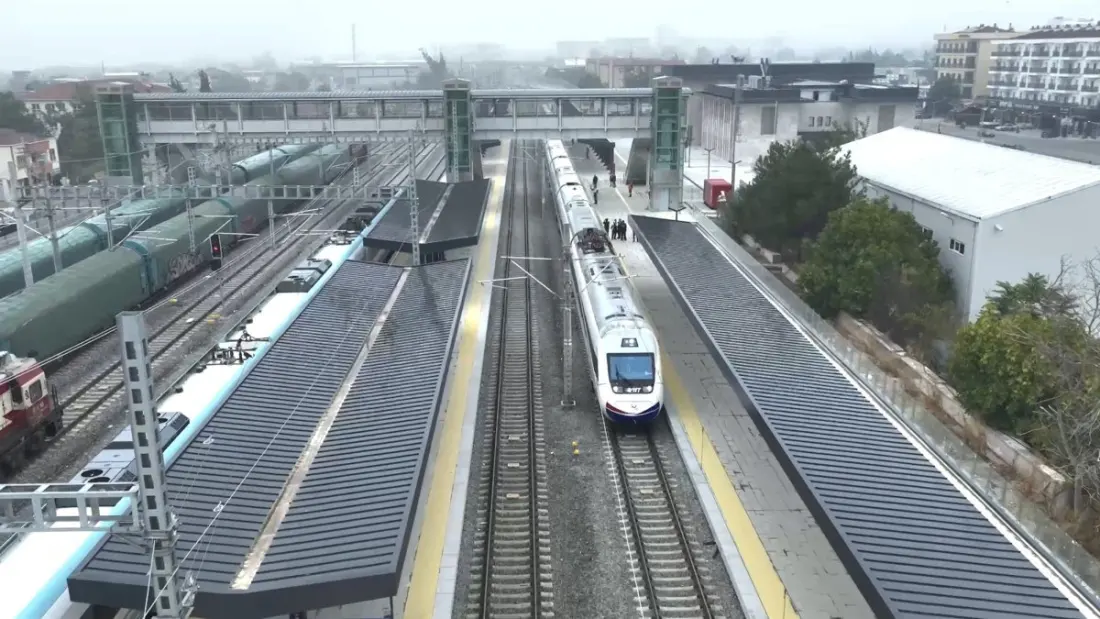
Türkiye just extended its high-speed rail network all the way to its European border, and it's part of something much bigger: an HSBC report putting a $872 billion price tag on the Middle East, North Africa and Türkiye infrastructure pipeline heading into 2030.
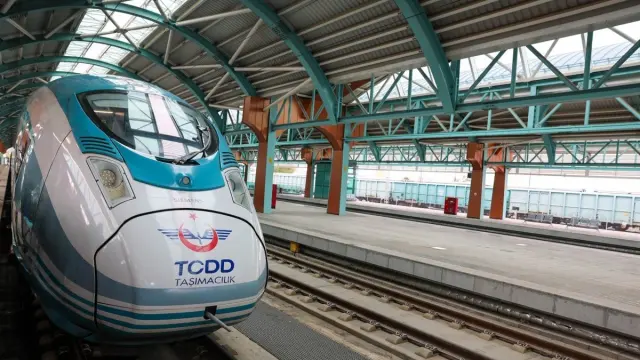
The newly opened Çerkezköy-Kapıkule section is the longest stretch of the Halkalı-Kapıkule line — 229 kilometres running from the western edge of Istanbul to Kapıkule near Edirne, the country's busiest rail and road crossing with Bulgaria. President Erdoğan framed it as a key chunk of the 2,094-kilometre Turkish section of the Development Road, a planned corridor moving freight from the Persian Gulf through Iraq and Türkiye into Europe.
That corridor matters more than ever, HSBC argues, because of the Iran war. The conflict has exposed how dependent global trade remains on the Strait of Hormuz, which previously carried about a fifth of the world's oil and LNG shipments. HSBC chief executive Georges Elhedery told an audience in Dubai that Gulf states are now pouring money into pipelines and overland routes — and that within five years, Hormuz "may become redundant." The bank expects the MENAT region, despite a forecast contraction of 1.3% this year per the World Bank, to rebound strongly in 2027 on the back of that investment.
The $872 billion pipeline (itself part of a $1.4 trillion wider programme, using data from industry tracker MEED) covers the whole MENAT region, and HSBC's report doesn't break down Türkiye's share. But Türkiye's inclusion reflects its position as the land bridge between the Gulf and Europe. Cargo leaving Iraq's Faw Port would eventually run about 1,200 kilometres by rail to Ovaköy on the Turkish border, connecting to routes like the Middle Corridor through Central Asia and the Caucasus.
For travellers, the headline news is the rail line itself. Getting from Istanbul toward the Bulgarian border is now dramatically faster and smoother, and it stitches together a plausible no-fly option: train from Istanbul across the border into Bulgaria and onward through the Balkans. Kapıkule has long been a slow, congested crossing by road; a high-speed link changes the calculus for anyone travelling overland between Istanbul and Eastern Europe. Watch this space too — as the Development Road and related corridors progress, cross-border rail between Türkiye, Iraq and the Caucasus could gradually open up routes that are currently freight-only or impractical for passengers.