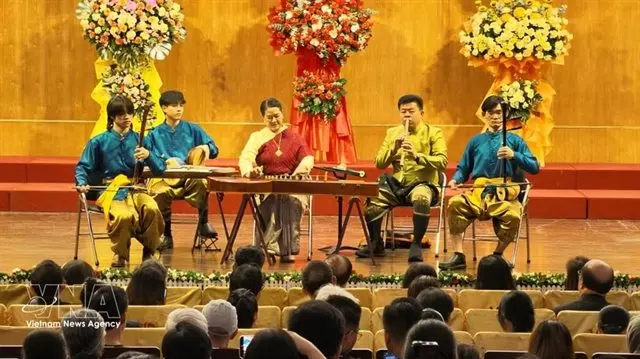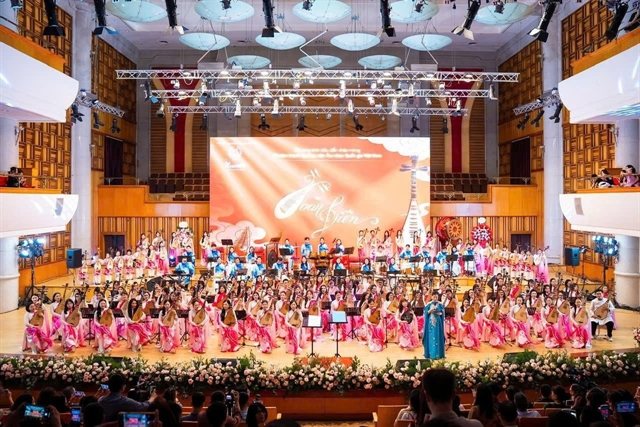
Late autumn in Vietnam will sound distinctly traditional this year. The National Traditional Musical Instrument Solo and Ensemble Competition 2026 runs across two provinces in late October and early November, drawing up to 800 artists from 33 arts troupes nationwide — theatres, conservatories, academies and even armed forces ensembles.
The contest splits into two rounds. Round one takes place October 24-30 at the Lâm Đồng Provincial Theatre of Exhibition and Cultural Arts in the Central Highlands, featuring 17 organisations. Round two follows on November 6-12 at the Việt Nam National Theatre of Song, Dance and Music's branch in Thái Nguyên in the north, with 16 more. Organised by the Department of Performing Arts under the Ministry of Culture, Sports and Tourism, it carries the slogan Vietnamese Sounds – Convergence and Brilliance.
What makes this worth knowing — even if you can't name a đàn tranh from a đàn bầu — is the sheer regional range on one programme. Northern troupes bring midlands, mountain and Red River Delta traditions plus classical theatre music. The centre and Central Highlands contribute court music, tuồng opera and folk songs. The south offers cải lương reformed theatre, đờn ca tài tử chamber music and Khmer music, alongside new ensemble work reflecting modern life. In effect, a visitor to either venue gets a compressed tour of the country's musical map in a single evening.
Department director Nguyễn Xuân Bắc made the point that traditional arts are often said to be fading, but the volume of registrations suggests otherwise. The competition is as much about connecting performers and training institutions as it is about prizes.
For travellers, the timing is handy. Lâm Đồng's capital Đà Lạt sits in the cool Central Highlands and is one of Vietnam's most pleasant autumn escapes, while Thái Nguyên lies about 80km north of Hà Nội — easy to pair with a capital city break. Even if your trip doesn't line up with the competition dates, both cities host regular traditional performances, and this event signals a wider push to keep these art forms in front of new audiences. If you do catch a round, expect solos and ensembles spanning everything from imperial court repertoires to southern folk — a rare chance to hear regional styles that rarely tour internationally.