Most visitors to Split come for Diocletian's Palace and the Adriatic glitter of the Riva. Few realise that in Stobreč, a quiet peninsular suburb east of the city, archaeologists have uncovered a settlement dating back to around 1500 BC — centuries before the Greeks or Romans ever reached the Dalmatian coast.
Stobreč was already on the archaeological map as the site of ancient Epetium, a Hellenistic and Roman-era town. But large-scale protective research that began in 2024, the biggest excavation ever carried out here, has confirmed something far older: a genuine Bronze Age settlement. More than 100,000 fragments of objects have been documented across the site's layers, which include Hellenistic defensive walls and a tower, a Roman road with drainage, and late antique buildings stacked one on top of another.
The prehistoric finds are the ones that catch the imagination. Archaeologists have identified ovens, likely used for cooking, along with complete ceramic vessels — trays, cups and jugs — the everyday kit of people who lived here millennia ago. Traces of burning suggest one house was destroyed by fire, and among the most poignant discoveries was the grave of a newborn buried in the house's floor. Detailed analysis of the material is still ongoing.
What happens next is still being decided. Croatia's Ministry of Culture and Media says a zone of roughly 3,000 square metres is earmarked for presenting the archaeological heritage, with another 2,500 square metres where construction may be allowed depending on further research. The delicate Bronze Age ovens and a threshing floor are expected to be moved to the Archaeological Museum in Split, while the settlement itself could be brought to life through 3D models and virtual reconstructions. A full archaeological park is on the table — an idea, for now, not a promise.
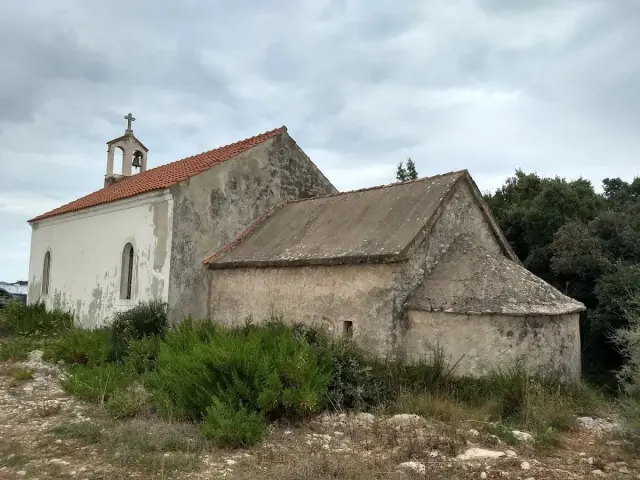
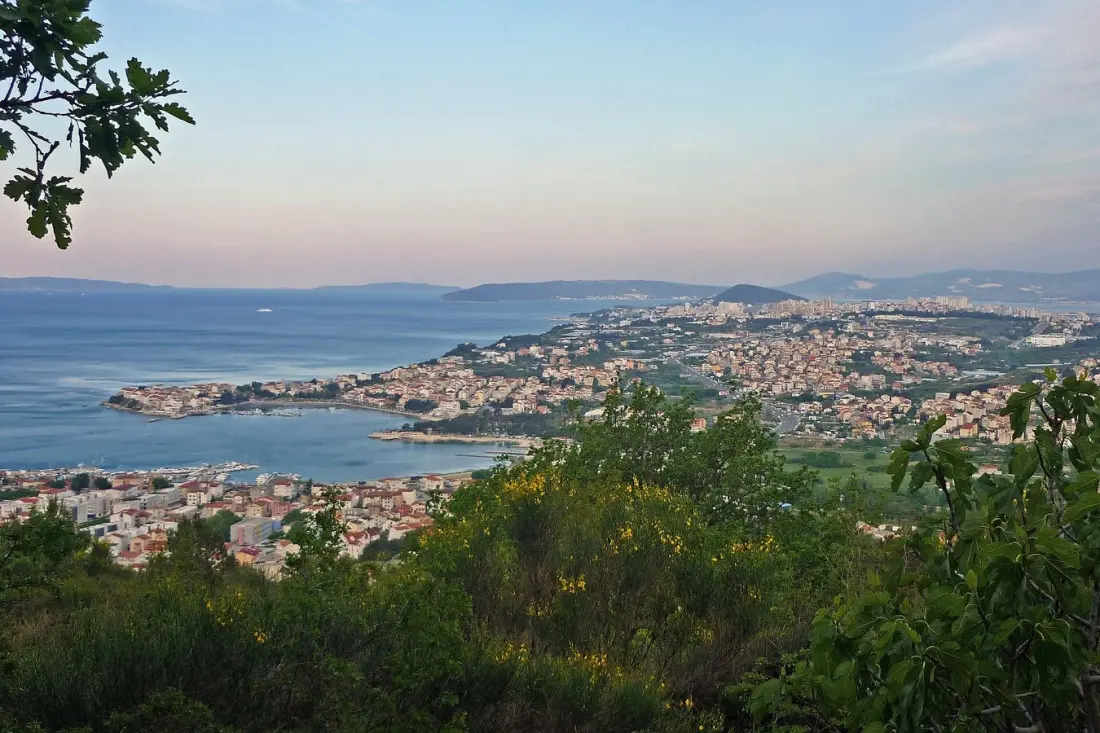
You don't need to wait for the park to enjoy Stobreč. The village sits on a peninsula near the mouth of the Žrnovnica river, with sandy and pebble beaches in its centre and rockier coves towards the southwest. The hills of Perun and Mosor rise nearby for anyone after a hiking day, and central Split is close enough for an easy city-and-beach combo. Even the place's name carries history: archaeologist Frane Bulić linked it to Saint Lawrence, the Roman martyr honoured by a local early Christian basilica, whose apse later held a small church.
Why should travellers care? Because Stobreč is a rare spot where you can swim in the morning and stand within metres of layers spanning the Bronze Age, the Hellenistic world, Rome and early Christianity in the afternoon — all without the crowds of Split's old town. If the proposed archaeological park and virtual reconstructions go ahead, it could become one of Dalmatia's most intriguing low-key sights. For now, it's a good excuse to look beyond Split's postcard landmarks and remember that history here starts much earlier than the Romans.
Story via Total Croatia.